
The Subtle Art of Not Giving a F*ck" by Mark Manson - In-depth Review
This is bonkers!!


Have you ever felt overwhelmed by the constant pressure to be positive, to hustle harder, and to optimize every aspect of your life? I know I have. And then I picked up this orange book with the provocative title that promised a counterintuitive approach to living a good life. What I found inside wasn't just refreshing—it was revolutionary for how I approached my daily challenges.
A Different Kind of Self-Help
Let's be honest: the self-help genre often feels like an endless parade of rainbow-tinted advice telling us to visualize success, eliminate negativity, and chase happiness with unrelenting optimism. What makes this masterpiece stand out is its willingness to call BS on that entire approach.
From the first chapter, I was struck by how differently it framed personal growth. Instead of adding more to our plates—more goals, more ambitions, more positive thinking—it suggests a radical alternative: carefully choosing what to care about and letting go of everything else.
The central premise is deceptively simple: we all have a limited number of f*cks to give, so we should be intentional about where we invest them. This isn't about being indifferent or apathetic—quite the opposite. It's about conserving your emotional energy for what truly matters in your life.
The Discomfort of Truth

What I found most valuable was the book's unflinching commitment to embracing discomfort as essential for meaningful growth. In a culture that often promotes comfort and ease as ultimate goals, the author boldly asserts that pain, failure, and uncertainty aren't just inevitable—they're necessary ingredients for a fulfilling life.
One passage that particularly resonated with me explores how our constant attempts to avoid negative experiences actually make us more miserable. By trying to escape feelings of inadequacy or insecurity, we paradoxically reinforce the belief that we should feel adequate and secure all the time—an impossible standard that sets us up for perpetual disappointment.
This insight hit me like a ton of bricks. How much of my own anxiety stemmed from believing I shouldn't feel anxious? How much of my dissatisfaction came from the belief that I should be satisfied? The framework presented here flipped my understanding of emotional well-being on its head in the most liberating way.
Values Over Feelings
Perhaps the most profound aspect of this work is its emphasis on values-based living rather than emotions-based living. Rather than chasing positive feelings and avoiding negative ones, the book encourages readers to identify their core values and act in accordance with them—regardless of how it feels in the moment.
The author illustrates this through compelling personal stories, including his transformation from a directionless party-goer to a purpose-driven writer. What changed wasn't some magical discovery of passion or overnight success, but rather a gradual refinement of what he deemed worthy of his limited emotional investment.
I found myself highlighting passage after passage that challenged conventional wisdom about success and happiness. Take this gem, for example: "The desire for a more positive experience is itself a negative experience. And, paradoxically, the acceptance of one's negative experience is itself a positive experience." That single sentence encapsulates the counterintuitive wisdom that makes this book so powerful.
Responsibility Without Blame
Another standout element is the nuanced discussion of responsibility. The text makes a crucial distinction that transformed how I view challenges in my life: taking responsibility for our problems doesn't mean we're to blame for them.
This reframing changed everything for me. Suddenly, acknowledging my role in my life's problems wasn't about shame or guilt—it was about empowerment. If I contribute to my problems, then I can also contribute to their solutions. This perspective shift alone was worth the price of admission.
The section on how we're all wrong about everything (just a little bit) provided a refreshing take on certainty and knowledge. By embracing uncertainty and viewing our beliefs as works-in-progress rather than immutable truths, we open ourselves to growth and learning in ways that rigid certainty prevents.
More Than Just Not Caring
A common misconception about this book is that it promotes a nihilistic "nothing matters" attitude. Having read it cover to cover (twice!), I can tell you that's far from accurate. It's not about caring less—it's about caring better.
The framework presented here helps readers distinguish between productive and unproductive forms of suffering. As the author eloquently puts it, "Who you are is defined by what you're willing to struggle for." This isn't about avoiding difficulty but choosing the right difficulties—ones aligned with your core values.
I've applied this principle to my own career decisions, asking not "What job will make me happiest?" but rather "What struggles am I willing to endure?" This subtle shift led me to choices that felt authentic rather than those that simply promised the most comfort or status.
Style and Accessibility
What makes this book particularly effective is its conversational, no-BS tone. The writing style feels like having a straight-talking friend call you out on your self-deception while simultaneously offering you a beer. The personal anecdotes are raw, sometimes embarrassing, and always illuminating.
The liberal use of profanity might put off some readers, but I found it refreshingly authentic. There's something powerful about stripping away the polished veneer that typifies self-improvement literature and just telling it like it is.
The concepts are presented with remarkable clarity, using everyday language rather than psychological jargon. Complex ideas about values, metrics of success, and identity are broken down into digestible chunks that anyone can understand and apply.
Real-World Application
What I appreciate most about this work is how immediately applicable its principles are. After finishing it, I conducted a "f*ck audit" of my own life—examining where my limited emotional resources were going and questioning whether those investments aligned with my values.
The results were eye-opening. I discovered I was giving way too many fcks about social media validation, others' opinions of my career choices, and minor inconveniences that wouldn't matter in a week, let alone a year. Meanwhile, I wasn't giving enough fcks to my physical health, creative projects, and deepening relationships with people who truly mattered to me.
This realization prompted concrete changes. I started saying "no" more often without elaborate explanations. I began viewing rejection and failure as valuable feedback rather than personal catastrophes. Most importantly, I stopped measuring my worth against arbitrary external metrics and developed more meaningful internal standards.
The Counterintuitive Path to Contentment
Ultimately, this book offers something rare in the self-help landscape: a path to contentment that doesn't require mantras, morning routines, or manifestation journals. Instead, it suggests that true satisfaction comes from facing reality head-on, embracing our limitations, and choosing our struggles wisely.
The author's discussion of death—how acknowledging our mortality clarifies our values—is particularly powerful. Rather than being morbid, this perspective illuminates what truly matters when we strip away the noise of day-to-day concerns.
A Few Criticisms
For all its wisdom, this work isn't perfect. Some readers might find certain examples oversimplified, and occasionally the irreverent tone borders on dismissiveness toward genuine challenges. The author's perspective is also unavoidably shaped by his experiences as a straight white male, which sometimes limits the scope of his examples.
Additionally, some principles presented as universal may resonate differently across cultural contexts where community values might outweigh individual choice in meaningful ways.
Final Thoughts
Three years after my first reading, the principles from this book continue to influence how I approach challenges, make decisions, and measure success. It's one of those rare works that doesn't just change how you think—it changes how you live.
If you're tired of forced positivity and hungry for a more authentic approach to personal growth, this book offers a refreshing alternative. It won't solve all your problems—and it explicitly tells you it won't—but it will help you distinguish between problems worth solving and those better left alone.
In a world constantly telling us to care more about everything, learning the subtle art of caring selectively might be the most valuable skill we can develop. This isn't just another self-help book—it's an invitation to a more honest, grounded, and ultimately fulfilling way of being human.
And that's something worth giving a f*ck about.
About the Creator
A.O
I share insights, tips, and updates on the latest AI trends and tech milestones. and I dabble a little about life's deep meaning using poems and stories.
My New Book is Finally Here
My poetry collection Beautiful and Brutal Things is done. It's actually done and finally published over 270 pages. Over a year of my life went into this book. More than a year, really. Long days at my computer, sometimes seven days a week because I couldn't stop even when I probably should have. Then two months of editing that felt harder than the writing itself. But it's finished, and I'm still standing, and the book is real.
By Tim Carmichael2 days ago in BookClub
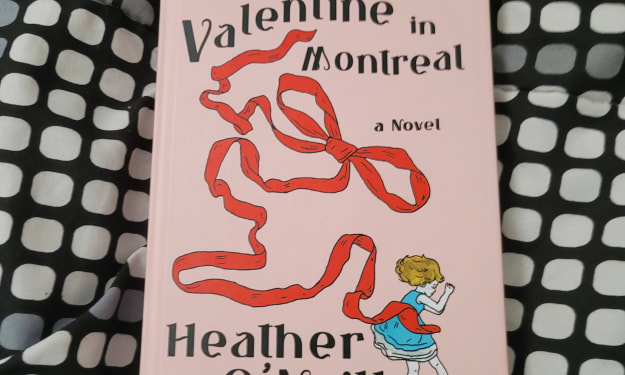
Valentine in Montréal
Don't be fooled by the title. The story is actually very interesting: My name is Valentine. I am twenty-three years old and I work at a little store at Berri-UQAM métro. I am very ordinary-looking and Barney, who works the same shift as me at the store, says I do not know how to dress. I have been working there for four years, and I have never missed a day. This is why sometimes I seem familiar to people, even though they can't place me.
By Kendall Defoe 5 days ago in BookClub



Comments
There are no comments for this story
Be the first to respond and start the conversation.