
I'm Glad My Mom Died by by Jennette Mccurdy: In-depth Review
A Raw Journey Through Fame, Family, and Finding Freedom


A Raw Journey Through Fame, Family, and Finding Freedom: Jennette McCurdy's Memoir
When I first saw the provocative title of Jennette McCurdy's memoir, I admit I was taken aback. But after diving into this unflinchingly honest account of her life, I understood exactly why she chose those four jarring words. This isn't just another celebrity tell-all; it's a profound exploration of childhood trauma, complicated maternal relationships, and the dark underbelly of child stardom that manages to be both heartbreaking and darkly humorous.
The Mother-Daughter Dynamic That Shaped Everything
At the core of McCurdy's memoir is her relationship with her mother, Debra, who passed away from cancer in 2013. From the opening pages, we're introduced to a mother who exercised extreme control over every aspect of her daughter's life—from her career choices to her caloric intake to her shower routine (yes, her mother performed breast and genital exams on her well into her teens, ostensibly to check for cancer).
What struck me most was McCurdy's unflinching honesty about the complicated emotions this relationship evoked. She details how her mother's emotional volatility—rapid shifts between smothering affection and explosive rage—created an environment where young Jennette's entire existence became focused on keeping her mother happy. The writing here is particularly powerful, as McCurdy captures both the child's desperate need for approval and the adult's retrospective understanding of how deeply dysfunctional this dynamic was.
"When I'm alone, I have a hard time answering the most basic questions about myself," she writes at one point. "What do I want to eat? What TV show do I want to watch? What errands do I need to run today? It's as if my mother were the compass guiding my life, and without her I'm lost."
Child Stardom: The Glamour and the Damage
For those who knew McCurdy from her role as Sam Puckett on Nickelodeon's "iCarly" and "Sam & Cat," her behind-the-scenes revelations are eye-opening. She details how she was pushed into acting at age six despite crippling shyness and anxiety—not because she wanted fame, but because her mother had always dreamed of being famous herself.
The sections about her Nickelodeon years are particularly illuminating. McCurdy doesn't hold back when discussing "The Creator," a powerful figure at the network who she claims subjected her to emotional abuse, inappropriate behavior, and pressure. She recounts being photographed in a bikini during a wardrobe fitting as a teenager and being encouraged to drink alcohol while underage. These moments are recounted with clarity and purpose—not for shock value, but to illustrate how normalized such inappropriate behavior became in her world.
What resonated deeply was her description of developing anorexia at her mother's encouragement when she was 11, which later evolved into bulimia that plagued her for years. McCurdy writes about these struggles with eating disorders in a way that's both matter-of-fact and deeply moving. She doesn't sensationalize, but neither does she minimize the physical and psychological damage inflicted.
Finding Her Voice After Loss
Perhaps the most powerful aspect of this memoir is McCurdy's journey toward healing after her mother's death. With raw honesty, she admits the relief she felt alongside her grief—relief that came from no longer having to live under her mother's control. The title itself speaks to this complicated emotional reality that many survivors of abusive relationships understand but rarely express aloud.
The second half of the book details her attempts to rebuild her life: pursuing therapy, walking away from acting, and developing her own voice as a writer and director. It's here that her writing truly shines, as she captures the messy, non-linear nature of healing from trauma:
"Recovery is not a straight line, it's not even a curvy line, it's a tangled ball of Christmas lights that you've kept meaning to sort out but instead have thrown in a drawer for the past eight years."
What makes these sections so compelling is McCurdy's ability to find humor in even the darkest moments. Her descriptions of disastrous dates, awkward therapy sessions, and her first experiments with alcohol after years of strict prohibition provide necessary moments of levity while never undermining the seriousness of her journey.
Beyond Celebrity: Universal Themes
What elevates this memoir above typical celebrity fare is how it tackles universal themes that resonate far beyond Hollywood. At its heart, this is a book about:
Codependency and establishing boundaries: McCurdy's painful process of separating her identity from her mother's speaks to anyone who has struggled to define themselves outside of a controlling relationship.
The long shadow of childhood trauma: Her clear-eyed analysis of how early experiences shaped her adult patterns offers insight into how trauma manifests throughout life.
Cultural attitudes toward women's bodies: Through her own story, McCurdy indicts an entertainment industry and broader culture that sexualizes young girls while simultaneously demanding impossible thinness.
Grief's complexity: Her complicated mourning process—loving someone deeply while also acknowledging the harm they caused—reflects a reality many face but few discuss openly.
The Writing: Direct, Unflinching, and Surprisingly Funny
McCurdy's prose style deserves special mention. As a first-time author, she displays remarkable control over her narrative. There's no hint of ghostwriting here; her voice is distinctly her own—direct, unadorned, and punctuated with dark humor that serves as both shield and weapon.
Her comedy background shines through in her timing and her eye for absurd details, like describing her mother's habit of saving Jennette's hair in a ziplock bag, or recounting a humiliating commercial audition for Red Lobster. These moments of humor make the darker material bearable without undercutting its impact.
What's notably absent is any sense of self-pity. McCurdy isn't asking for the reader's sympathy—she's simply laying out her experiences with remarkable clarity and letting us draw our own conclusions. This straightforwardness gives the memoir an authenticity that's refreshing in a genre often marked by either melodrama or sanitized half-truths.
Cultural Impact and Why It Matters
Published in 2022, this memoir arrived at a cultural moment when we're collectively reassessing how we treat child stars and recognizing the potential for abuse in entertainment settings that lack proper oversight. Coming in the wake of documentaries about Britney Spears and conversations about the welfare of child performers, McCurdy's personal testimony adds an important voice to this discourse.
What makes her story particularly valuable is how it illuminates the ways family dynamics often enable exploitation in the entertainment industry. Her mother's desperate need for vicarious fame created conditions where professional boundaries were routinely crossed, and a child's wellbeing became secondary to career advancement.
Beyond its commentary on Hollywood, the memoir also contributes meaningfully to conversations about maternal relationships that fall outside the idealized norm. By honestly portraying a mother who was both loving and harmful, McCurdy gives permission to others with complicated family histories to acknowledge the full truth of their experiences.
A Few Criticisms
If the memoir has any shortcomings, it's that certain periods of McCurdy's life receive relatively brief treatment. Her post-Nickelodeon acting years and some of her adult relationships are covered somewhat cursorily. Additionally, while she mentions supportive figures like her therapists, we get less insight into the positive relationships that helped sustain her through difficult times.
Some readers might also wish for more explicit discussion of the systemic issues in child entertainment rather than focus primarily on individual bad actors. However, these are minor quibbles about a book that succeeds remarkably well at what it sets out to do.
Final Thoughts
Jennette McCurdy's memoir stands as one of the most honest and impactful celebrity memoirs in recent memory. What could have been merely sensational in less skilled hands becomes, through her authentic voice and thoughtful perspective, a profound meditation on family, fame, and recovery.
For former fans of her shows, it offers context that might be shocking but necessary. For those unfamiliar with her acting work, it stands on its own as a powerful account of surviving childhood trauma and finding one's authentic voice. The provocative title initially draws attention, but it's the unflinching honesty and surprising hope of the pages within that leave a lasting impact.
In sharing her story with such transparency, McCurdy has created not just a compelling memoir but a valuable resource for anyone working to understand and heal from complicated family relationships. The courage it took to tell this story so openly deserves our respect, and the skilled storytelling it contains deserves our attention.
About the Creator
A.O
I share insights, tips, and updates on the latest AI trends and tech milestones. and I dabble a little about life's deep meaning using poems and stories.
THE EMBER AND THE ECHOES
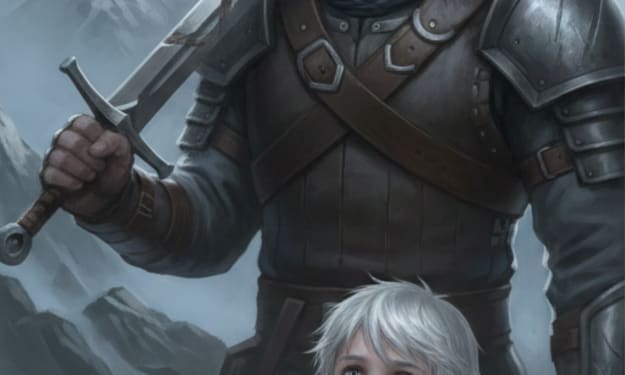
EPISODE 1: THE DEBT UNPAID The rain on the night of the Severing did not fall; it was a solid, weeping veil that drowned the world. It soaked through the midnight-blue velvet blanket, threatening to silence the weak cries of the infant wrapped within. The man who placed the bundle on the granite steps of the Iron Ridge Orphanage did not linger. He was a silhouette against the storm, tall and straight as a blade, his face a mask of terrible, empty purpose. He drove a dagger through the blanket, pinning it to the wood, the tip stopping a hair’s breadth from the infant’s side. It was not an attempt to kill; it was a punctuation mark. Attached to the hilt was a sodden scroll.
By Akua Anitaabout 10 hours ago in BookClub



Comments
There are no comments for this story
Be the first to respond and start the conversation.