
Summary
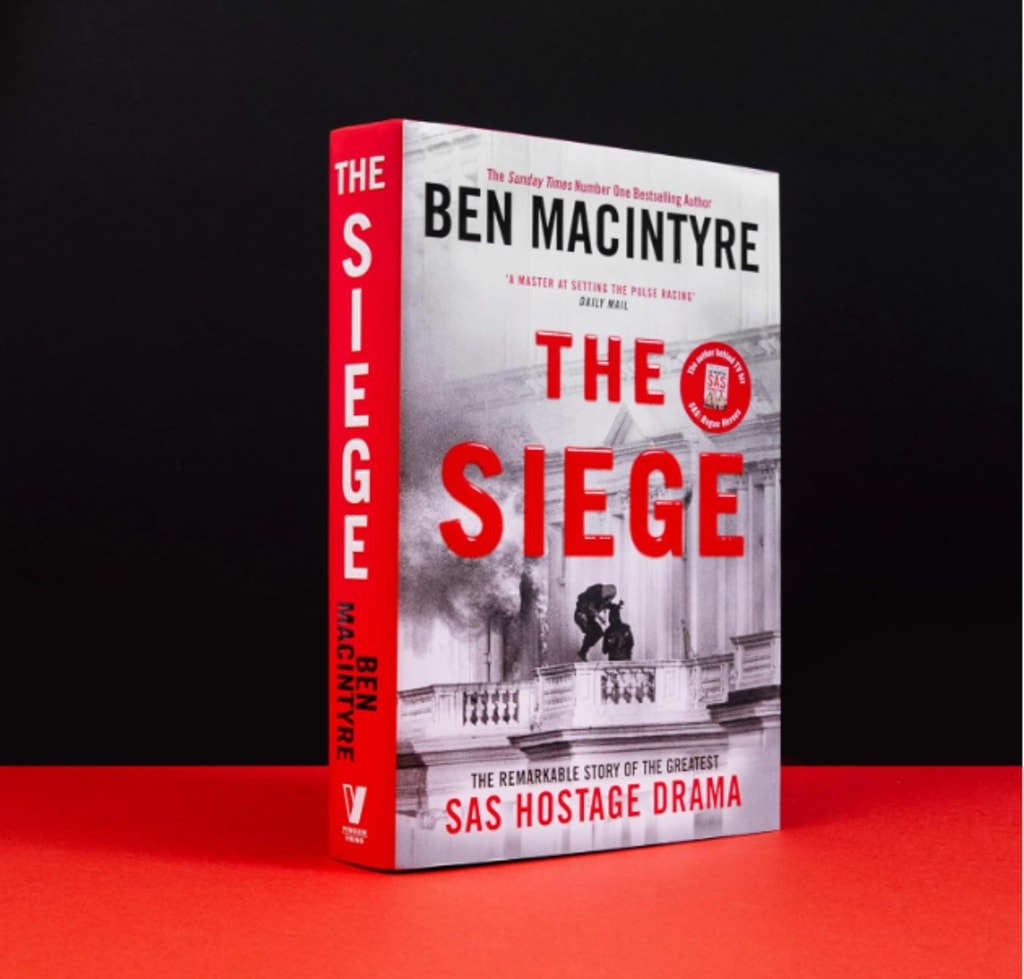
The Siege by Ben Macintyre offers a detailed analytical account of the real account of the Iranian Embassy siege in London in 1980. ‘’The Siege’ is a compelling recollection of the six-day hostage crisis which as the author notes transformed both British politics and world terrorism. The focal of the story is a besiege of the embassy by several Iranian militants who captured several hostages and demanded the release of prisoners in Iran. The government of the United Kingdom did not waste time with deliberation as it embarked on complicated negotiations as well as a military action known as Operation Nimrod. Macintyre first presents the gunmen and the hostages as real as well as the SAS soldiers that stormed the building thus elucidating the human side of the daring drama.
The principal conflict is between the gunmen who want political bargaining and the British authorities who have to safeguard the hostage’s life and simultaneously avoid an incident from blowing up into a global crisis. The second conflict is between the militant’s political agenda and their self-erasure as the blockade unfolds. At the heart of the book, Macintyre asks the critical question: To what extent ought a government be committed to safeguarding its citizens and running a precarious global crisis?
Experience
At one moment I was thrilled and soon afterward I was sad or angry. From here I could sense the increased tension as the siege progressed in real time, something that was never experienced before in terms of real-time. That the events were happening ‘live,’ on television, made the story even darker, which could be felt in the accounts of the survivors. Sometimes it was as if the tension abated a little, and I thought how much pressure was on the hostages and the negotiators/bringers of death. The extraordinary circumstances that surrounded this incident were aptly described by Macintyre and the emotional changes in the subject helped me to understand what is involved. It was much more interesting to notice that the behaviour of the hostages, gunmen and even police was not entirely black-and-white and it made me question the dualistic perspective with which such a situation might be normally perceived.
The book also enlightened me more about hostage-taking incidences and how much pressure is on the police as well as military police. This was important here because it focused on the realism of war and terrorism, the live choices are made not only with the brain but also with the heart and guts. I especially grasped the fact that what the media relays about such occurrences becomes precisely a legend, reducing the existence of reality to an utter myth. The notion that everyone thinks they are immortal and can act perfectly fine under immense pressure and the emotional journey of the genius mathematician was something that I truly greatly appreciated throughout the book.
Strengths
Where others have fallen short it was due to Macintyre’s fine narrative work to present the story the way it happened with many different views. The author includes many firsthand narratives, which range from the hostages themselves to the police, the military, and even the criminals. Such an approach to the problem enabled me to understand that the issue was not monochromic. I understood the situation of the hostages, who were sequestered in the territory of the embassy of a foreign country and were waiting for their actions from the authorities. The gunmen were real, not just evil doing bad things for fun but people who believed in something and at the end of the day living in fear and confusion. To Macintyre, they are real people, and he helps readers understand the nature of the crisis.
The writing is superb, and much of this owes to Macintyre’s ability to research with a focus and detail that leaves nothing to chance. But perhaps it was a technical aspect that I found most interesting – the authors’ detailed understanding of SAS operations. He examined Operation Nimrod, the plan to storm the embassy, in a gripping manner going through the mechanics of one of the most well-known and successful modern small special-forces operations. The book conveys how much was at risk during the mission, the delicate balance of the bargaining and the problem of how to cope with kidnappers.
Weaknesses
Generally, The Siege is a rich source of detail but sometimes the volume of information, has proved to be excessive. The historical setting is evident, detailed, and a commendation, though it sometimes made me feel that the novel’s progress was rather hindered by allusions to political contexts far beyond the book's scope. For instance, some explanations concerning the political context in Iran and the history of the area are significant somehow, yet they sharply took me out of the contest of the siege. Moreover, there was a sense that I missed the gunmen's opportunistic motives which could have been fully developed. Macintyre explains them more endearing, but at some point, their change over the six days seemed a bit too hasty and I wished for more on their backgrounds.
Final Thoughts
The Siege proves to be an arresting presentation of a historic episode in the annals of British history. At this, Ben Macintyre does a commendable job of painting a vivid picture of the mayhem and heroism and the stupidity and courage that went with it. This is truly a book for the general reader interested in modern history, military tactics/strategy, or the anecdotes and biographies of persons involved in the occurrences. That is why the book can be on the list of interest to any reader while still being thoroughly academic for any scholar or student of history, the political and military narrative, plus some glimpses into human lives.
In my opinion, this book is suitable for any person who is interested in effective and important real-life events. These are not decisions that would involve going to the shop for bread; it’s about people making decisions that can cost them their lives. There are always lessons to learn, and if you’re like me after reading such a book as The Siege, you start wondering how you would act or react in the same position.
My Recommendation
If you enjoyed The Siege, you might also like books such as Rogue Heroes by Ben Macintyre, which delves into the history of the SAS, or The Spy and the Traitor, another one of Macintyre’s works that deals with espionage and betrayal. Finally, Black Hawk Down by Mark Bowden offers a similar high-stakes narrative, exploring the 1993 Battle of Mogadishu.
As soon as you have read The Siege, it will be interesting to watch some documentaries on the Iranian Embassy siege or to read books about the SAS. Everyone could learn so much more about this part of history and Macintyre’s narrative will leave the reader eager to know more.
Click here to listen to The Siege for free with Audible.
Disclaimer
This article contains affiliate links. If you sign up for an Audible trial or make any purchases through these links, I may receive a small commission at no extra cost to you. Your support helps to keep this content free and accessible. Thank you!
About the Creator
Sid Coulton
I have discovered a love for writing blogs, creating stories and writing articles. My book reviews do contain affiliate links as i am an Amazon Associate.
Keep reading
More stories from Sid Coulton and writers in BookClub and other communities.
My Favourite Mistake
Summary Marian Keyes’ My Favourite Mistake is a powerful novel about change, strength and the issue of self. The main character, Anna Walsh, is a 39-year-old PR representative from New York who has it all – a gorgeous apartment, a great job, and an encouragingly empty nest while her two kids are battling through colleges, but as COVID-19 hit this woman’s harmonious life starts shaking. A string of relationship breakdowns, health problems, and professional turmoil, compels her to look at her life over from a new perspective. Her character returns from New York, where she worked a stressful corporate job only to take up a new life in her homeland of Ireland, with just a few odds and ends.
By Sid Coultonabout a year ago in BookClub
My New Book is Finally Here
My poetry collection Beautiful and Brutal Things is done. It's actually done and finally published over 270 pages. Over a year of my life went into this book. More than a year, really. Long days at my computer, sometimes seven days a week because I couldn't stop even when I probably should have. Then two months of editing that felt harder than the writing itself. But it's finished, and I'm still standing, and the book is real.
By Tim Carmichael9 days ago in BookClub
Little Self-Interview With Books
I'm going to get right into it. Every year, I like to revisit six questions about books and reading and give six answers, hoping to discover something new about myself and my reading habits. The questions are:
By Avocado Nunzella BSc (Psych) -- M.A.P 3 days ago in BookClub
Affection and Healing for Yourself
During the night of the last quarter moon, I gathered my ritual supplies. I carefully handled the chunk of black tourmaline that would protect me from your overall negative and narcissistic energy. I carefully walked the house with my stick of selenite in hand, asking the universe to cleanse our working space.
By Alisha Wilkins ✒️🦋🖋️6 days ago in Fiction



Comments
There are no comments for this story
Be the first to respond and start the conversation.