
The Injection Moulding Process: A Comprehensive Guide
Injection Moulding Process

Injection moulding is one of the most widely used manufacturing processes, responsible for producing a staggering range of products, from small household items to complex automotive parts and medical devices. It is a highly efficient and cost-effective method for mass production, especially when creating components made of plastic. The process involves injecting molten material into a mould, cooling it, and ejecting a finished product. While the concept seems simple, the technology behind injection moulding is highly advanced and continues to evolve with innovations in material science, mould design, and automation.
In this detailed guide, we will explore the injection moulding process, the equipment used, materials involved, types of injection moulding, benefits, challenges, and how modern technology is shaping its future.
What is Injection Moulding?
Injection moulding is a manufacturing process used to produce parts by injecting molten material into a mould. The materials used are typically thermoplastics or thermosetting polymers, though metals, ceramics, and glass can also be used. The process can produce both simple and highly complex parts with intricate shapes, often with very tight tolerances. Injection moulding is particularly valued for its ability to produce identical parts in large volumes at high speed.
The process involves four main stages: clamping, injection, cooling, and ejection. Each stage must be carefully controlled to ensure that the final part meets design specifications and quality standards.
The Injection Moulding Process: Step-by-Step Breakdown
Understanding the injection moulding process step by step helps illustrate how raw materials are transformed into finished products.
1. Clamping
The injection moulding process begins with clamping. The clamping unit is responsible for holding the mould in place and ensuring that it stays closed during the injection phase. The mould consists of two halves (a core and a cavity) that are tightly pressed together by the clamping unit.
The clamping unit is essential to maintain pressure within the mould, preventing leaks during injection. The force required to keep the mould closed is known as the "clamping force," which varies depending on the size of the mould and the complexity of the part being produced. This force can range from a few tons to several thousand tons for larger parts.
2. Injection
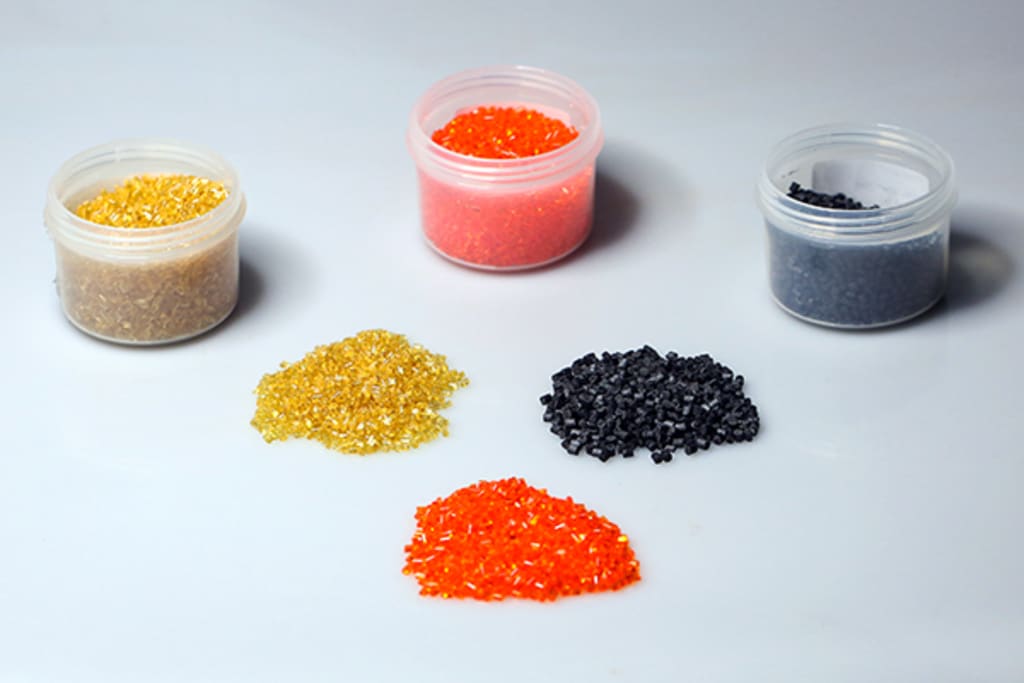
The second stage is the actual injection of material. In this phase, plastic pellets (or another raw material) are fed into the injection unit through a hopper. These pellets are then heated until they melt into a molten state. The plastic is pushed forward by a reciprocating screw or plunger, which injects the molten material into the mould through a nozzle at high pressure.
The injection speed, pressure, and temperature must be carefully controlled to ensure that the mould cavity is filled completely without causing defects such as air bubbles or sink marks. Once the mould is filled, the material must remain under pressure for a certain time to compensate for any shrinkage that may occur as the material cools.
3. Cooling
Once the material is injected, the cooling process begins. The mould itself is usually cooled by circulating water or another coolant through channels in the mould to accelerate the cooling process. As the molten plastic cools, it solidifies and takes on the shape of the mould cavity.
Cooling is one of the most critical stages because it directly affects the quality and dimensional stability of the final part. Uneven cooling can lead to defects like warping or internal stresses. In some cases, the cooling process can take longer than the actual injection process, especially for large or thick-walled parts.
4. Ejection
Once the part has cooled and solidified, the mould opens, and the part is ejected using ejector pins, a mechanical device that pushes the part out of the mould cavity. The part may still be hot at this stage, so care must be taken to avoid deforming it.
After ejection, the part may undergo additional finishing processes such as trimming or removing excess material, also known as "flash," that may have seeped into the parting line of the mould. Some parts are immediately ready for use, while others may require further processing, such as painting or assembly.
Materials Used in Injection Moulding
The choice of material is crucial for injection moulding because it determines the properties, functionality, and appearance of the final product. The most commonly used materials are thermoplastics, but thermosetting polymers, elastomers, metals, and ceramics are also used.
1. Thermoplastics
Thermoplastics are the most popular materials for injection moulding because they can be melted and reshaped multiple times without significant degradation. Common types of thermoplastics include:
• Polyethylene (PE): Used in packaging, containers, and bottles.
• Polypropylene (PP): Known for its flexibility and chemical resistance, commonly used in automotive parts, medical devices, and household goods.
• Polystyrene (PS): Used for lightweight applications like disposable cups, food containers, and packaging.
• Acrylonitrile Butadiene Styrene (ABS): A tough, impact-resistant plastic used for automotive components, toys (like LEGO bricks), and consumer electronics.
• Nylon (PA): Known for its high strength and resistance to wear, commonly used in gears, bearings, and mechanical parts.
2. Thermosetting Polymers
Unlike thermoplastics, thermosetting polymers can only be moulded once. Once set, they cannot be remelted, making them ideal for high-heat applications. Examples include:
• Epoxy: Often used for electrical components.
• Phenolic: Used for heat-resistant and insulating materials.
3. Elastomers
Elastomers are rubber-like materials that are flexible and can be stretched. They are used for applications where flexibility and durability are needed, such as seals, gaskets, and tires.
4. Metals and Ceramics
Though less common than plastics, metals and ceramics can also be injection moulded, typically using a process known as metal injection moulding (MIM) or ceramic injection moulding (CIM). These processes are used for producing small, intricate metal or ceramic parts in large volumes.
Types of Injection Moulding
There are several types of injection moulding processes, each designed to cater to specific materials, applications, or requirements.
1. Traditional Injection Moulding
This is the most commonly used form of injection moulding, focusing primarily on thermoplastics. It is used to produce parts with high precision, consistency, and efficiency.
2. Gas-Assisted Injection Moulding
Gas-assisted injection moulding involves injecting a gas (typically nitrogen) into the mould after the plastic. The gas pushes the molten plastic to the edges of the mould, forming a hollow core. This reduces material usage, lightens the part, and minimizes warping or sink marks.
3. Overmoulding
Overmoulding involves moulding one material over another. This process is commonly used to create products with a hard plastic core and a soft rubber outer layer, such as toothbrush handles or tool grips.
4. Insert Moulding
Insert moulding is the process of embedding pre-manufactured components (like metal screws or rods) into the plastic part during the moulding process. This technique is used to create hybrid parts with both plastic and metal elements.
5. Micro Injection Moulding
Micro injection moulding is used for producing extremely small parts, typically for the medical, electronics, and telecommunications industries. The moulding process is similar to traditional injection moulding, but with significantly smaller dimensions and tighter tolerances.
Advantages of Injection Moulding
Injection moulding offers numerous benefits, making it the go-to method for mass production in industries such as automotive, electronics, packaging, medical devices, and more. The advantages include:
1. Efficiency
Once the mould has been created, the injection moulding process is highly efficient, allowing for the rapid production of thousands or even millions of identical parts. Modern machines can produce parts in seconds, reducing cycle times and increasing output.
2. Cost-Effectiveness
For large-scale production, injection moulding is extremely cost-effective due to economies of scale. While the initial investment in moulds and machinery is high, the cost per unit decreases significantly with increased production.
3. Design Flexibility
Injection moulding can produce complex shapes with a high degree of accuracy. Multiple components can be consolidated into a single part, reducing assembly time and cost.
4. Material Versatility
The injection moulding process can work with a wide range of materials, including plastics, elastomers, metals, and ceramics, offering flexibility in product design and application.
5. Low Waste
Injection moulding produces very little waste compared to other manufacturing processes. Excess plastic from the runner system or moulding process can often be recycled and reused.
6. Consistency and Repeatability
Injection moulding is ideal for producing high volumes of parts with consistent quality. Once the mould is created, each part will have the same specifications, making it a reliable option for industries that require precision.
Challenges of Injection Moulding
While injection moulding offers numerous advantages, it also has its challenges, particularly in terms of cost and design complexity.
1. High Initial Investment
The cost of designing and creating a mould can be quite high, particularly for complex parts. This makes injection moulding more suited for high-volume production runs where the cost of the mould can be amortized over many units.
2. Design Constraints
While injection moulding allows for complex shapes, certain design constraints must be observed. For example, parts with very thin walls or deep undercuts may require special mould designs, increasing the complexity and cost.
3. Material Limitations
Certain materials, particularly those that degrade under high heat, may not be suitable for injection moulding. Additionally, while many plastics can be recycled, the process for thermosets and some advanced composites can be more challenging.
Technological Advancements in Injection Moulding
The injection moulding industry continues to evolve, with advancements in materials, automation, and process control driving increased efficiency, quality, and sustainability. Key innovations include:
1. Automation and Robotics
Automation is playing a significant role in modern injection moulding facilities, from material handling to part extraction and quality control. Robotic arms are increasingly used to speed up production and ensure that parts are handled with precision, reducing defects.
2. 3D Printing and Additive Manufacturing
While 3D printing is often seen as a competing technology, it is also being used in conjunction with injection moulding. 3D printed prototypes can be used to quickly validate designs before creating costly moulds. Additionally, 3D printing is increasingly used for producing custom mould inserts or even entire moulds for low-volume production.
3. Smart Manufacturing and IoT Integration
The integration of Internet of Things (IoT) technologies in injection moulding is allowing manufacturers to monitor machines and processes in real-time. This enables predictive maintenance, reduces downtime, and ensures optimal operating conditions.
4. Advanced Materials
Research into advanced materials is pushing the boundaries of what can be produced through injection moulding. For example, bioplastics and recyclable composites are becoming more common, offering more sustainable options for manufacturers.
Conclusion
Injection moulding is an essential manufacturing process that has revolutionized industries worldwide. Its ability to mass-produce highly complex parts with precision, speed, and efficiency makes it the ideal choice for countless applications, from everyday consumer products to critical medical devices.
With advancements in materials, automation, and process control, injection moulding is becoming even more efficient and sustainable. While challenges remain, particularly in terms of design complexity and initial costs, the benefits of injection moulding far outweigh its drawbacks, especially for large-scale production.
As industries continue to evolve, so will the injection moulding process, ensuring it remains a cornerstone of modern manufacturing.
About the Creator
Holloway Group
Holloway Group is a proudly Australian owned innovation facilitator and Australian manufacturer, which aims to redefine what's possible to engineer a better tomorrow for our partners, clients and community.
Keep reading
More stories from Holloway Group and writers in BookClub and other communities.
A Comprehensive Guide to Cheap Injection Molding: Everything You Need to Know
Injection molding has become a cornerstone in the manufacturing world, particularly for producing large quantities of plastic parts. While injection molding can be a highly efficient and cost-effective production method, there’s often a perception that it's an expensive process. However, with proper planning, sourcing, and design, cheap injection molding can be achieved without compromising on quality. In this extensive blog post, we’ll dive deep into everything you need to know about cheap injection molding, from the basics of the process to cost-saving strategies, and much more.
By Holloway Groupabout a year ago in BookClub
Rachel Reviews: The Spiral Archive by Pieter Hendrik
It's difficult for me to know where to start with a review of this book as it was, for me, an entirely unique experience and one that I'll probably never have again. I don't want that to be interpreted as unenjoyable but it has left me scratching my head a little and ruminating on its content, its themes and its characters.
By Rachel Deeming7 days ago in BookClub
Little Self-Interview With Books
I'm going to get right into it. Every year, I like to revisit six questions about books and reading and give six answers, hoping to discover something new about myself and my reading habits. The questions are:
By Avocado Nunzella BSc (Psych) -- M.A.P a day ago in BookClub
🅼🅸🅳🅽🅸🅶🅷🆃 🆂🅽🅰🅲🅺🆂
"It's 10 in Tuscon! We all know what that means... It's Time for Midnight Snacks with your man, Gerald Gee! Ready to spend the night together? Me too! I'm full of snacks and can't wait to regurgitate them all back into your hungry ears. Crack a brew! Pop some corn! Anything to get ready for one hell of a show where the talk maybe cheap but the words cut deep...
By Lamar Wiggins2 days ago in Fiction


Comments
There are no comments for this story
Be the first to respond and start the conversation.