
The Giant in World Literature
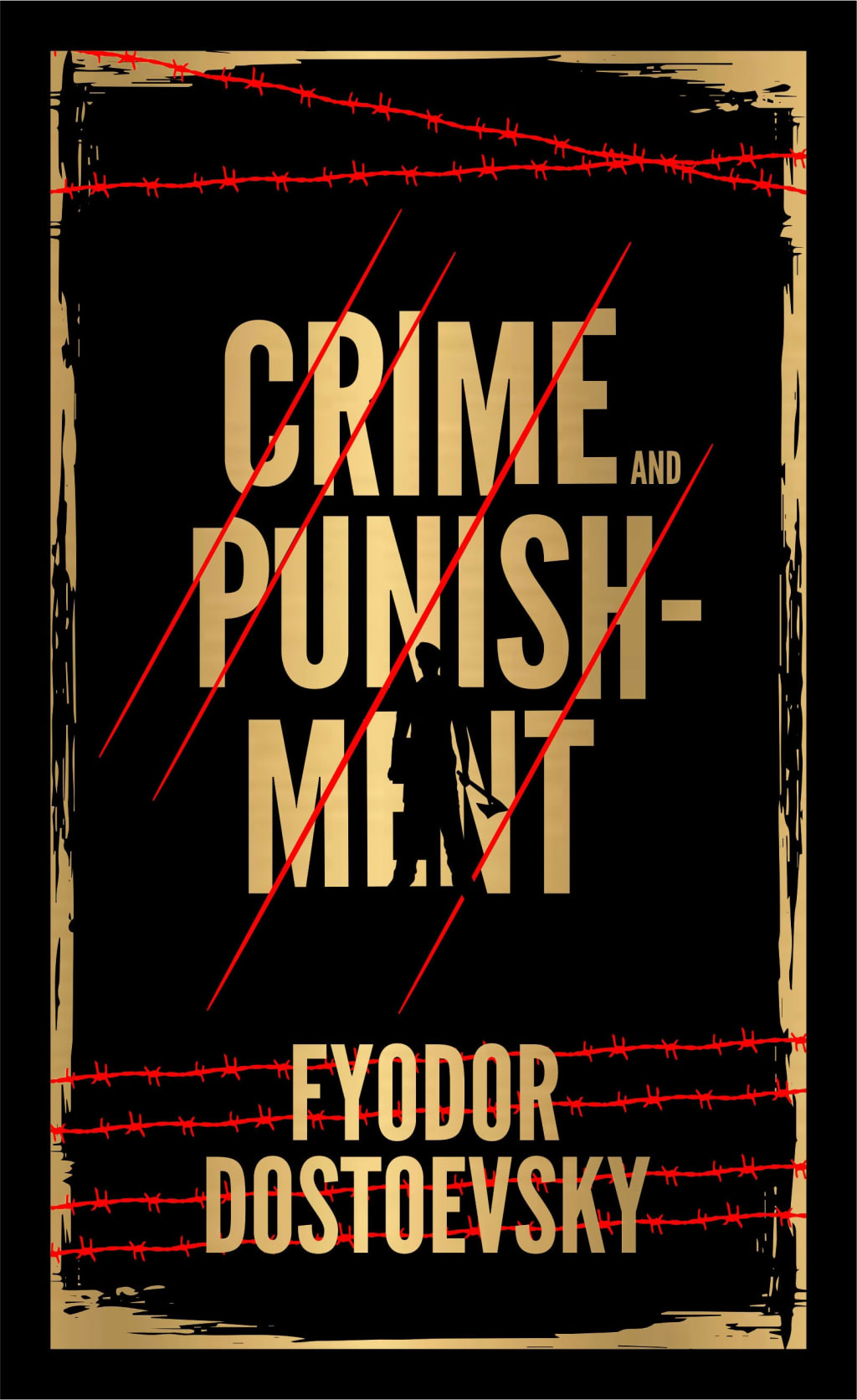
A review of Crime and Punishment by Dostoevsky

Nietzsche’s proclamation that “God is dead, and we have killed him” is more than a mere rejection of religious belief—it signals the collapse of a transcendent moral order that once governed human thought and behaviour. This existential void, created by the decline of religious meta-narratives, has given rise to a moral vacuum in which individuals are now burdened with the task of generating meaning from nothing or a vague term of "humanity" but then, according to a French philosopher, Proudhon in “The Concept of the Political” he writes that “Whoever invokes humanity, wants to cheat”. Without the scaffolding of divine commandments or universal moral truths, the individual becomes the architect of their own ethical framework—what Nietzsche calls the "Übermensch," the one who transcends herd morality and redefines values in the wake of divine absence.
In Crime and Punishment, Raskolnikov embodies an existential crisis in a world devoid of metaphysical grounding. A destitute law student torn between utilitarian logic and a fragmented conscience, he rationalises the murder of the pawnbroker, whom he perceives as a parasitic figure, as an act of liberation—a step towards transcending conventional morality. This act is more than a crime; it is a philosophical wager, an attempt to become Nietzsche’s Übermensch, one who creates value in the absence of God. However, the aftermath exposes the chasm between abstract reason and lived moral reality. His guilt, more than psychological, is metaphysical—the murder does not elevate him; it dismantles him.
Dostoevsky, sceptical of cold rationalism and deeply influenced by Orthodox Christianity, shows that the human soul cannot endure the weight of godhood. Raskolnikov doesn’t destroy old morality to forge a new one; he merely awakens to the moral law still etched in his being. As Dostoevsky writes in The Idiot, “men hate nothing more than being called ordinary,” and Raskolnikov’s delusion of being extraordinary collapses under the burden of conscience. His rationalisations crumble; the money he hides remains untouched, buried not only in the earth but in the muddy depths of his fractured self. In the end, he is not beyond good and evil—only tragically human.
Ultimately, Raskolnikov's arc illustrates that when individuals attempt to replace divine moral authority with their own, they risk a descent not into godhood, but into alienation. In trying to transcend the moral order, he becomes ensnared in it. His journey is not one of liberation, but of return—through suffering and confession, he must confront the terrifying, yet redemptive, reality of human fallibil
About the Creator
Reader insights
Nice work
Very well written. Keep up the good work!
Top insights
Compelling and original writing
Creative use of language & vocab
Easy to read and follow
Well-structured & engaging content
Excellent storytelling
Original narrative & well developed characters
Expert insights and opinions
Arguments were carefully researched and presented
Eye opening
Niche topic & fresh perspectives
Masterful proofreading
Zero grammar & spelling mistakes
On-point and relevant
Writing reflected the title & theme
7 Best Historical Fiction Books In 2026
Historical fiction has a rare power: it transports us across time while illuminating timeless truths about humanity. Through richly imagined characters and meticulously researched settings, the best historical fiction novels allow us not just to learn history, but to feel it. We walk alongside soldiers, queens, rebels, healers, and ordinary people caught in extraordinary moments—discovering how their choices echo into our own lives.
By Diana Meresc3 days ago in BookClub




Comments (2)
True
Well reviewed