
The future of global democracy
Redefining Freedom, Power, and Equality in a Changing World
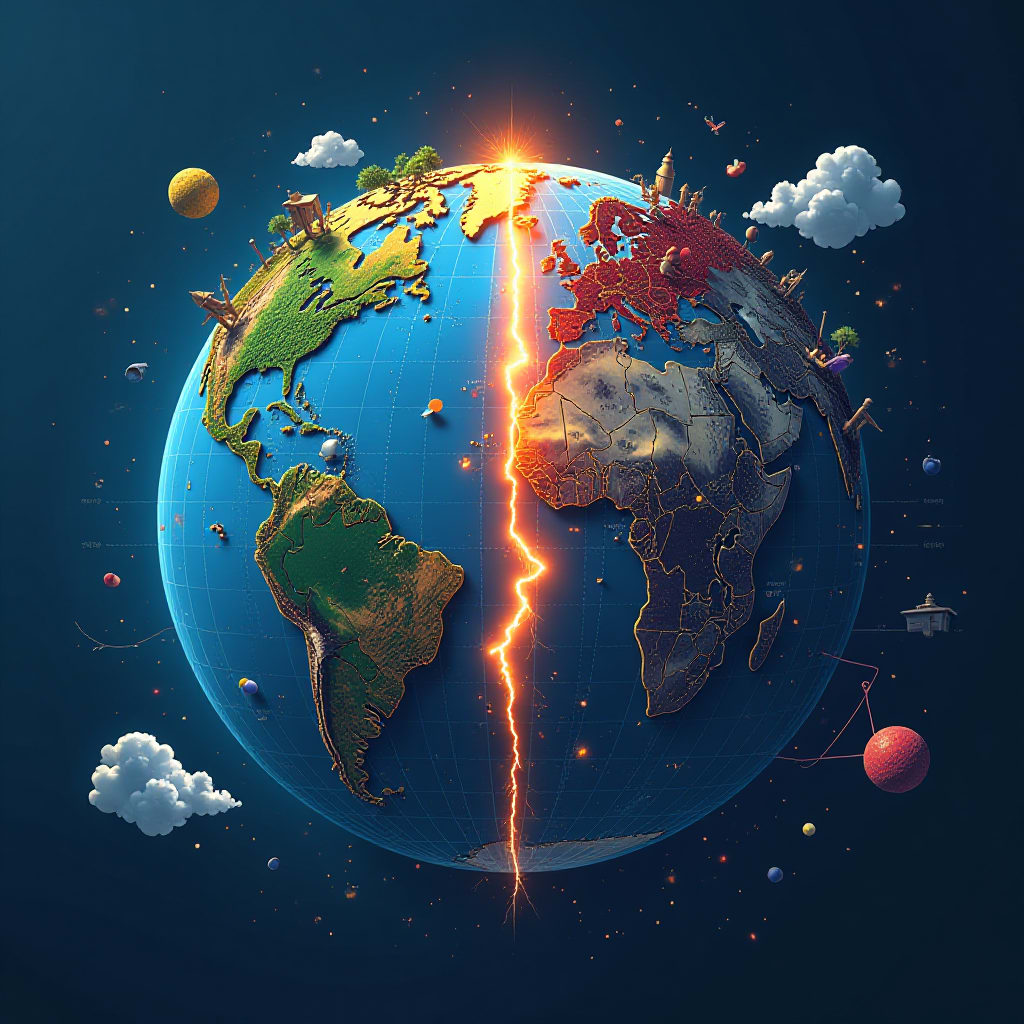
In a rapidly changing world, the future of global democracy is an urgent and complex issue. Democracy, long hailed as the most effective system of governance, faces new challenges in an increasingly interconnected, technologically advanced, and polarized world. From the rise of populist movements to the influence of social media, from the threat of authoritarian regimes to the growing impact of climate change, the trajectory of global democracy is uncertain. As the global political landscape evolves, the future of democracy will likely be shaped by a combination of internal and external forces that will test the resilience of democratic institutions and ideals.
The Current State of Democracy
Democracy, in its classical sense, is founded on principles of political participation, individual freedoms, the rule of law, and equality. In the 20th century, the spread of democratic ideals led to the formation of democratic governments in countries across the globe, particularly following World War II. The collapse of the Soviet Union in 1991 was seen as a triumph for liberal democracy, and scholars like Francis Fukuyama famously predicted that the world was witnessing "the end of history" with the global spread of democracy.
However, in recent years, this optimism has waned. Democracy is facing a backslide in several parts of the world. In established democracies, disillusionment with political elites, economic inequality, and ineffective governance has led to a rise in populism. Leaders who challenge the principles of liberal democracy have gained power in countries like Hungary, Poland, and Turkey. In authoritarian regimes, leaders have found new ways to tighten control, often under the guise of democratic legitimacy. The notion of democracy as a universally applicable system is being questioned.
At the same time, new forms of participation and engagement are reshaping democratic practices. Technology, particularly social media, has empowered citizens to engage with politics in real-time, but it has also amplified misinformation, polarization, and the influence of special interests. The balance between democratic ideals and the challenges posed by modern society is delicate and uncertain.
The Role of Technology in Shaping Democracy
One of the most significant factors influencing the future of global democracy is the impact of technology. The rise of the internet, social media, and artificial intelligence has revolutionized how people engage with politics. Social media platforms like Twitter, Facebook, and Instagram have provided new ways for citizens to voice their opinions, organize protests, and challenge governmental policies. The Arab Spring is a prime example of how social media can enable democratic movements, allowing ordinary citizens to organize and mobilize against authoritarian regimes.
However, technology also poses significant challenges to democratic institutions. The spread of disinformation, fake news, and echo chambers on social media has eroded trust in traditional media and governmental institutions. Political polarization is exacerbated by algorithms that prioritize content that confirms pre-existing beliefs. The role of social media in influencing elections, from the U.S. presidential election to Brexit, has raised concerns about the integrity of democratic processes.
Moreover, the increasing power of big tech companies has led to calls for regulation. Many argue that these companies hold too much power over public discourse and the flow of information. The lack of accountability in the tech industry presents a challenge to democratic norms, as tech giants often prioritize profit over the public good. The future of democracy may depend on how well societies can regulate and harness technology for the benefit of democracy.
The Rise of Populism and Authoritarianism
Another major threat to the future of global democracy is the rise of populist movements and authoritarian leaders. In recent years, populist leaders have gained power in countries such as the United States, Brazil, and the Philippines. These leaders often challenge traditional democratic norms, undermine institutions, and stoke division within society. Populism, while claiming to represent the will of the people, often attacks minority groups and promotes exclusionary policies.
Authoritarian regimes, particularly in Russia, China, and parts of the Middle East, continue to exert influence and challenge democratic ideals. These regimes use tools such as surveillance, censorship, and propaganda to maintain control. In many cases, they present a model of governance that contrasts sharply with Western liberal democracies. In China, the success of the Communist Party under Xi Jinping has led to questions about the compatibility of democracy with economic growth. Some have even argued that China’s rise signals the decline of Western-style democracy.
As populism and authoritarianism gain momentum, the future of democracy will likely be determined by the strength of democratic institutions. In some cases, democracy may be resilient enough to withstand the pressures of populism, but in others, democratic norms may erode, and authoritarianism may take root.
The Global Challenges of Democracy
Democracy's future will also be shaped by broader global challenges, including climate change, economic inequality, and global governance. Climate change presents an existential threat to humanity, and its impact on global democracy could be profound. Disasters such as wildfires, floods, and hurricanes exacerbate existing inequalities and could fuel political instability. In many cases, democratic governments are ill-equipped to address these challenges effectively, leading to frustration among citizens and potential disillusionment with democratic systems.
Economic inequality is another critical issue. In many democracies, the gap between the wealthy and the poor is widening, undermining the foundational principle of equality. If governments cannot address economic disparities, they risk alienating large swaths of the population, which could lead to political instability and a decline in trust in democratic institutions.
Finally, global governance will play a key role in the future of democracy. As the world becomes more interconnected, challenges like pandemics, cyberattacks, and terrorism cannot be solved by individual nations acting alone. Effective global cooperation is essential, but existing international institutions like the United Nations are often criticized for their inefficiency and lack of reform. Strengthening global governance mechanisms could be crucial for addressing global issues while ensuring that democratic values remain at the core of international relations.
Conclusion
The future of global democracy is uncertain, with both opportunities and challenges on the horizon. Technology, populism, authoritarianism, and global crises all play a role in shaping the trajectory of democratic governance. The ability of democracies to adapt to these challenges will determine whether they can survive and thrive in the 21st century.
Ultimately, the future of democracy will depend on the willingness of citizens to actively engage in democratic processes, the strength of democratic institutions, and the ability of leaders to balance freedom, equality, and governance. As the world continues to change, so too will the meaning and practice of democracy—and its future will be shaped by the choices we make today.
About the Creator
My New Book is Finally Here
My poetry collection Beautiful and Brutal Things is done. It's actually done and finally published over 270 pages. Over a year of my life went into this book. More than a year, really. Long days at my computer, sometimes seven days a week because I couldn't stop even when I probably should have. Then two months of editing that felt harder than the writing itself. But it's finished, and I'm still standing, and the book is real.
By Tim Carmichael4 days ago in BookClub
Supporting Tyler Robinson
At only 22 years old, Tyler Robinson now finds himself at the center of a high-profile legal battle that has already drawn widespread attention. As he awaits trial, it is important to remember the foundation of our justice system: every individual is presumed innocent until proven guilty. Tyler, like anyone facing charges, deserves the opportunity to defend himself with dignity, fairness, and adequate resources.
By Organic Products 4 days ago in BookClub



Comments
There are no comments for this story
Be the first to respond and start the conversation.