
The Nature of Consciousness
Exploring the Mysteries of Awareness: What It Means to Be Truly Conscious
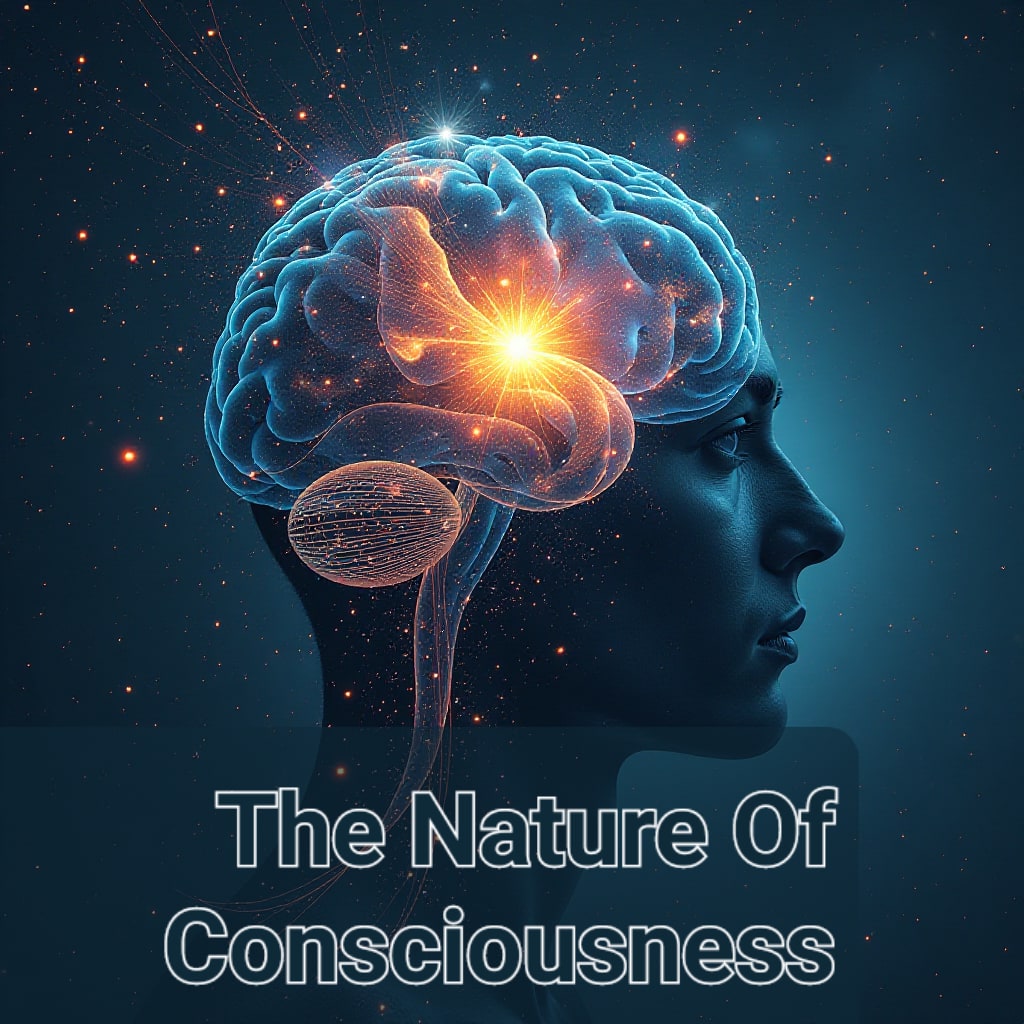
Consciousness is one of the most profound and enigmatic aspects of human existence. It is the state of being aware of and able to think about one’s own existence, sensations, thoughts, and environment. Despite its central role in our experience of the world, consciousness remains a deeply mysterious phenomenon that challenges scientists, philosophers, and theologians alike. Understanding its nature involves exploring both its subjective and objective dimensions, its relationship with the brain, and the ongoing debates over whether consciousness can be fully explained through physical processes or whether it transcends material understanding.
At its core, consciousness involves awareness. This awareness can be both internal, such as thoughts, emotions, and memories, and external, like sights, sounds, and smells. What makes consciousness particularly difficult to study is its inherently subjective quality—what philosopher Thomas Nagel famously called “what it is like” to be a conscious being. No matter how detailed our descriptions of brain activity become, they seem to fall short of explaining the richness of inner experience. This subjective quality, often referred to as “qualia,” is at the heart of the so-called “hard problem” of consciousness, a term coined by philosopher David Chalmers. The hard problem asks why and how physical processes in the brain give rise to subjective experiences.
Neuroscience has made tremendous progress in mapping areas of the brain associated with different aspects of conscious experience. For example, the prefrontal cortex is involved in decision-making and self-awareness, while the visual cortex processes sight. Yet, identifying the neural correlates of consciousness (NCCs) does not fully explain how or why these processes are accompanied by awareness. The mystery persists: why does a particular brain state feel like anything at all?
Philosophers have proposed various theories to grapple with this issue. Physicalist or materialist theories argue that consciousness arises entirely from physical interactions in the brain. According to this view, if we fully understand the brain's mechanics, we will ultimately understand consciousness. On the other hand, dualist theories maintain that consciousness is non-physical and fundamentally distinct from the brain. Renowned philosopher René Descartes famously proposed that the mind and body are separate entities, a perspective that continues to influence certain strands of thought today.
More recently, some theories have emerged that attempt to bridge the gap between the subjective and objective aspects of consciousness. Integrated Information Theory (IIT), developed by Giulio Tononi, suggests that consciousness corresponds to the capacity of a system to integrate information in a unified whole. According to IIT, any system that processes information in a sufficiently complex and interconnected way may have some degree of consciousness. This theory opens up the possibility that consciousness is not exclusive to humans or even animals, but could be present in varying degrees across different systems, including artificial intelligence.
Another modern approach is the Global Workspace Theory (GWT), proposed by Bernard Baars. GWT likens consciousness to a global broadcasting system in the brain, where information from various modules is integrated and made available to the whole system. This theory is compatible with much of what neuroscience reveals and offers a framework for understanding the dynamics of attention, memory, and decision-making in conscious states.
Despite these advances, consciousness continues to raise fundamental questions about identity, free will, and the nature of reality. For instance, if consciousness is entirely the product of physical processes, does that mean free will is an illusion? If machines can someday replicate consciousness, what does that imply about human uniqueness or moral status? These questions are not only scientific but ethical and existential.
In religious and spiritual traditions, consciousness is often regarded as a divine or eternal essence. In Hinduism, for example, consciousness (or "chit") is considered one of the fundamental attributes of the soul. In Buddhism, consciousness is seen as a flowing, ever-changing process rather than a static entity. Such perspectives offer alternative insights into the nature of consciousness that emphasize inner experience and spiritual development over physical explanation.
In conclusion, the nature of consciousness is a deeply complex and multifaceted topic that spans disciplines and worldviews. While science continues to uncover the brain mechanisms that correlate with conscious experience, the subjective essence of consciousness remains elusive. Whether it can ultimately be explained in purely physical terms or requires a fundamentally new understanding of mind and matter is a question that continues to inspire debate, reflection, and wonder. Consciousness, in all its richness, remains one of the greatest mysteries of the universe—and perhaps the key to understanding ourselves.
About the Creator
My New Book is Finally Here
My poetry collection Beautiful and Brutal Things is done. It's actually done and finally published over 270 pages. Over a year of my life went into this book. More than a year, really. Long days at my computer, sometimes seven days a week because I couldn't stop even when I probably should have. Then two months of editing that felt harder than the writing itself. But it's finished, and I'm still standing, and the book is real.
By Tim Carmichael4 days ago in BookClub
The Deal & the Art of the Fake Date
Welcome back to The Chapter Café, where stories are always on the menu and comfort is served by the chapter. I’m your host, Kristen, and today we’re serving up a spicy, slow-burn romance with a side of banter, brainy girls, and hockey boys. On today’s menu? The Deal by Elle Kennedy—a book that proves sometimes the best relationships start with a little pretending.
By Kristen Barenthaler6 days ago in BookClub




Comments
There are no comments for this story
Be the first to respond and start the conversation.