
The Elusive Crown: What Does it Mean to be the Greatest of All Time?
greatest all-time


The Elusive Crown: What Does it Mean to be the Greatest of All Time?
The phrase "greatest of all time," or GOAT, echoes through the halls of sports arenas, resonates in artistic circles, and even sparks fervent debates in fields like science and philosophy. It's a title laden with prestige, a seemingly definitive label bestowed upon those who have reached the pinnacle of their craft. But what truly constitutes the "greatest of all time," and is such a definitive judgment even possible?
The immediate answer often revolves around quantifiable metrics: the most championships won, the highest number of records broken, the most groundbreaking discoveries made. In sports, we point to athletes with unparalleled statistics and dominant careers. In music, we celebrate artists with the most iconic discographies and enduring influence. In science, we hail those whose theories revolutionized our understanding of the universe.
However, the GOAT conversation quickly transcends mere numbers. Subjectivity inevitably creeps in. Style, innovation, impact, and the intangible "it" factor all play crucial roles. Think of the basketball fan who argues for Michael Jordan's unmatched competitive spirit versus the LeBron James supporter citing his all-around dominance in a different era. Consider the music aficionado torn between the lyrical genius of Bob Dylan and the electrifying stage presence of Freddie Mercury.
The context of the era in which an individual achieved greatness also cannot be ignored. Comparing athletes across decades with vastly different training methods, rule sets, and levels of competition presents a significant challenge. Similarly, judging scientific breakthroughs without acknowledging the foundational work of predecessors can paint an incomplete picture.
Furthermore, the very definition of "greatness" can vary depending on individual perspectives and cultural values. What one person deems the most significant contribution, another might view as merely incremental progress. The impact of an individual's work on society, their ability to inspire and transcend their field, often weighs heavily in these discussions.
Perhaps the pursuit of definitively naming a single GOAT is inherently flawed. Instead, we might consider acknowledging a pantheon of greats, individuals who have reached unparalleled heights within their specific contexts and whose contributions continue to resonate across generations. This allows for a more nuanced appreciation of diverse talents and achievements.
Ultimately, the "greatest of all time" remains an elusive crown. While statistics and accolades provide a tangible framework for comparison, the intangible elements of impact, inspiration, and the ever-shifting sands of time make a definitive judgment nearly impossible. The beauty lies in the debate itself, in the passionate arguments and the deep appreciation for the extraordinary individuals who have pushed the boundaries of human potential and left an indelible mark on history. Instead of seeking a single answer, perhaps we should celebrate the multitude of "greats" who have enriched our world in countless ways.
About the Creator
M M Tasib
Life is an untold story.
My New Book is Finally Here
My poetry collection Beautiful and Brutal Things is done. It's actually done and finally published over 270 pages. Over a year of my life went into this book. More than a year, really. Long days at my computer, sometimes seven days a week because I couldn't stop even when I probably should have. Then two months of editing that felt harder than the writing itself. But it's finished, and I'm still standing, and the book is real.
By Tim Carmichael2 days ago in BookClub
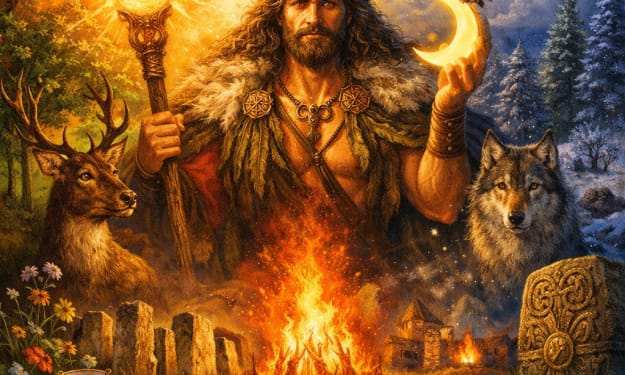
The Horned God: Lord of the Wild
Encountering the Horned God Across Paleolithic cave walls, Neolithic standing stones, Iron Age reliefs, ritual masks, and contemporary devotional spaces, a recurring figure emerges with remarkable consistency. Antlers rise from a human brow. Animal limbs merge with upright posture. Surrounding imagery evokes forests, herds, sexuality, decay, seasonal return, and the tension between cultivation and wilderness. Known in modern discourse as the Horned God, this figure represents one of the most persistent and multilayered symbols within the religious imagination of Europe and the wider Indo-European world.
By Marcus Hedare5 days ago in BookClub



Comments
There are no comments for this story
Be the first to respond and start the conversation.