
The Deliverance True Story
Only on Netflix from August 30th
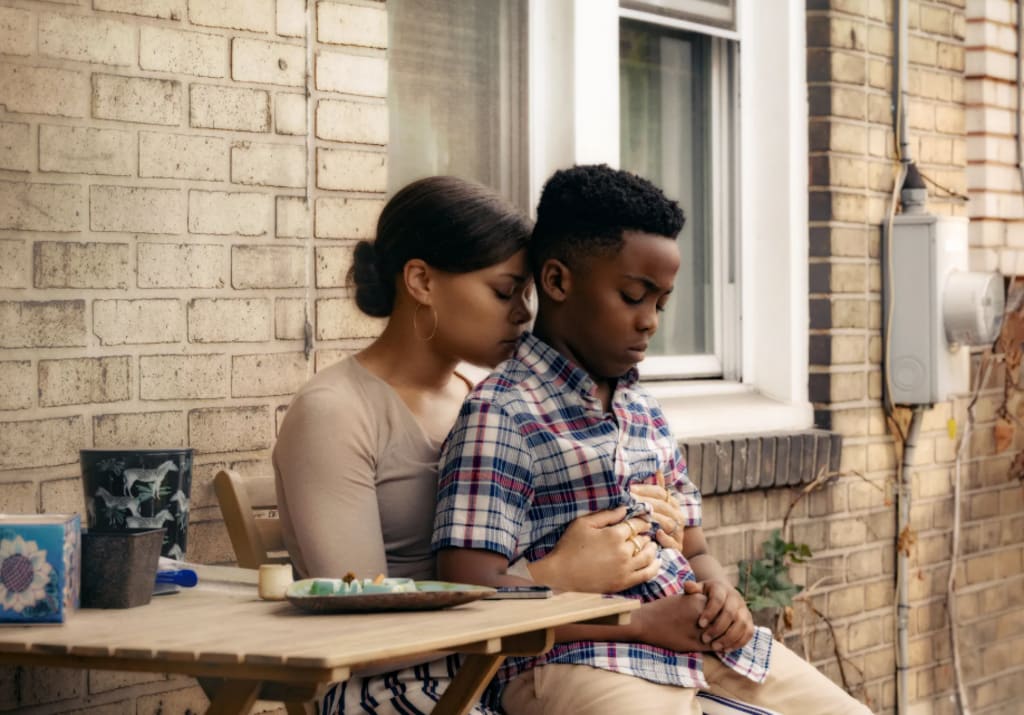
Netflix’s “The Deliverance,” directed by Lee Daniels, is not entirely based on a true story but is loosely inspired by a local family who lived in a haunted house in Gary, Indiana, for about a year. Latoya Ammons, the real-life counterpart of the film’s Ebony Jackson, moved into the old rental house with her mother, Rosa Campbell, and her three children. To protect their identities, the names of these real-life individuals have been changed in the Netflix film, and the location has been altered to Pittsburgh, Pennsylvania, for creative reasons.
The Ammons family moved into what became known as the Demon House in November 2011. Shortly after, they began hearing strange footsteps on the basement stairs and seeing shadowy figures in their living room. Reports also mentioned that the house was swarmed with black flies, similar to the experiences depicted in the film. The cause of these eerie occurrences remains a mystery, although the film attempts to provide a psychological explanation.
After a series of traumatic incidents, the Ammons family vacated the house in June 2012 and moved to Indianapolis to live with Latoya’s brother, Kevin. In real life, Latoya also lost custody of her three children after a Child Protective Services officer reported the situation. However, six months later, in November 2012, she regained custody and was reunited with her family, mirroring Ebony Jackson’s story in the film.
In 2014, professional paranormal investigator Zak Bagans purchased the Demon House from the original landlord, Charles Reed, for $35,000 after learning about it through newspapers and television. Upon arriving at the property, Bagans conducted a series of experiments to uncover the cause of the paranormal activities. Unfortunately, he couldn’t find any solid proof, although many believed the basement was haunted, as suggested in the film.
The local priest, Father Michael Maginot, portrayed as Reverend Bernice James in the film, performed multiple exorcisms on the Ammons family to rid them of the demon, allowing them to move on and start a peaceful life. Father Maginot believed that the previous owners might have performed a conjuring ritual in the basement, accidentally opening a portal to Hell, which led to the demonic presence in the house. The film’s ending portrays a similar demon hole in the basement, implying it was the source of the unnatural occurrences.
During the police investigation, Indiana officer John Grusa recovered a fingernail, a clip-on nail, and some women’s underwear buried under the basement stairs. It seemed someone had been meddling with demonic powers, either accidentally or intentionally unleashing the curse onto the house. Bagans discovered that Latoya had an abusive ex-boyfriend who might have been involved in the hauntings, but he refused to make any statements, leading to a dead end.
In the film, Ebony had been sexually assaulted by her mother’s boyfriend when she was a teenager. She never shared the incident with anyone, not even her mother, but blamed her for years of torment. Ebony’s childhood trauma shaped her character, making her an easy target for the demon. One could also interpret that there was no demon at all and that Ebony was struggling to overcome her own dark thoughts, which she eventually did. In one haunting scene, she imagined a man walking in her bedroom, later revealed to be her sexual assaulter, whom she believed was hiding in the basement.
In his documentary, Zak Bagans brought several people to the property to film the house, but many of them started losing their minds. He also found that anyone who had stepped into the house in the past experienced similar disturbances.
About the Creator
Keep reading
More stories from writers in BookClub and other communities.
My New Book is Finally Here
My poetry collection Beautiful and Brutal Things is done. It's actually done and finally published over 270 pages. Over a year of my life went into this book. More than a year, really. Long days at my computer, sometimes seven days a week because I couldn't stop even when I probably should have. Then two months of editing that felt harder than the writing itself. But it's finished, and I'm still standing, and the book is real.
By Tim Carmichael6 days ago in BookClub
Lessons from the Life of Joseph
Title: Lessons from the Life of Joseph Subtitle: Finding Strength in Trials and Trusting God’s Plan Have you ever felt betrayed, abandoned, or overwhelmed by life’s unfairness? Joseph, one of the most remarkable figures in the Bible, experienced all of this—and yet his story teaches us how patience, faith, and integrity can transform even the darkest trials into blessings. His journey is a timeless reminder that God’s plan often unfolds in ways we cannot immediately understand.
By Nonhlanhla Emogene Mbokane7 days ago in BookClub
How, Too
Many people wonder how, too. You are not alone, and I am an expert. I will teach you how, too! First, you need to remit a small application fee and fill out an application describing the nature of your financial situation and how often payments will be made, as this will have great bearing on how well I teach you how, too.
By Harper Lewis6 days ago in Fiction




Comments
There are no comments for this story
Be the first to respond and start the conversation.