
The Dark Allure of Pennies
Exploring Power, Pain, and Redemption in Pepper Winters’ Dollar Series


Dark romance is a genre that thrives on the razor’s edge of human experience, blending forbidden desires with raw emotion and often unsettling realities. Pepper Winters’ Pennies, the first installment of her Dollar Series, is a masterful example of this provocative niche. Published in 2016, the novel introduces readers to a world where innocence is currency, power is absolute, and redemption is a distant, fragile hope. Through the lens of its central characters-Tasmin Blythe, who becomes Pimlico (Pim), and the enigmatic Elder Prest-Winters crafts a narrative that challenges conventional boundaries of love, morality, and survival. This article delves into the appeal of Pennies, its psychological depth, and its place within the broader landscape of dark romance literature.
A Descent into Darkness
At its core, Pennies is a story of captivity and resilience. Tasmin Blythe, an eighteen-year-old with dreams of a psychology degree and a life shaped by her mother’s rigid expectations, is violently torn from her world on the night of her birthday. Strangled and sold into slavery by a man she naively trusts, she becomes Pimlico-a mute, battered possession of Alrik Äsbjörn, a sadistic millionaire who revels in her silence and suffering. Winters doesn’t shy away from the brutality of Pim’s new reality. The opening chapters paint a vivid picture of her confinement in a dilapidated hotel-turned-prison, where she’s stripped of identity and reduced to a commodity in a sinister marketplace known as the Quarterly Market of Beauties (QMB).
What sets Pennies apart from lighter romance fare is its unflinching portrayal of trauma. Pim’s silence, initially a weapon of defiance against her captors, becomes a literal disability when Alrik, enraged by her refusal to speak, orders her tongue severed. This harrowing moment-interrupted only by Elder Prest’s violent intervention-underscores the novel’s central tension: the battle between victimhood and agency. Winters uses Pim’s internal monologue, scribbled on stolen toilet paper to an imaginary confidant named “No One,” to give readers access to her fractured psyche. These notes are a lifeline, a testament to her refusal to be fully erased, even as her body and voice are stolen.
The Antihero’s Shadow
Enter Elder Prest, a figure as compelling as he is ambiguous. A wealthy thief and businessman with a shadowy past, Elder is no knight in shining armor. He arrives at Alrik’s mansion under the guise of a business deal-constructing a yacht dubbed “Phantom”-but his encounter with Pim shifts the narrative’s trajectory. Unlike traditional romance heroes, Elder is not driven by altruism. He admits to being a villain, a man who steals because he craves it, and his interest in Pim is as much about possession as it is about rescue. When he returns to save her, killing Alrik and his accomplices in a visceral bloodbath, it’s less an act of heroism and more a reclamation of something he deems his.
Elder’s complexity is a hallmark of Winters’ character development. His internal conflict-balancing his criminal instincts with an unacknowledged capacity for empathy-mirrors Pim’s own struggle to retain her humanity. Their dynamic is not a straightforward savior-victim relationship but a tangled dance of power and vulnerability. When Elder carries Pim from the white mansion, drenched in her blood and his promises of ownership, he declares, “You belong to me.” It’s a chilling statement that blurs the line between liberation and a new form of captivity, setting the stage for the series’ exploration of whether true freedom is possible for either of them.
The Psychology of Dark Romance
Pennies taps into the psychological underpinnings that make dark romance so polarizing yet addictive. For readers, the genre offers a safe space to explore taboo emotions-fear, desire, rage-through the lens of fiction. Pim’s journey resonates because it reflects a universal truth: survival often demands adaptation, even at the cost of one’s former self. Her transformation from Tasmin to Pimlico is not just a loss but a rebirth, a shedding of naivety for a steely resolve that Elder both admires and covets.
Elder, meanwhile, embodies the archetype of the wounded antihero, a trope that has long captivated audiences from Heathcliff to modern-day figures like Christian Grey. His past, hinted at through references to a lineage of fighters and thieves, suggests a man forged by hardship, unable to fully escape the darkness he wields. Winters excels at making readers question his motives: Is he Pim’s salvation or her next tormentor? This ambiguity is the novel’s strength, inviting investment in a relationship that defies easy categorization.
The violence in Pennies-graphic and unrelenting-serves a purpose beyond shock value. It’s a mirror to the characters’ inner turmoil, externalizing their pain and forcing readers to confront the cost of power. When Pim pulls the trigger on Alrik, it’s not just revenge; it’s a reclaiming of agency, however fleeting. Elder’s assistance in steadying her hand symbolizes their nascent partnership, one built on mutual recognition of each other’s scars.
The Broader Canvas of Dark Romance
Within the dark romance genre, Pennies stands alongside Winters’ earlier works like the Monsters in the Dark trilogy and the Indebted series, both of which earned her a devoted following and critical acclaim. Her ability to weave complex narratives with emotionally charged stakes has cemented her as a leading voice in the field. Like Tears of Tess, which also features a kidnapped heroine and a morally gray rescuer, Pennies pushes boundaries, asking readers to find beauty in the broken.
Critics of dark romance often argue it glorifies abuse or romanticizes suffering, but fans-and authors like Winters-counter that it’s about resilience. Pennies doesn’t sugarcoat Pim’s ordeal; it lays bare the ugliness of her captivity and the steep price of her freedom. The romance, if it can be called that, is not a fairy tale but a gritty exploration of two damaged souls navigating a world that offers no easy answers.
A Tale Unfinished
As the first book in a five-part series, Pennies ends on a cliffhanger, with Pim bleeding in Elder’s arms, her fate uncertain. The promise of Dollars, Hundreds, Thousands, and Millions looms large, hinting at a journey that will test both characters’ limits. Will Elder’s declaration of ownership evolve into something resembling love, or will it deepen Pim’s isolation? Can Pim reclaim her voice, figuratively and perhaps literally, after such profound loss?
For readers willing to embrace its darkness, Pennies is a gripping introduction to a saga that refuses to play it safe. It’s a testament to Winters’ skill that she can take a premise so bleak and infuse it with moments of raw, unsettling hope. The novel’s power lies in its refusal to offer tidy resolutions, instead leaving us to ponder the cost of survival and the price of connection in a world ruled by monsters. Whether you see Elder as a thief of souls or a reluctant savior, one thing is clear: Pennies is not just a story-it’s an experience that lingers long after the final page.
About the Creator
KWAO LEARNER WINFRED
History is my passion. Ever since I was a child, I've been fascinated by the stories of the past. I eagerly soaked up tales of ancient civilizations, heroic adventures.
https://waynefredlearner47.wixsite.com/my-site-3
Keep reading
More stories from KWAO LEARNER WINFRED and writers in BookClub and other communities.
The Green Hat: A Tale of Tragedy and Redemption
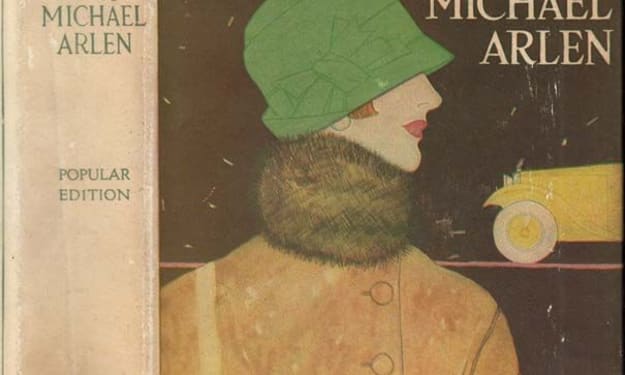
Michael Arlen’s The Green Hat, first published in 1924, is a novel that captures the restless spirit of the post-World War I era, a time when societal norms were shifting, and the scars of war lingered in the hearts of many. Set against the backdrop of 1920s London, this dramatic tale weaves together themes of love, betrayal, and self-destruction, all embodied in the enigmatic figure of Iris Storm, the woman in the titular green hat. Arlen, an Armenian-born writer who wrote the novel in English, crafted a story that resonated deeply with its audience, becoming a bestseller and even inspiring a play in 1925. Through its vivid characters and emotional depth, The Green Hat offers a poignant exploration of human fragility and the search for meaning in a world that often feels indifferent.
By KWAO LEARNER WINFRED10 months ago in BookClub
My New Book is Finally Here
My poetry collection Beautiful and Brutal Things is done. It's actually done and finally published over 270 pages. Over a year of my life went into this book. More than a year, really. Long days at my computer, sometimes seven days a week because I couldn't stop even when I probably should have. Then two months of editing that felt harder than the writing itself. But it's finished, and I'm still standing, and the book is real.
By Tim Carmichaela day ago in BookClub
Golden's Bridge Mom Hangs in There with New Book on Raising Teenagers
See John Jay Crowd Shots and all Winter Photos Below When Ali Flynn became an empty nester in September 2025, it wasn’t the sight of her twins leaving that brought finality. Out food shopping, the mother of four realized that she had no idea how much broccoli to buy. “I started crying,” Flynn remembered. Broccoli obviously not the point, the feelings are, and the angst and joy of raising teenagers is meant to be shared as a form of support. So that’s just what the Golden’s Bridge mom has done.
By Rich Monetti8 days ago in BookClub



Comments
There are no comments for this story
Be the first to respond and start the conversation.