
the art of war
Sun Tzu is credited with authoring the classic Chinese work "The Art of War,"

which is thought to have been composed in the fifth century BCE. This classic text is a wellspring of wisdom that has been used in many facets of life, including business and leadership, in addition to being a treatise on battle and strategy. We will examine the major ideas and tenets offered in "The Art of War" in this 2000 word synopsis.
Introduction
"The Art of War" is a thorough manual on strategy and tactics that provides insights into the dynamics of war and the fundamentals of effective leadership. Although it was created as a guide for military commanders, its lessons have transcended the battlefield and have been embraced by people and organisations trying to deal with hardship and competition.
Before starting any fight, Sun Tzu lays out five important elements that should be taken into account. These elements are:
The Way (Tao) is the term used to describe the moral and ethical path that ought to direct a leader's actions. Sun Tzu emphasises the value of honesty, sagacity, and justice in leadership.
Heaven (Tien): This element stands for the impact of environmental factors, such as the topography and weather, on a conflict's conclusion. Success depends on being aware of and capable of adjusting to these circumstances.
Earth (Di): Earth represents the material and natural components of conflict. This includes any potentialcampaign-affecting topography, resources, and logistical factors.
(The Commander): shih The traits and skills of the leader are crucial in deciding success or failure. Sun Tzu emphasises the value of leadership, which includes traits like vision, initiative, and adaptability.
Discipline and methodology (Fa and Chih): This aspect has to do with the methods and techniques used in battle, as well as the organisation and discipline of the troops. Sun Tzu stresses the need of adaptability and the capacity to modify one's strategies in response to shifting battlefield conditions.
The Principles of Strategy
The foundational ideas that make up the heart of Sun Tzu's strategic theory are as follows:
The Flexibility Principle: Sun Tzu places a strong emphasis on the value of flexibility and the capacity to react to changing situations. He suggests that one should create an adaptable plan that can be changed when the circumstance changes.
The Deception Principle: Misdirection and deception are crucial elements of strategy. Sun Tzu encourages the employment of strategies that deceive and outmanoeuvre the adversary, presenting chances for success.
The Speed Principle: In battle, having a quick decision-making and execution process can be quite advantageous. Sun Tzu advises taking quick, resolute action to surprise the opponent.
The Economy of Force Principle : recommends focusing resources and efforts in strategic locations to produce the most impact while conserving resources elsewhere.
The unity of command principle: states that in order to prevent misunderstanding and ensure coordinated action, only one person should be in charge of the entire operation.
The principle of surprise : states that sudden strikes or actions can throw the enemy's plans for a loop and cause confusion, giving you a tactical edge.
The Law of Terrain: It is essential to comprehend the terrain and take advantage of it. Sun Tzu suggests picking battlegrounds that are advantageous to your armies and provide tactical advantages.
The Morale Principle: Success depends on maintaining one's own troops' morale while eroding the enemy's. Demoralised troops are more likely to struggle in battle.
The Espionage and Intelligence Principle: Acquiring knowledge about the objectives, capabilities, and weaknesses of the adversary is essential for making wise choices.
The Art of War in Practice
Sun Tzu's ideas go beyond mere theory; they provide helpful advice for succeeding in a variety of endeavours, including business and leadership. Here are some examples of how these ideas can be put to use outside of the battlefield:
Know Yourself and Your Competition: Sun Tzu's advice to know one's own strengths and weaknesses has practical business applications. A business has to understand its strengths and position in the market, as well as conduct a detailed analysis of its rivals.
The relationship between strategy and adaptability : is highlighted by the flexibility principle. Companies must be willing to modify their tactics to reflect shifting consumer preferences and market realities.
Innovation and deception: In a cutthroat business environment, businesses frequently use tactics to outwit competitors. This could entail launching new goods, expanding into untapped markets, or using marketing initiatives to feign a competitive edge.
Decision-Making and Pace: In a market that is changing quickly, firms might gain an advantage by making decisions and acting quickly. Missed opportunities can result from delaying critical decisions.
Resource Allocation: In business, resource allocation follows the economy of force principle. While keeping an eye on cost management, businesses should concentrate their resources on areas that will have the biggest influence on their goals.
Leadership and Morale: Maintaining employee morale and providing effective leadership are essential in company. A motivated and integrated team has a higher chance of succeeding.
Market intelligence : is crucial for corporate success. It should be gathered and analysed. Making strategic judgements is aided by knowledge about consumer patterns, rival tactics, and emerging technologies.
Sun Tzu's Legacy
In the areas of strategy, leadership, and management, "The Art of War" has had a profound effect. Military leaders, business executives, and those looking to succeed in numerous fields have learned and used its concepts.
Because of the book's emphasis on strategy, adaptability, and the value of leadership traits, it is a useful tool for anyone trying to survive in challenging situations with intense competition. The principles of Sun Tzu have been incorporated into corporate management philosophies, business strategy classes, and leadership development programmes.
Sun Tzu's "The Art of War" is still a relevant and significant work that goes beyond its background as a military manual. Its enduring concepts are applicable to a wide range of endeavours outside of warfare and provide insightful perspectives on leadership, strategy, and the dynamics of competition. Sun Tzu's wisdom is still useful today for individuals looking to succeed in a world full of chances and challenges, whether applied to business, politics, or personal development.
About the Creator
kieran mc
i am a young entrepreneur ready to take on life to the fullest and give my all
Keep reading
More stories from writers in BookClub and other communities.
My New Book is Finally Here
My poetry collection Beautiful and Brutal Things is done. It's actually done and finally published over 270 pages. Over a year of my life went into this book. More than a year, really. Long days at my computer, sometimes seven days a week because I couldn't stop even when I probably should have. Then two months of editing that felt harder than the writing itself. But it's finished, and I'm still standing, and the book is real.
By Tim Carmichael2 days ago in BookClub
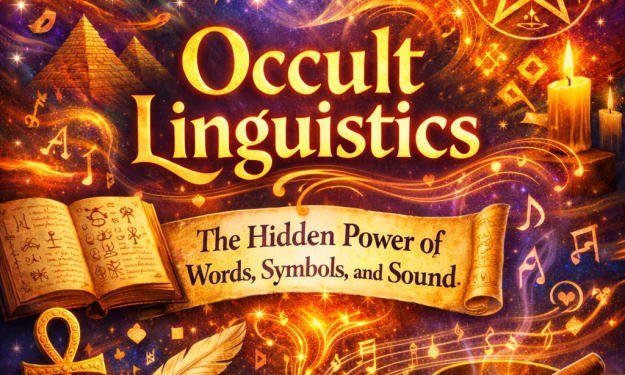
Occult Linguistics
The Hidden Architecture of Sacred Language Occult linguistics occupies a distinctive intellectual and spiritual territory where language is understood as an active, formative force rather than a passive vehicle for meaning. In this framework words, letters, sounds, and symbols are treated as living structures capable of shaping perception, consciousness, and reality itself. Language functions not only as representation but as participation, embedding human thought within cosmological, ritual, and metaphysical systems that have developed over thousands of years. Across esoteric traditions language is regarded as an extension of creation, a medium through which invisible principles become perceptible and operative.
By Marcus Hedare3 days ago in BookClub



Comments
There are no comments for this story
Be the first to respond and start the conversation.