Theme
"The Symphony of Compassion"
In a world where emotions manifested as vibrant colors and harmonious melodies, lived a young woman named Lyra. Born with a unique gift, Lyra could hear the music of people's hearts and see the colors of their emotions. Her days were filled with the kaleidoscope of human sentiments, from the joyous crescendos of laughter to the melancholic notes of sorrow.
By JOHN JOEL STEPHEN C.ORBISO2 years ago in BookClub
The case of the laughing banana
In the strange town of Giggleville, detective Barry Peel had a reputation for cracking the strangest crimes. But nothing would have prepared him for the events of "The Case of the Laughing Banana." The strange incident was first reported by Mrs. Thompson, the local grocery shop owner, one sunny morning.
By IBRAHIM JAFAR2 years ago in BookClub
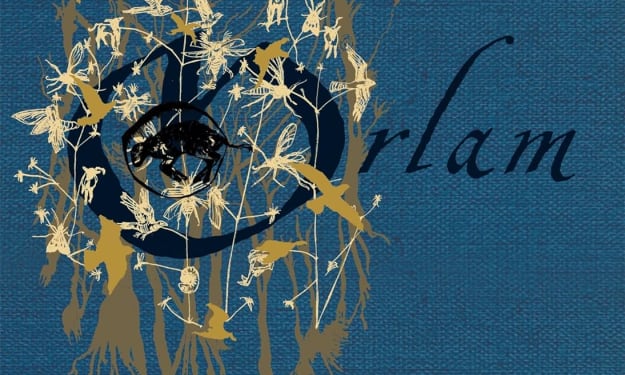
Reading Orlam
Introduction For my birthday I got the Polly Jean Harvey book "Orlam". I was a little confused about it at first, but now it has revealed itself to me and I am enjoying exploring the worlds and magical mythical creatures and people that are described here.
By Mike Singleton 💜 Mikeydred 2 years ago in BookClub
Whispers of the Whispering Sisterhood
Deep in the middle of the misty Blackwood Forest, a group of witches called the Whispering Sisterhood had gathered on a moonless night. They were the keepers of an ancient mystery, the custodians of a power long forgotten by the world. The air was heavy with anticipation as we gathered under a tall tree with centuries-old yew trees.
By Sadia Mukhtar2 years ago in BookClub
Utopia Is Unachievable
In Lois Lowry's The Giver, the pursuit of perfection leads to the revelation that by creating a seemingly utopian world by eliminating suffering, more is lost than gained. The narrative traces the experiences of a twelve year-old protagonist who seeks to overcome the control imposed upon him by his totalitarian government and bring back the vibrancy and uniqueness that once existed. By trying to pursue such Utopian ideals, their society is stripped of diversity and individuality. Similarly, Lowry depicts a world that is heavily monitored and regulated. All the citizens are easily manipulated and conform to the numerous rules that they are presented with. Whilst majority of the community is oblivious to the sinister side of their seemingly utopian world, the protagonist has access to memories of the past and is faced with immense pain and the deep knowledge of their dystopian world.
By Aashini Rastogi2 years ago in BookClub
#Norsevember
Do you read Norse books? Then I'm happy to introduce Norsevember, a reading event in which we talk about, recommend, read and review Norse inspired books! Started by Alex of Spells and Spaceships in 2020, it was born after he thought to dedicate a month to read and review Norse books, and others on Twitter expressed their enthusiasm to do the same.
By Marie Sinadjan2 years ago in BookClub
Orlam
Introduction This year for my birthday Fiona bought me the new PJ Harvey album "I Inside The Old Year Dying" and then found that there was a linked book "Orlam" so I got that as well. I love everything that Polly Jean does, even though I don't have everything she has done.
By Mike Singleton 💜 Mikeydred 2 years ago in BookClub
"The Art of Laughter: Unearthing Comedy in Everyday Life"
"Have you ever taken notice of how numerous jokes commence with the phrase, 'Have you ever noticed?' And what's up with, 'What's the deal?' There's an abundance of humor hidden in the everyday, mundane aspects of life that we usually overlook. So, if you're aiming to inject some levity into your tale, presentation, or screenplay, here are a few tips and techniques for unearthing the comical. All exceptional storytelling, comedy writing included, is made up of a handful of fundamental ingredients: who, what, when, where, why, and how. Writers have been probing these questions since at least the 1st century BC, and none of them can be addressed with a mere 'yes' or 'no.' They crave details, and the more precise those details are, the more amusing the narrative becomes. Let's kick off with the 'who,' the comical character. Think about the books, TV shows, and films that tickle your funny bone. They typically feature amusing archetypes. The know-it-all, the endearing underdog, the terrible boss, the neurotic, the scatterbrain. Interestingly, these are all stock characters hailing from Commedia Dell'Arte, the artistic comedy of the late Renaissance Italy, and they've yet to lose their charm. The Commedia principle for crafting comedic characters is simple: find the flaw, then magnify it. Alternatively, you can experiment with opposites. When the smartest person in the room commits the silliest blunder, or the goofball outsmarts the genius, our laughter is triggered because we didn't anticipate it. The ancient Greek humorist Aristotle is reputed to have asserted, 'The key to humor is surprise.' This surprise, or incongruity theory of humor, posits that we laugh at things that appear out of place or defy our expectations, such as a frog dating a pig, a lizard peddling insurance, a baby grooving to disco, a nun dancing to disco, or a feline showcasing any disco-related moves. Actually, just a baby, a nun, or a cat doing pretty much anything, especially involving disco. One fun way to identify incongruities is by forming connections, literally drawing them in a mind map. Begin small; select a word, let's say 'pickle,' jot it down, and then as swiftly as possible, establish connections. What do pickles bring to mind? Who savors pickles? What cherished pickle-related recollections from childhood do I have? Another excellent method for generating comedic content is shifting from observation to imagination. Transition from 'what is' to 'what if.' For instance, what if instead of a horse, you had a pair of coconuts? Now, envision some memorable moments in history, literature, or film and consider how they'd unfold if coconuts were involved. Allow your imagination to run wild, even if an idea seems overdone, too apparent, or just plain daft, jot it down nonetheless. What seems evident to you might not be to someone else, and the most foolish idea could unexpectedly turn out to be the cleverest. Speaking of real-life absurdities, have you ever noticed how much comedy revolves around the exasperating, infuriating, and mortifying experiences we encounter? Will Rogers once quipped, 'Everything is funny as long as it happens to somebody else.' So, if you're having a dreadful morning, imagine it happening to a character you're crafting, and by the afternoon, you might have a humorous story to tell. After you've delineated your characters and plot, here are a few swift and simple comedy writing techniques to make them sizzle. The 'rule of three' or 'zig-zag.' Experiment with setting up an anticipated pattern (zig-zig), then subvert it (zag). A rabbi, a priest, and a coconut stroll into a bar. The 'punchline rule' suggests placing your punchline at the end of the sentence. A rabbi, a priest, and a coconut sashay into a disco. This leads us to the 'rule of K.' For some reason, words with a 'k' sound tend to tickle our ears and are deemed comical. Coconut, disco, pickles, crickets? Well, we don't always elicit a chuckle. Humor is subjective, comedy is an experiment, and writing is all about revising. Keep on trying. Discover the imperfections, uncover the details, introduce incongruities, incorporate 'k' words, and bear in mind the most pivotal rule for crafting comedy: relish the process. As Charles Dickens once mused, 'There is nothing in the world so irresistibly contagious as laughter and good humor.' And disco."
By Alisa İnnokate2 years ago in BookClub
Gallery of Whispers
In the heart of an ancient city, hidden away from the bustling streets and flashing neon lights, there stood a modest yet enigmatic gallery. It was known as the "Gallery of Whispers," a sanctuary for art lovers and seekers of forgotten tales. This is the story of a unique gallery where every brushstroke and sculpture was imbued with the power to unlock the secrets of the past.
By Rajesh kumar 2 years ago in BookClub
"Unlocking the Enigma: The Mysteries of the Voynich Manuscript"
Nestled within the hallowed confines of Yale University's Beinecke Rare Book and Manuscript Library lies an enigmatic relic—an exclusive copy of a 240-page tome. Recent carbon dating, with estimates around 1420, reveals vellum pages graced with mesmerizing, dream-like illustrations and a flowing script that defies interpretation. This singular manuscript, measuring 24x16 centimeters, goes by the name of the Voynich manuscript, and it ranks among history's most inscrutable enigmas. The enduring riddle? No one has yet unlocked its meaning.
By Alisa İnnokate2 years ago in BookClub