Author
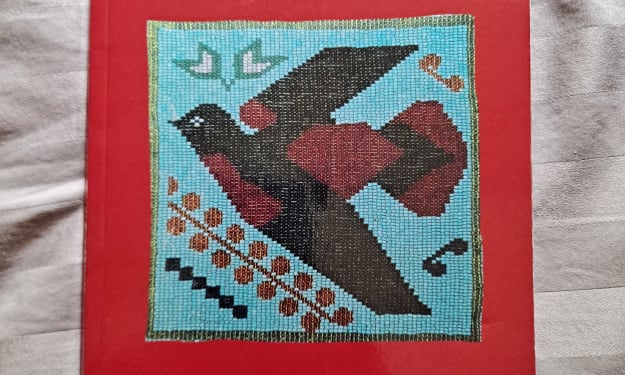
The Indians of Hungry Hollow
In my book collection, I often visit this book. I won't use it as a primary source but one I would go to in order to investigate the inner families dynamics of the Native Americans. Bill Dunlop and Marcia Fountaian-Blacklidge collaborated to record the stories of his youth.
By Sheila L. Chingwa3 years ago in BookClub
A book that had a profound effect on me.
When you live a busy lifestyle, it may be difficult to shake the feelings of worry and anxiety that come along with it. Reading, on the other hand, has been shown to really aid reduce feelings of stress. Not only that, but it also has the potential to assist you in having a more restful night's sleep.
By Jacob Damian3 years ago in BookClub
Review On The Book "1984" by George Orwell
Introduction When it comes to classic literature that has left an indelible mark on both the literary world and the collective consciousness of society, "1984" by George Orwell undoubtedly takes a prominent position. This dystopian novel, published in 1949, has managed to remain relevant and thought-provoking throughout the years. In this review, we will delve into the captivating world Orwell has created and explore the profound themes that continue to resonate with readers today.
By Ashir Hassan3 years ago in BookClub
Unveiling Potential: A Tale of Transformation and Inspiration
Mia had always possessed a brilliant mind, but her enthusiasm for school was nearly non-existent. She trudged through each day with a heavy heart, rarely seeing the purpose in the assignments and lectures that unfolded before her. While her classmates eagerly engaged in discussions and projects, Mia remained on the periphery, her lack of motivation casting a shadow over her potential.
By Punit kumar3 years ago in BookClub
Tombs of the Kings
In the heart of the scorching Egyptian desert, the legendary tomb of King Tutankhamun lay hidden beneath layers of shifting sands. The air was thick with anticipation as a team of archaeologists and adventurers gathered at the entrance of the tomb, their faces a mixture of excitement and trepidation. The tale of King Tut's tomb had spread like wildfire, promising untold treasures and ancient mysteries waiting to be unraveled.
By mostafa ali3 years ago in BookClub
Rich Dad Poor Dad" by Robert Kiyosaki (Summary)
Certainly! "Rich Dad Poor Dad" by Robert Kiyosaki is a financial self-help book that contrasts the perspectives of two father figures on money and investing: the author's biological father (referred to as "Poor Dad") and his best friend's father (referred to as "Rich Dad"). The book is rich with insights into financial education, entrepreneurship, and wealth-building strategies. Here's a summary of some key chapters:
By Abbaty Sambo3 years ago in BookClub
Savouring a Personal Feat With The Booker Prize Winners
To say I love reading probably sounds trite and clichéd. Who doesn’t? you might be tempted to ask. However, perhaps I am obsessed with books, both fiction and non-fiction, and so took a keen interest in the British Booker Prize award some years ago. It soon became obvious that only certain people became judges - the known literati - who then chose the books in their own image, likeness and opinions of what deserved to win. Often I gazed wistfully at the growing list of winners wondering when I would see someone like me as a Booker recipient. I just couldn’t imagine how long I would have to wait.
By Elaine Sihera3 years ago in BookClub
I DID NOT ASK TO BE HERE.
Is it preferable not to have existed? Some people think it would be better if there was no conscious life at all. The philosophical position known as antinatalism holds that procreation constitutes moral evil. Therefore, we ought to steer clear of it. Some antinatalists believe that just humans should stop having children, while others argue that it would have been better for all sentient beings if they had never existed. But isn't it wrong to be against childbirth? Why would somebody be opposed to the development of new life? David Benatar is one of the most well-known antinatalist thinkers of our time. Instead, Not to Have Been, one of the books he wrote, contains a thorough explanation of his antinatalist beliefs. Benatar contends that creating new sentient life is always evil because doing so causes grave harm. Therefore, the most beneficial thing we may do for our future offspring is to avoid procreation because those who haven't been born aren't subject to the pain of life. His antinatalist stance is, therefore, not motivated by a dislike for sentient creatures. It is motivated by compassion because it wants to stop the inevitable misery of being born. Antinatalism is a contentious issue that conflicts with many people's worldviews. The general public likely opposes antinatalism since they view it as misanthropic. After all, isn't destroying all sentient life to alleviate suffering a bit harsh?
By Ian Sankan3 years ago in BookClub