Analysis
ESFP Nikolai Gogol's DEAD SOULS
Through the gates of the hotel in the gubernatorial city of NN entered a rather beautiful, modest, steel spring-suspended, horse-drawn carriage, in which unmarried men travel: retired lieutenant colonels, staff captains, estate owners possessing approximately a hundred peasant souls -- in short, all of those who are called the gentlemen of the middle class. In the horse-drawn carriage was seated a gentleman, not good-looking, but not bad-looking either, neither too fat, nor too thin; one could not say that he was old, but that's not to say that he was young. His arrival inside the city did not produce any hubbub whatsoever and was not accompanied by anything conspicuous; merely a couple of Russian peasants who stood outside the entrance of the tavern opposite the hotel, and who made some remarks that, incidentally, had more to do with the carriage than the man seated in it.
By ANTICHRIST SUPERSTAR2 years ago in BookClub
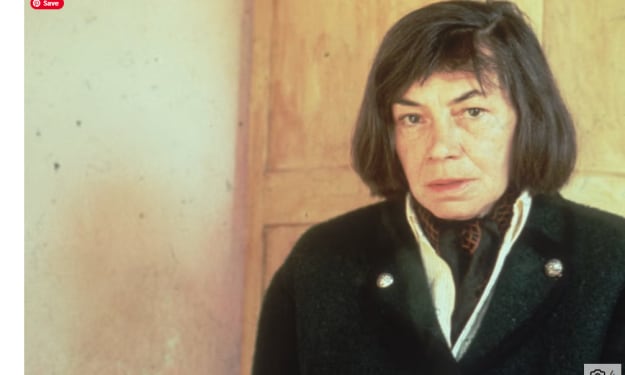
"A murder is a form of intimate bonding": The peculiar life of Patricia Highsmith, the writer of The Talented Mr. Ripley
Someone like Patricia Highsmith wrote about antiheroes. Consider Tom Ripley, the "suave, agreeable, and utterly amoral" conman who is the main character of her 1955 novel The Talented Mr. Ripley. He travels over Europe by lying, cheating, and killing people, but he manages to win our sympathy in the process. Even over 70 years after he first appeared on the page, he is still incredibly captivating, which is why Ripley, the Netflix TV adaption starring Andrew Scott, is one of the most eagerly awaited films of 2024.
By Francis Dami2 years ago in BookClub
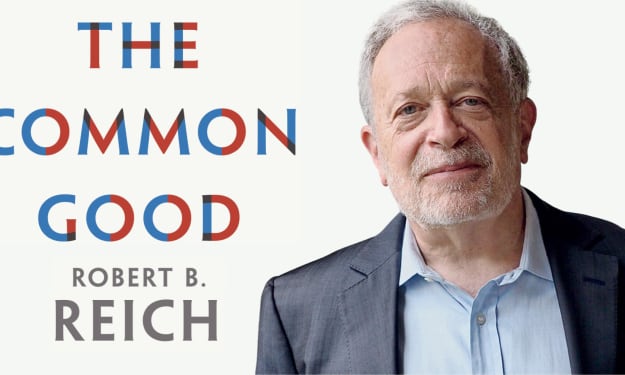
“The Common Good” and Necessarily Lukewarm Left-Politics
Robert Reich’s The Common Good is a good book, and a great book to recommend. It’s nothing revolutionary itself, but for someone who’s attached to some big names in politics (Presidents Clinton, Ford, and Carter), he’s surprisingly more left than center-left. I first noticed him from his Netflix documentary Saving Capitalism, named after his book of the same name. It was a bipartisanish approach at exposing lobbying. It looked at a real problem both sides should be able to agree on, and said, “Shouldn’t something be done about this?’
By R.J. Sikes2 years ago in BookClub
[Analysis] Unique Character Names - Good or Bad?
Recently, someone posed a question in a group I am a part of: is it a good thing or a bad thing when authors craft unique names for their characters? Should authors stick to pronounceable names (e.g., John, James, Margaret) or is it okay for them to craft their own that suit their world (e.g., Legolas, Rhaenyra, Feyre)? This question seems, at its core, to be a simple one. Is the answer not simply 'whatever the author feels is right for their story'? In my opinion, yes and no. When writing a story, and naming characters in that story (assuming said story is for commercial release), one should consider four primary things when naming characters to ensure the reader is engaged in the narrative:
By Meg Ilsley2 years ago in BookClub
The Little Prince - How Did I Miss Out On This Famous Book?
It’s all Bob Fosse’s fault. A few years back I tore through Fosse, the giant tome-of-a-biography about the prolific dancer and choreographer. Within its pages I learned he’d appeared in a film I’d never heard of, 1974’s The Little Prince. The author went on to explain Fosse had a featured role as The Snake, getting to showcase his signature moves himself.
By Joe Guay - Dispatches From the Guay Life!!2 years ago in BookClub