
ROLF DOBELLI CAN TEACH THIS TO YOU
WHY YOU SHOULD READ THE ART OF THINKING CLEARLY BOOK

In this series of numbers, 724, 947, 746, 843, 394, 411, and 054, there is a common digit that appears repeatedly. The digit four occurs in multiple numbers. This is a simple pattern to identify.
Now, let's move to a second series of numbers. In this series, none of the three-digit numbers contains the digit six. This absence of six is the repeating pattern. It may be more challenging to notice, as it's harder to detect an absence than a presence. This concept is known as the feature positive effect.
The feature positive effect suggests that people often focus on what is present rather than what is missing. For instance, when one experiences pain or discomfort, they tend to appreciate the absence of pain once it occurs. Similarly, good-looking individuals may dismiss the importance of looks, while wealthy individuals might overlook the challenges of being financially insecure.
Humans have a tendency to compare themselves to others. It is important to recognize and appreciate what you have that others may not. For instance, being grateful for good health can improve your overall well-being. Listening to the stories of those who have faced struggles can enhance your perspective and maturity.
Let's explore ten questions related to psychology. Respond to them as a game and share how many you answered correctly. The more questions you get right, the more psychologically mature you may be.
Question one: You leave home to go to work and have two scenarios. In scenario A, your tire gets punctured normally. In scenario B, you encounter a construction site, leading to your tire puncturing. Which scenario do you believe is more likely? If you chose scenario B, consider the psychology behind conjunction – having two events is less probable than just one.
Question two: Your grandfather is in pain and faces two treatment options. Option A is surgery from a skilled surgeon, while option B is advice from a family member who had a similar issue. Which option would you choose? Choosing the surgeon highlights the concept of professional deformation, where we trust professionals too much without considering alternative solutions.
Question three: If someone travels to Africa to interact with wildlife, which animal do you think might pose the greatest danger? Logic suggests that we might assume the lion is the most dangerous. However, statistics show that hippos and elephants account for more human deaths, illustrating base rate neglect.
Question four: You have the chance to impress a crush at a party. Would you choose to go with a more attractive friend or someone less appealing? The contrast principle suggests it may benefit you to go with someone less attractive to enhance your appeal.
Question five: In a potential crisis, would you instinctively run with a crowd or stop to assess the situation? This shows the psychology of social proof in our decision-making.
Question six: Author Nassim Taleb wanted to get fit. He thought swimming would give him a swimmer's body, but he learned that professional swimmers already had fit bodies before training. This highlights the swimmer's body illusion.
Question seven: Would you be able to study and answer multiple questions within a limited time frame? Many may struggle with this due to the Tidal Tendency, where people believe they know more than they do.
Question eight: If you purchased a beautiful but troublesome chair, would you sell it for less than what you paid? The sunk cost fallacy often prevents us from letting go of things that no longer serve us.
Question nine: If offered a risky business strategy that may backfire, would you hire someone suggesting it? Be cautious of the idea that things must get worse before they improve.
Question ten: You have a chance to enter a lucky draw by choosing your number for a dollar. Alternatively, you can have a random number generated for free. The illusion of control suggests that individuals may feel they can influence the outcome, even when it’s beyond their control.
Let me know how many questions you answered correctly out of ten.
About the Creator
Keep reading
More stories from Rafsan monir Kousol and writers in BookClub and other communities.
The Blood Moon
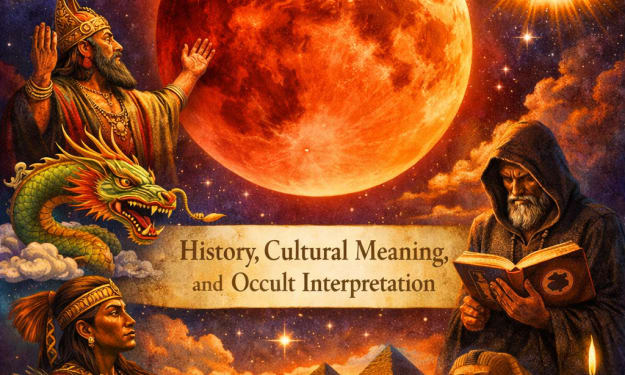
When the Moon Turns Red For millennia, the sudden darkening of the full Moon has stirred awe, fear, reverence, and speculation. A total lunar eclipse transforms a familiar celestial body into something uncanny, as Earth’s shadow slowly overtakes the lunar surface and replaces silver light with deep copper and crimson tones. This phenomenon, commonly called the Blood Moon, occurs through a precise interaction of orbital mechanics and atmospheric physics. Sunlight passing through Earth’s atmosphere bends and scatters, filtering out shorter wavelengths and allowing red and orange light to reach the Moon. The result is neither illusion nor omen, but a predictable yet visually arresting event grounded in natural law.
By Marcus Hedare4 days ago in BookClub


Comments
There are no comments for this story
Be the first to respond and start the conversation.