
"Rebecca" by Daphne du Maurier
Page to Screen Book Club

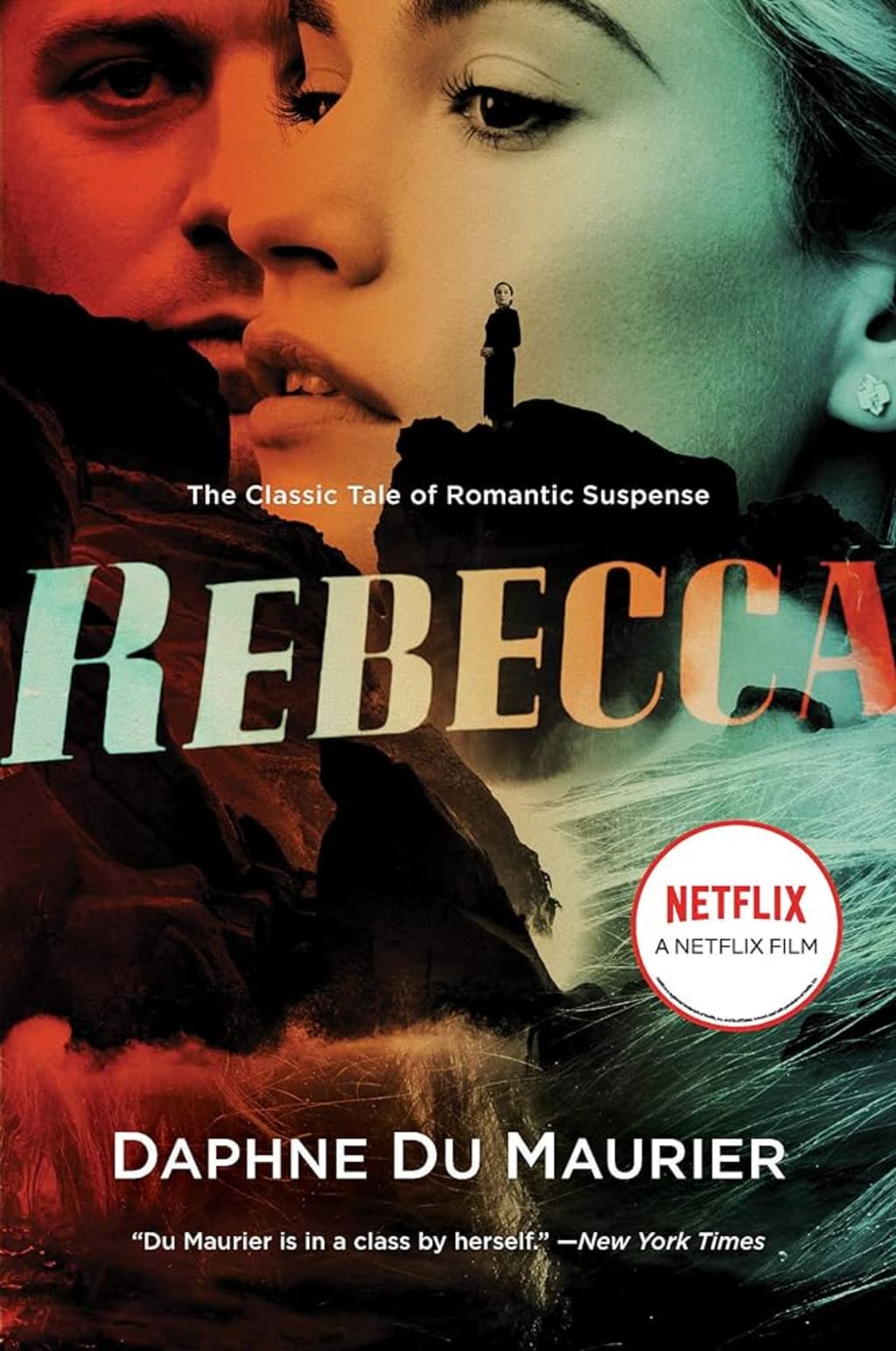
About the Book/Movie:
Ancient, beautiful Manderley, between the rose garden and the sea, is the county's showpiece. Rebecca made it so - even a year after her death, Rebecca's influence still rules there. How can Maxim de Winter's shy new bride ever fill her place or escape her vital shadow?
A shadow that grows longer and darker as the brief summer fades, until, in a moment of climatic revelations, it threatens to eclipse Manderley and its inhabitants completely...
Book vs. Movie:
Opening Scene:
- Book: The novel opens with the protagonist's recollections and thoughts about Manderley.
- Movie: Hitchcock chose to begin the film with a dream sequence at Manderley, which sets a slightly different tone.
Protagonist's Narration:
- Book: The novel is narrated in the first person by the unnamed protagonist.
- Movie: Hitchcock opted to eliminate the protagonist's voiceover narration, relying on visual storytelling instead. This changes the way the audience connects with the story.
Mrs. Danvers' Introduction:
- Book: Mrs. Danvers is introduced through the protagonist's narration, with her eerie presence gradually revealed.
- Movie: In the film, Mrs. Danvers is visually established early on, emphasizing her mysterious and intimidating demeanor.
Characterization of Maxim de Winter:
- Book: Maxim's internal struggles and complexities are explored more deeply in the novel.
- Movie: While Laurence Olivier portrays Maxim effectively, some nuances of his character from the book are not as pronounced in the film.
Changes to the Ending:
- Book: The novel's ending is more detailed and provides additional insights into the aftermath of the events at Manderley.
- Movie: Hitchcock altered the ending for a more cinematic conclusion, deviating slightly from the novel's resolution.
Character Relationships:
- Book: The novel delves into the intricate dynamics between characters, especially in the interactions between the protagonist, Maxim, and Mrs. Danvers.
- Movie: While the film captures the essence of these relationships, it necessarily condenses some of the subtleties present in the book.
Handling of the Second Mrs. de Winter:
- Book: The protagonist's insecurities and struggles in living up to Rebecca's legacy are deeply explored.
- Movie: Joan Fontaine's portrayal captures the insecurity, but some internal struggles of the protagonist are more explicitly addressed in the book.
Emphasis on Suspense:
- Book: Daphne du Maurier's writing builds suspense through the protagonist's internal thoughts and reflections.
- Movie: Hitchcock, known for his suspenseful storytelling, uses visual techniques to create tension, with a particular focus on Mrs. Danvers' character.
Character of Rebecca:
- Book: Rebecca's character is built through the protagonist's imagination and the accounts of other characters.
- Movie: Hitchcock, perhaps to maintain suspense, chooses not to show Rebecca directly, making her a more mysterious and elusive presence.
Visual Style and Cinematography:
- Movie: Hitchcock's visual style, including his use of shadows and camera angles, adds a distinct cinematic quality to the story that differs from the atmospheric descriptions in the book.
Discussion Questions:
- Narrative Perspective:
Book: The novel is written in the first person from the perspective of the unnamed protagonist.
Movie: Hitchcock chose not to use voiceover narration. How does this impact the viewer's connection to the protagonist compared to the reader's connection in the book?
- Character Portrayals:
Book: How do the characters in the book differ from their on-screen counterparts? Are there aspects of the characters' personalities or appearances that were emphasized or downplayed in the movie?
- Visual Interpretation:
Movie: Hitchcock's visual storytelling is a significant departure from the novel. Discuss how the director's choices in cinematography, set design, and visual effects contribute to the atmosphere and mood of the story.
- Changes in Plot or Storyline:
Book: Explore any significant plot points or subplots present in the book that were altered, omitted, or added in the movie adaptation.
Movie: Consider Hitchcock's reasons for making these changes. How do they affect the overall narrative?
- Emphasis on Suspense:
Book: Discuss how du Maurier builds suspense through the protagonist's internal thoughts and reflections.
Movie: Hitchcock is known for his mastery of suspense. How does he translate the suspenseful elements of the book into a visual medium?
- Treatment of Mrs. Danvers:
Book: Mrs. Danvers is a complex and enigmatic character in the novel. How does the book delve into her motivations and actions?
Movie: Analyze Judith Anderson's portrayal of Mrs. Danvers. How does the on-screen performance compare to the character in the book?
- Ending and Resolution:
Book: Examine how the book concludes the story and resolves the various plot threads.
Movie: Compare the resolution in Hitchcock's film. Are there changes, and do they alter the impact of the conclusion?
- Use of Music:
Book: Discuss how the absence of a musical score in the novel influences the reader's experience.
Movie: Bernard Herrmann's score is integral to the film's atmosphere. Explore how the music enhances the emotional and suspenseful elements.
- Hitchcock's Signature Style:
Movie: Consider how Hitchcock's signature themes and motifs (such as voyeurism, psychological tension, and the MacGuffin) are present in "Rebecca." How do these elements contribute to the film's uniqueness?
- Critical Reception:
Book: Discuss the critical reception of the novel and its literary merits.
Movie: Explore how the film was received by critics and audiences. Did it capture the essence of the book, and how did Hitchcock's adaptation contribute to its success or challenges?
About the Creator
Kristen Barenthaler
Curious adventurer. Crazed reader. Librarian. Archery instructor. True crime addict.
Instagram: @kristenbarenthaler
Facebook: @kbarenthaler
Reader insights
Outstanding
Excellent work. Looking forward to reading more!
Top insight
Excellent storytelling
Original narrative & well developed characters
Keep reading
More stories from Kristen Barenthaler and writers in BookClub and other communities.
"Water for Elephants" by Sara Gruen
About the Book/Movie: Jacob Janowski's luck had run out―orphaned and penniless, he had no direction until he landed on a rickety train that was home to the Benzini Brothers Most Spectacular Show on Earth. A veterinary student just shy of a degree, he was put in charge of caring for the circus menagerie. It was the Great Depression and for Jacob the circus was both his salvation and a living hell. There he met Marlena, the beautiful equestrian star married to August, the charismatic but brutal animal trainer. And he met Rosie, an untrainable elephant who was the great hope for this third-rate traveling show. The bond that grew among this group of misfits was one of love and trust, and ultimately, it was their only hope for survival.
By Kristen Barenthalerabout a year ago in BookClub
7 Books You Must Read To Change Your Life In 2026
There are moments in life when we feel stuck—professionally, emotionally, or spiritually. In those moments, the right book can act like a mentor, offering clarity when the path feels blurred and courage when motivation runs dry.
By Diana Meresc5 days ago in BookClub




Comments
There are no comments for this story
Be the first to respond and start the conversation.