
Pride and Prejudice: Love and Dignity Across Two Centuries
Pride and Prejudice: Love and Dignity Across Two Centuries
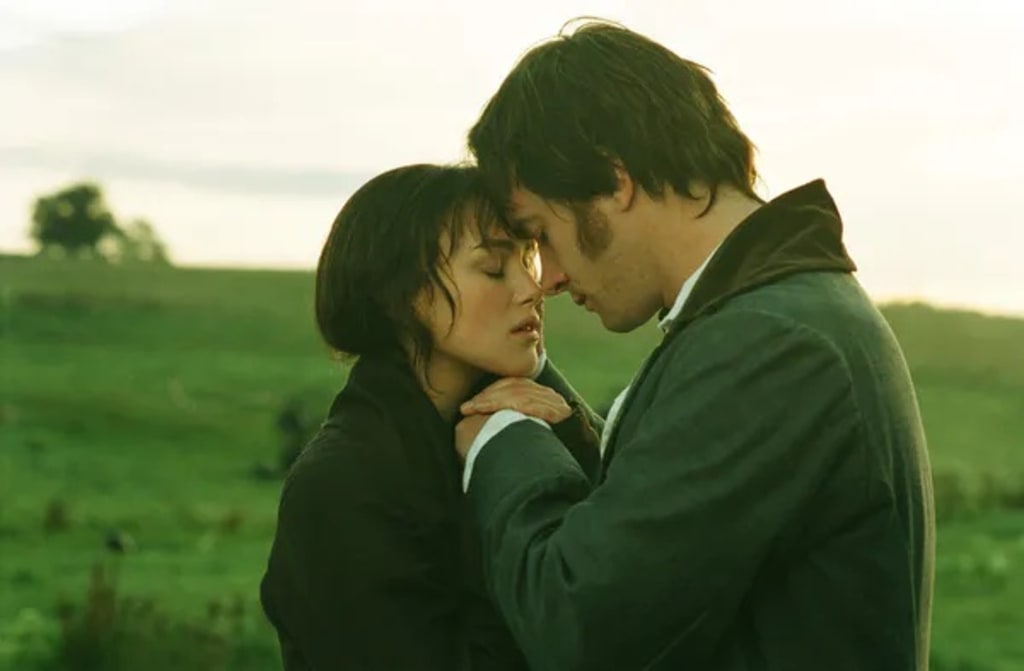
Pride and Prejudice: Love and Dignity Across Two Centuries
Behind Darcy’s pride lies sincerity; beneath Elizabeth’s prejudice stands independence.
In the quiet English countryside of the early 19th century, Mrs. Bennet’s shrill declaration pierced the calm: “It is a truth universally acknowledged, that a single man in possession of a good fortune must be in want of a wife.” With this iconic sentence, Jane Austen opens the door to a world of wit, elegance, and satire—where five Bennet sisters and a handful of eligible gentlemen play out a timeless drama of love, dignity, and misunderstanding.
At their first encounter, Mr. Darcy’s dismissive comment—“She is tolerable, but not handsome enough to tempt me”—ignites a fire of self-respect in Elizabeth Bennet. He never expects that the outspoken daughter of a country gentleman would become the most formidable challenge of his life.
"Pride" and "prejudice"—seemingly simple words—become powerful undercurrents in Austen’s novel, quietly shaping the fate of every character.
A Maze of Love: Four Marriages, Four Reflections of Society
When Mr. Bingley arrives in Hertfordshire with his friend Mr. Darcy, the Bennet daughters each stand at a crossroads. The novel presents four very different marriages, each like a mirror reflecting the many faces of human nature when it comes to love and commitment.
Elizabeth and Darcy’s relationship forms the emotional core of the story. From mutual distaste at a ball to Darcy’s rain-soaked confession—“In vain have I struggled. It will not do... I love you”—to their final union across class lines, their love journey evolves from misunderstanding to mutual respect and emotional clarity.
Austen masterfully captures this emotional transformation. When Elizabeth visits Darcy’s Pemberley estate, she witnesses his kindness toward his sister and hears the housekeeper’s praise of his character. In that moment, “the towering wall of prejudice within her began to crumble.”
In contrast, Jane and Bingley’s romance is nearly derailed by their own passivity—Jane’s quiet nature and Bingley’s indecision almost cost them their happiness. Austen warns that repressing feelings can be as damaging as impulsivity.
Charlotte Lucas’s marriage to Mr. Collins offers a sharp social commentary. At 27, she pragmatically accepts his proposal—not for love, but for security: “I am not a romantic, you know. I ask only for a comfortable home.” When Elizabeth visits their home and sees her friend smile politely in the presence of a ridiculous husband, the absence of love is suffocating, even on the page.
Most tragic is Lydia Bennet’s reckless elopement with the unscrupulous officer Wickham, nearly destroying her family’s reputation. Austen subtly predicts the outcome: any union built on lust and lies is doomed to spiral into debt and disillusion.
Pride and Prejudice: A Timeless Struggle Within the Human Heart
“Pride relates more to our opinion of ourselves, vanity to what we would have others think of us,” says Darcy—and Austen’s story explores how these inner forces shape our lives.
Darcy’s pride is a protective armor, hiding a generous heart. Standing atop the social hierarchy at Rosings Park, he never imagined being undone by the gaze of a country girl. Elizabeth, praised by her father as the most intelligent of his daughters, becomes lost in Wickham’s lies and lets her prejudice toward Darcy take root.
Austen’s brilliance lies in exposing how prejudice forms—how people believe what conveniently fits their preconceptions. When Wickham accuses Darcy of denying him an inheritance, Elizabeth readily believes him because it “confirmed everything she already assumed about Darcy.” This selective trust remains a psychological trap we still fall into today.
A pivotal moment arrives with Darcy’s letter. He admits to interfering with Jane and Bingley’s relationship and reveals Wickham’s gambling and attempt to elope with his sister. The letter becomes a key unlocking the truth: “As Elizabeth read, her hands trembled; her once-unshakable ‘truths’ began to unravel.”
Darcy’s second proposal, no longer arrogant but vulnerable—“You are the love of my life, and my soul’s true companion”—marks a true meeting of equals. Their love endures not because of perfection, but because it survives pride, prejudice, and emotional reckoning.
An Enlightened Voice: The Awakening of a Female Mind
Beneath its romantic charm, Pride and Prejudice carries a quiet feminist current. Through Elizabeth Bennet, Austen sends a message far ahead of her time: that a woman’s self-worth is not defined by marriage.
When Mr. Collins proposes with an air of patronizing generosity, Elizabeth delivers a thunderous refusal: “You could not make me happy, and I am convinced I am the last woman in the world who would make you so.” In early 19th-century England, this declaration—that mutual respect is essential for marriage—was nothing short of revolutionary.
Her courage is further revealed when Lady Catherine de Bourgh storms into the Bennet home, demanding Elizabeth promise never to marry Darcy. Elizabeth’s defiant reply—“I am only resolved to act in a manner which will constitute my own happiness”—resonates even today. Her boldness recalls the modern declaration from a Chinese girls’ school: “I was born to be a mountain, not a stream.” Across centuries, voices for autonomy echo in harmony.
Jane Austen herself practiced what she wrote. She turned down a wealthy suitor and chose a life of writing over comfort. In a time when women rarely lived independently, she made a living with her pen, channeling that spirit into Elizabeth, giving her character enduring vitality.
The novel also celebrates intellectual growth. Elizabeth’s wide reading fosters her independence of mind. As Confucius said, “To study without reflection is a waste; to reflect without study is dangerous.” Her love with Darcy is not a rescue story, but a meeting of minds—upending the traditional “hero saves heroine” narrative.
A Timeless Classic: Who Should Read This Book of Wisdom?
Two hundred years on, Pride and Prejudice remains a literary cornerstone because its insights continue to resonate across generations.
For those seeking true love, the novel offers wise counsel: don’t let first impressions cloud judgment. Wickham, the charming soldier with smooth manners, turns out to be a debt-ridden fraud. Austen warns us—charm can mask dishonor.
For social critics, the book unveils the harsh realities of a world where women couldn’t inherit property and were often forced into marriage for survival. The economic and gender inequalities Austen depicted still spark relevant discussions today.
For writers and readers of literature, Austen’s mastery of irony and character remains a goldmine. From Mrs. Bennet’s ridiculous desperation, to Mr. Collins’s sycophantic sermons, to Lady Catherine’s authoritarian airs—these characters are some of English literature’s most brilliant comedic creations.
And for all of us navigating modern life: when we encounter a “Darcy” who seems arrogant, or find ourselves judging others too quickly, Elizabeth’s journey reminds us that people are multi-faceted. As Austen wrote, “A marriage without affection is foolish, but one based only on money is worse.” This kind of balanced thinking remains vital today.
As Darcy walks through the morning mist of Pemberley toward Elizabeth, his former arrogance melts into humility. And when Elizabeth meets his eyes, her prejudice softens into understanding.
Centuries have passed, and the roses at Rosings bloom and fade again. But generation after generation still finds echoes of their own pride and prejudice in Austen’s words. In a world of dating apps and social media echo chambers, we remain tangled in the same human struggle—to see others clearly, and to let ourselves be seen.
Close the leather-bound book, and the wisdom between the pages still whispers: Lay down your armor to find truth; open your heart to find connection. The story of Elizabeth and Darcy endures not only because it tells of love—but because it chronicles humanity’s eternal fight for dignity.
About the Creator
Keep reading
More stories from writers in BookClub and other communities.
My New Book is Finally Here
My poetry collection Beautiful and Brutal Things is done. It's actually done and finally published over 270 pages. Over a year of my life went into this book. More than a year, really. Long days at my computer, sometimes seven days a week because I couldn't stop even when I probably should have. Then two months of editing that felt harder than the writing itself. But it's finished, and I'm still standing, and the book is real.
By Tim Carmichael7 days ago in BookClub
Little Self-Interview With Books
I'm going to get right into it. Every year, I like to revisit six questions about books and reading and give six answers, hoping to discover something new about myself and my reading habits. The questions are:
By Avocado Nunzella BSc (Psych) -- M.A.P a day ago in BookClub
Thoughts on Vocal and the way the world is
"Death cannot stop true love, only delay it." – Wesley in The Princess Bride. I decided to come back to Vocal on a very cold and dark night at the end of December. I had been, and still am, convalescing from a horrible staph infection that had gone misdiagnosed for months. This, paired with the increasing challenges of being healthy, making the best choices for my co-parented child, being a wife, and being a director at a new job, was a lot to manage.
By Jazzy 6 days ago in Confessions



Comments
There are no comments for this story
Be the first to respond and start the conversation.