
No-Drama Discipline" by Daniel J. Siegel and Tina Payne Bryson : In-depth Review
From Chaos to Connection: How Brain Science Revolutionized My Approach to Raising Kids


I'll be honest – before discovering this transformative guide, I was one of those parents who secretly wondered if I was doing everything wrong. You know the feeling: your child has a complete meltdown in the grocery store, and suddenly every parenting book you've ever read feels useless. The traditional timeout chair wasn't working, bribes felt manipulative, and yelling definitely wasn't the parent I wanted to be. Then I stumbled upon this masterpiece, and everything changed.
What struck me immediately was how this wasn't just another parenting manual telling me what to do. Instead, it explained the why behind children's behavior in a way that made everything click into place. Suddenly, my five-year-old's epic tantrum over the "wrong" color cup wasn't defiance – it was a developing brain struggling to manage big emotions.
The Science That Changes Everything
The foundation of this approach rests on groundbreaking neuroscience research that the authors translate into incredibly practical strategies. What I love most is how they break down complex brain science into concepts any parent can understand and apply immediately.
The book introduces us to the concept of the "upstairs" and "downstairs" brain – a metaphor that has literally saved my sanity on countless occasions. The downstairs brain handles our survival instincts and emotions, while the upstairs brain manages rational thinking and decision-making. Here's the game-changer: in children, the upstairs brain isn't fully developed until their mid-twenties.
When I learned this, so many frustrating moments suddenly made sense. My eight-year-old wasn't being intentionally difficult when he couldn't explain why he hit his sister – his downstairs brain had literally hijacked his upstairs brain. This understanding shifted my entire perspective from "How do I punish this behavior?" to "How do I help him develop the skills he needs?"
The authors explain that traditional punishment often activates the downstairs brain even more, making it impossible for children to learn from the experience. Instead, they propose discipline that connects first, then redirects – a approach that feels counterintuitive but produces remarkable results.
Beyond Punishment: The Connection Revolution
What sets this approach apart from every other discipline strategy I've tried is its emphasis on connection over correction. The central premise is beautifully simple: we can't teach children when they're in a state of emotional chaos. We must first help them calm down and feel safe before any learning can occur.
This might sound obvious, but think about how most of us were raised. When we misbehaved, we were often sent to our rooms, given the silent treatment, or faced immediate consequences. This book helped me realize that while these methods might stop the behavior temporarily, they don't actually teach children the skills they need to make better choices next time.
The "connect and redirect" strategy has become my parenting North Star. When my daughter throws herself on the floor because I won't let her wear her Halloween costume to school in February, I no longer see this as manipulation or defiance. Instead, I recognize a child whose emotional regulatory system needs support.
I've learned to get down on her level, acknowledge her feelings ("You're really disappointed that you can't wear your costume"), and wait for her nervous system to calm down before we problem-solve together. The transformation in both her behavior and our relationship has been profound.
Practical Tools That Actually Work
While the brain science provides the foundation, the practical strategies make this book invaluable for daily parenting challenges. The authors provide specific scripts, visual aids, and step-by-step approaches that you can implement immediately.
One technique that's been particularly helpful is the "HALT" check – helping children identify if they're Hungry, Angry, Lonely, or Tired before addressing behavior. I can't tell you how many "discipline problems" turned out to be low blood sugar or missed naps. This simple framework has prevented countless power struggles in our household.
The book also introduces the concept of "time-in" versus "time-out." Instead of isolating children when they're struggling, time-in involves staying with them while they regulate their emotions. Initially, this felt counterintuitive – wasn't I rewarding bad behavior? But the results speak for themselves. My children recover from upsets faster, and they're actually learning emotional regulation skills rather than just serving time.
Another breakthrough concept is understanding the difference between discipline and punishment. Discipline, as explained here, comes from the Latin word meaning "to teach." The goal isn't to make children suffer for their mistakes but to help them develop internal controls and empathy. This shift in mindset has made discipline feel less like a battle and more like collaborative problem-solving.
Real-World Application and Challenges
I won't pretend that implementing these strategies has been seamless. There's definitely a learning curve, especially when you're trying to rewire your own childhood programming about discipline. The first few weeks, I felt like I was being "too soft" or that my children would never learn boundaries.
But here's what I discovered: setting boundaries with connection actually makes them stronger, not weaker. When children feel understood and supported, they're more likely to cooperate. The power struggles that used to drain my energy have largely disappeared, replaced by collaborative problem-solving sessions.
The approach works particularly well for sensitive children who were previously labeled as "difficult" or "strong-willed." My highly sensitive son, who used to have daily meltdowns, now has the vocabulary and tools to express his big feelings before they overwhelm him. The change didn't happen overnight, but the progress has been steady and remarkable.
That said, this approach requires patience and consistency. You can't connect and redirect sometimes and then fall back into old punishment patterns when you're stressed. The authors acknowledge this challenge and provide strategies for taking care of yourself so you can show up as the parent you want to be.
The Ripple Effect on Family Dynamics
Perhaps the most surprising benefit has been how these principles improved my relationship with my partner and even my own emotional regulation. When you start viewing everyone's challenging behavior through the lens of brain development and unmet needs, it becomes easier to respond with curiosity rather than reactivity.
Our family meetings have become genuine problem-solving sessions where everyone's voice is heard. My children are developing empathy, emotional intelligence, and conflict resolution skills that will serve them throughout their lives. Instead of compliant children who follow rules out of fear, we're raising kids who understand the reasons behind expectations and can make good choices independently.
The long-term vision presented in this book is compelling: children who grow up with this approach develop stronger emotional regulation, better relationships, and more resilience in facing life's challenges. They learn to see mistakes as learning opportunities rather than failures worthy of punishment.
Who Will Benefit Most
This book is invaluable for parents feeling frustrated with traditional discipline methods, especially those with sensitive, spirited, or neurodivergent children. If you've tried reward charts, time-outs, and consequences without lasting success, this approach offers a refreshing alternative.
Educators, childcare providers, and mental health professionals will also find the strategies applicable in their work with children. The principles scale beautifully from individual interactions to classroom management and therapeutic relationships.
However, parents seeking quick fixes or simple behavioral modification techniques might find this approach too involved. It requires genuine commitment to understanding child development and examining your own triggers and responses.
Addressing Common Concerns
Some parents worry that this approach is "permissive" or will create entitled children. I had these same concerns initially. However, this method actually involves very clear boundaries – they're just enforced with connection rather than punishment. Children still experience natural consequences and learn from their mistakes; they just do so in an emotionally safe environment.
Another concern is time – doesn't all this connecting take forever? While it does require more upfront investment, the long-term payoff is significant. Children who feel heard and understood cooperate more readily and develop internal motivation rather than external compliance.
Final Thoughts
This masterpiece has fundamentally changed how I view children's behavior and my role as a parent. Instead of seeing myself as a behavior manager focused on compliance, I now see myself as an emotional coach helping my children develop crucial life skills.
The combination of solid neuroscience research with practical, compassionate strategies makes this essential reading for anyone working with children. The authors have created something truly special – a parenting approach that honors both children's developmental needs and parents' desire to raise kind, capable, resilient human beings.
If you're tired of power struggles, want to build stronger relationships with your children, and believe that discipline should teach rather than punish, this book will transform your approach to parenting. More importantly, it will transform your relationship with your children and help them develop the emotional intelligence they need to thrive in our complex world.
The journey from traditional discipline to this brain-based approach isn't always easy, but it's absolutely worth it. Your future self – and your children – will thank you for making this investment in understanding how to truly support their developing minds and hearts.
About the Creator
A.O
I share insights, tips, and updates on the latest AI trends and tech milestones. and I dabble a little about life's deep meaning using poems and stories.
My New Book is Finally Here
My poetry collection Beautiful and Brutal Things is done. It's actually done and finally published over 270 pages. Over a year of my life went into this book. More than a year, really. Long days at my computer, sometimes seven days a week because I couldn't stop even when I probably should have. Then two months of editing that felt harder than the writing itself. But it's finished, and I'm still standing, and the book is real.
By Tim Carmichael2 days ago in BookClub
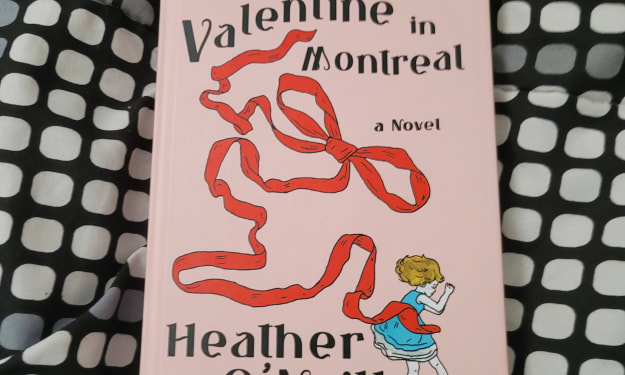
Valentine in Montréal
Don't be fooled by the title. The story is actually very interesting: My name is Valentine. I am twenty-three years old and I work at a little store at Berri-UQAM métro. I am very ordinary-looking and Barney, who works the same shift as me at the store, says I do not know how to dress. I have been working there for four years, and I have never missed a day. This is why sometimes I seem familiar to people, even though they can't place me.
By Kendall Defoe 5 days ago in BookClub



Comments
There are no comments for this story
Be the first to respond and start the conversation.