
Mahabharata
A Guide to Strength, Humility, and True Friendship
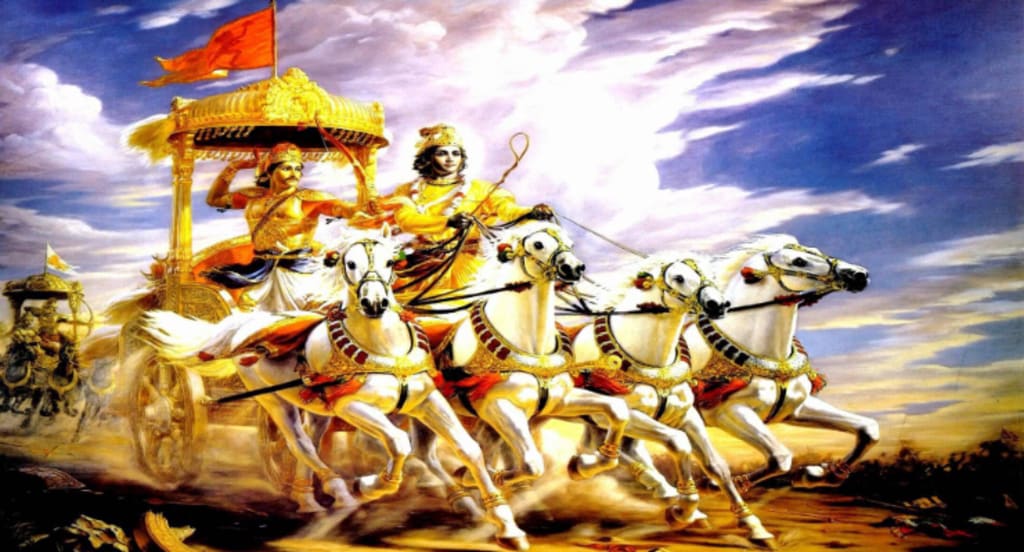
In the vast and complex world of Indian epics, the Mahabharata stands as a beacon of wisdom, offering profound lessons that remain relevant even in today’s world. One such lesson is derived from the powerful encounter between Bhima and Hanuman in the epic. It is a moment that illustrates the essence of humility, true strength, and the nature of real friendship.
The Encounter with Hanuman
In the Mahabharata, Bhima, known for his immense strength, once encounters a monkey on his way. The monkey, appearing weak, blocks Bhima’s path and requests him to move aside. Bhima, enraged by this obstruction, tries to forcefully remove the monkey’s tail, using all his strength. However, no matter how hard he tries, the tail doesn’t budge. In a moment of realization, Bhima understands that the monkey is no ordinary being—it is none other than Lord Hanuman, the son of the wind god, Vayu.
Hanuman then reveals his true form, showcasing the power of humility and control. This incident holds a deeper lesson: the true power doesn’t lie merely in physical strength. The essence of strength lies in humility and the ability to understand when force is not the solution. Bhima, despite his immense physical might, learns that sometimes strength must be tempered with humility, and some challenges cannot be overcome by force alone.
The Importance of Humility
The tale of Bhima and Hanuman underscores a fundamental lesson of the Mahabharata:
1. True strength is not always about power, but about knowing when to exercise humility.
2. The moment we start to feel overly proud of our strength or abilities, that very pride can become a barrier to growth.
3. In life, many tasks require a thoughtful approach, patience, and sometimes, the humility to accept help from others.
4. The true measure of a person’s power is not how much they can forcefully achieve, but how gracefully they accept the challenges that come their way.
The Complex Friendship of Karna and Duryodhana
One of the most intricate and poignant relationships in the Mahabharata is that between Karna and Duryodhana. Karna, known for his loyalty and courage, shares a deep bond with Duryodhana, the leader of the Kauravas. However, his blind loyalty to Duryodhana leads him to make questionable decisions that ultimately cost him dearly.
Throughout the Mahabharata, Karna supports Duryodhana, even when his actions are morally wrong. For example, when Duryodhana plotted to burn down the Pandavas’ palace, Karna could have intervened, but he chose to stand by his friend. Similarly, during the infamous disrobing of Draupadi in the Kaurava court, Karna could have objected, but instead, he remained silent, siding with Duryodhana.
Karna’s unwavering loyalty, while admirable, ultimately led him down the wrong path. The lesson here is that:
1. True friendship is not about blind loyalty, but about standing up for what is right, even if it means challenging a friend.
2. Sometimes, the hardest thing to do in a friendship is to point out the flaws of the other person and help them correct their mistakes.
The Pandavas: Lessons in Accountability
The Pandavas, despite their flaws, demonstrate qualities that set them apart from the Kauravas. They face their mistakes, take responsibility for their actions, and never blame others for their misfortunes. Even when they face severe challenges, such as the loss of their kingdom and the exile, they don’t give up. They accept their fate and work to correct their wrongs, showing resilience and humility in the process.
This acceptance of responsibility is a critical lesson for modern times. The Mahabharata teaches us that "true strength lies in accountability"—in being able to own our mistakes and learn from them, rather than blaming circumstances or others for our failures.
Relevance of Mahabharata in Modern Times
The timeless lessons of the Mahabharata are just as relevant today as they were thousands of years ago. Whether it’s the importance of humility, the complexities of friendship, or the need for self-reflection, the epic provides guidance for navigating life’s challenges.
In today’s fast-paced world, where individualism often trumps collective wisdom, the Mahabharata serves as a reminder of the importance of values like humility, responsibility, and loyalty. The teachings of the epic offer valuable insights into how we can lead more thoughtful, ethical lives.
The Mahabharata has always been a source of education, not just through its storytelling, but through its deep philosophical underpinnings. It offers a comprehensive guide to understanding human nature and the struggles that we face in our personal and professional lives. It teaches us that while we all have the capacity for great power, it is our ability to harness that power with wisdom and integrity that determines our true strength.
Preserving Ancient Wisdom for Future Generations
As we continue to navigate the complexities of modern life, it is crucial to preserve the wisdom contained in ancient texts like the Mahabharata. The lessons of the epic are not confined to a specific era—they transcend time and continue to offer valuable insights for future generations.
The Mahabharata is not just a story of gods and warriors; it is a guide to life itself. In an age where knowledge is easily accessible, it is important to ensure that we don’t lose sight of these profound teachings. Schools, colleges, and even informal educational platforms should integrate these lessons into their curricula, helping students understand the relevance of these ancient texts in today’s world.
By embracing the wisdom of the Mahabharata, we can learn to navigate the complexities of life with strength, humility, and compassion. These teachings have survived for thousands of years, and they will continue to guide humanity for generations to come.
About the Creator
Keep reading
More stories from Kavya Matta and writers in BookClub and other communities.
KAMASUTRA
The word Kamasutra often sparks discomfort, especially when uttered by women. Many associate it exclusively with sexuality and might even feel compelled to avoid discussing it altogether. Yet, dismissing or misunderstanding this ancient text does a disservice to its profound significance. Far from being a mere “sex manual,” the Kamasutra is a masterpiece of human philosophy, written during an era when Indian society was rich with intellectual, spiritual, and artistic exploration.
By Kavya Mattaabout a year ago in BookClub
Rachel Reviews: Lakefront Wolves by Joseph Deegan
Meet Finn. He's an 18 year old kid who has potential. He's bright with great school scores and he's also an athlete, a footballer of some prowess. He has it all going for him, it would seem, and yet, he's determined to send what could be a well-planned, stable existence firmly off the rails. He drinks, he smokes, he takes drugs, he has violent tendencies and he's in danger of losing not only his mind but all that he holds dear.
By Rachel Deeming14 days ago in BookClub
7 Amazing Books to Read When You're Feeling Lazy
We all have those moments when life feels slow, energy is low, and the idea of tackling dense, heavy books feels impossible. Yet, even on our laziest days, reading can still be one of the most rewarding ways to spend time. The trick lies in choosing the right books—stories that are engaging without being exhausting, inspiring without being overwhelming, and comforting without feeling trivial.
By Diana Meresc5 days ago in BookClub


Comments
There are no comments for this story
Be the first to respond and start the conversation.