
The word Kamasutra often sparks discomfort, especially when uttered by women. Many associate it exclusively with sexuality and might even feel compelled to avoid discussing it altogether. Yet, dismissing or misunderstanding this ancient text does a disservice to its profound significance. Far from being a mere “sex manual,” the Kamasutra is a masterpiece of human philosophy, written during an era when Indian society was rich with intellectual, spiritual, and artistic exploration.
Unfortunately, over the years, the true essence of this text has been overshadowed by stereotypes and misinterpretations, especially in the West. To fully appreciate the Kamasutra, we must understand its origins, intent, and its journey through history.
A Victim of Misrepresentation :
The Kamasutra is arguably the most globally recognized Indian text, even more famous than the Bhagavad Gita. However, its fame comes at a cost—it is also one of the most misinterpreted books. In Western culture, the text is often reduced to a collection of sexual positions, an association that began during British colonial rule in India.
The British, during their conquest, employed scholars to reinterpret Indian culture in ways that would erode native pride. This strategy extended to Indian literature, including the Kamasutra. Max Müller, a prominent scholar of the time, translated many Indian texts but framed them through a colonial lens. He once said, “India has been conquered once, but it must be conquered again. This second conquest should be through education.” This deliberate re-framing led to the loss of cultural nuance in texts like the Kamasutra.
In 1883, Sir Richard Francis Burton, a British explorer, translated the Kamasutra into English. Fascinated by global sexual customs, Burton focused almost entirely on the erotic elements of the book, neglecting its broader teachings on philosophy, relationships, and personal development. The publishing industry in the 20th century further sensationalized the text, marketing it with vulgar covers and emphasizing its sexual content.
During the sexual revolution of the 1960s and 1970s, the Kamasutra became a symbol of liberated sexuality in the West, but this adoption was far from accurate. Its profound teachings on balanced living, mutual respect, and societal harmony were ignored, reducing it to a misunderstood erotic guide.
What the Kamasutra Really Is :
The Kamasutra, written by Vatsyayana, is a comprehensive guide to human relationships and balanced living. While often credited as the sole author, Vatsyayana himself acknowledged that his work was a synthesis of earlier texts, tracing its origins to teachings on three fundamental aspects of life: Dharma (righteousness), Artha (prosperity), and Kama (pleasure).
These teachings were initially written in extensive volumes and gradually condensed over generations. Vatsyayana’s version organizes these insights into seven sections, each exploring a vital aspect of human life:
1. Sadharana: General principles of living.
2. Samprayogika: Sexual relationships and intimacy.
3. Kanya Samprayuktaka: Courtship and marriage.
4. Bharya Adhikarika: Married life and responsibilities.
5. Paradarika: Extramarital relationships.
6. Vaishika: The role and skills of courtesans.
7. Aupamishadika: Personal refinement through the mastery of 64 arts.
________________________________________
Key Teachings of the Kamasutra
1. Balanced Living
The Kamasutra emphasizes the importance of balancing Dharma (moral duty), Artha (prosperity), and Kama (pleasure) to lead a fulfilling life. It presents sexual pleasure as a sacred and integral part of existence but insists it must be pursued ethically and harmoniously.
2. Respect and Consent
The text stresses mutual respect, emotional connection, and consent in relationships. It rejects coercion and advocates for the satisfaction of both partners' emotional and physical needs.
3. Women’s Empowerment
Remarkably progressive for its time, the Kamasutra highlights the importance of women’s education and their active role in social and cultural life. It recognizes women as individuals with their own desires, rights, and responsibilities.
4. Guidance for Relationships
From courtship to marriage, the Kamasutra offers practical advice on choosing a partner, maintaining harmony in relationships, and managing household responsibilities. It delves into conflict resolution, financial management, and emotional connection, making it a timeless guide for couples.
5. Extramarital Affairs
While acknowledging the existence of infidelity, the text provides guidance on handling such situations with dignity and awareness of potential consequences.
6. The Role of Courtesans
Contrary to Western stereotypes, the Kamasutra portrays courtesans as highly educated and skilled individuals who played a significant role in ancient Indian society. It discusses their contributions to arts, culture, and social life with respect and admiration.
7. Personal Development
The final section of the Kamasutra lists 64 arts—ranging from music, dance, and painting to cooking, gardening, and conversation—that individuals should master to lead a refined and fulfilling life.
A Guide for Modern Life
Today, the Kamasutra is often dismissed or misunderstood, viewed as a taboo subject or merely a manual for sexual positions. However, its teachings remain profoundly relevant. It is, at its heart, a guide to holistic human development, encompassing emotional, social, and intellectual growth.
The text celebrates the pursuit of pleasure but emphasizes that it must never come at the expense of righteousness or societal harmony. Vatsyayana himself noted that sexual satisfaction is closely linked to emotional and mental well-being, a principle that resonates in modern discussions on mental health and relationships.
By reclaiming the true essence of the Kamasutra, we can learn to navigate relationships with respect, balance our personal and professional lives, and grow as individuals. It is far more than an ancient text on sex—it is a timeless manual for living a life of fulfillment and harmony.
About the Creator
Keep reading
More stories from Kavya Matta and writers in BookClub and other communities.
Mahabharata
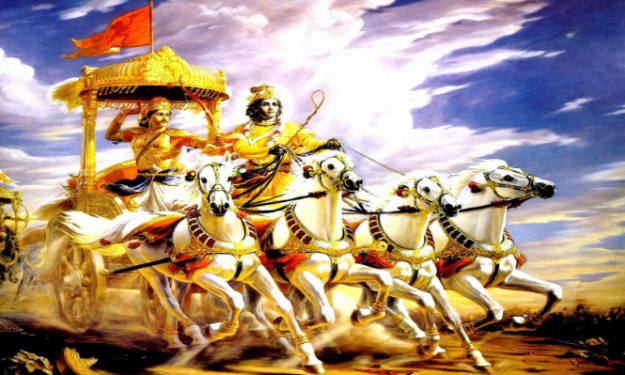
In the vast and complex world of Indian epics, the Mahabharata stands as a beacon of wisdom, offering profound lessons that remain relevant even in today’s world. One such lesson is derived from the powerful encounter between Bhima and Hanuman in the epic. It is a moment that illustrates the essence of humility, true strength, and the nature of real friendship.
By Kavya Mattaabout a year ago in BookClub
Rachel Reviews: Lakefront Wolves by Joseph Deegan
Meet Finn. He's an 18 year old kid who has potential. He's bright with great school scores and he's also an athlete, a footballer of some prowess. He has it all going for him, it would seem, and yet, he's determined to send what could be a well-planned, stable existence firmly off the rails. He drinks, he smokes, he takes drugs, he has violent tendencies and he's in danger of losing not only his mind but all that he holds dear.
By Rachel Deeming14 days ago in BookClub
A New Perspective on Change Arrives in Denver with Lori Montry’s You’re Not the Problem
In a culture that often tells people to try harder, stay disciplined, and push through discomfort, Lori Montry’s upcoming book launch event in Denver offers a different starting point. Her message is simple but powerful. Many of the struggles people blame on themselves may have far deeper roots.
By Chris Adams2 days ago in BookClub


Comments
There are no comments for this story
Be the first to respond and start the conversation.