
Influence: The Psychology of Persuasion
by Robert B. Cialdini, Ph.D

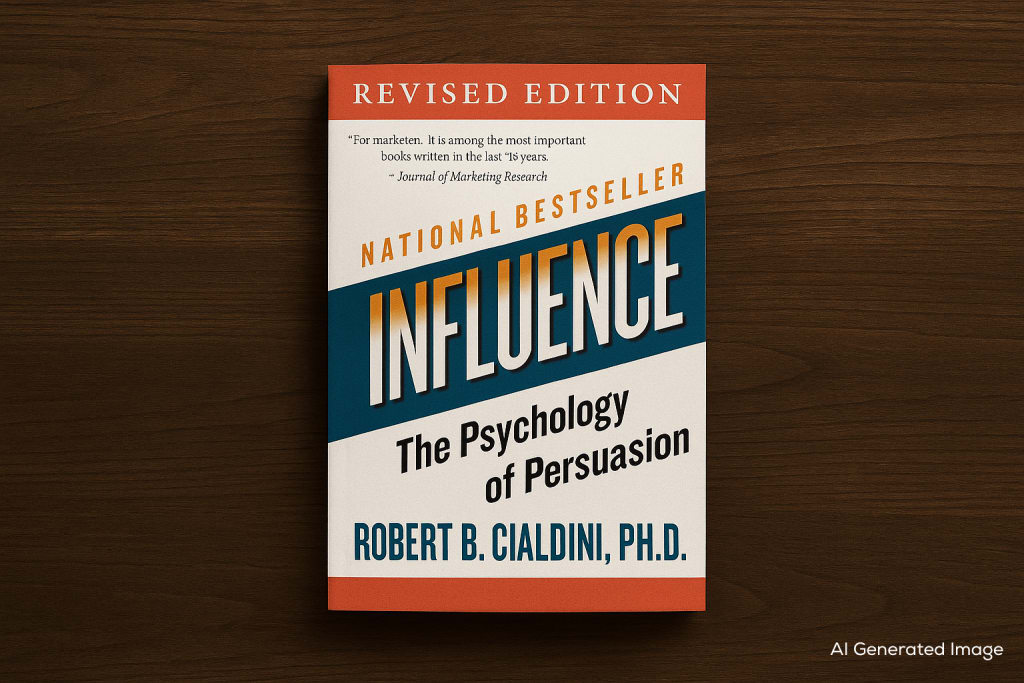
What Makes Us Say Yes, And How To Use (Or Defend Against) It
Most of us like to tell ourselves we aren’t as gullible as the next person. That a sharp mind and a little cynicism keep us safe from sales gimmicks, relentless politicians, or that subtle nudge into “just one more” at the store. But Robert Cialdini’s Influence lands the uncomfortable truth: you’re being persuaded a hundred times a day, usually in ways too fast or normal to catch. The real question isn’t whether we’re influenced, but whether we understand how and what we choose to do about it.
The Six Principles: Your Buttons, Exposed
Cialdini is a scientist first and a storyteller second, but his book reads like a street-smart guide to the psychology of “yes.” He identifies six universal levers, deeply wired into human nature, used by marketers, leaders, lovers, scammers, and even ourselves:
Reciprocity: We try to “pay back” favors, gifts, kindness, even manipulations. When someone gives, we feel compelled to give in return, often more than we should.
Commitment & Consistency: Once we publicly commit to something, even a minor yes, we feel pressure to act in ways that match that commitment, to others and to ourselves.
Social Proof: We take cues from the crowd. If others are doing it (or seem to be), we’re far more likely to follow, whether it’s real or manipulated.
Liking: We’re more likely to say yes to people we like, attractive, friendly, familiar, or even those who give us a compliment.
Authority: Uniforms, job titles, or a confident tone trick our brains into compliance. We respond to signals of expertise, even faked ones.
Scarcity: The less there is, or the more exclusive it seems, the more we want it. Deadlines, “only 3 left,” or secret, limited run offers all turn up the heat.
Cialdini doesn’t just point out the techniques, he fills the book with stick-in-your-teeth anecdotes, confessions, and the science that makes it all work. Most importantly, he describes how to spot when these triggers are being used against us.
The Gray Zone: Is Persuasion Evil?
What gives this book its staying power is its refusal to morally sanitize persuasion. Cialdini is clear: these levers are ethically neutral. They can be used to create value, build trust, and grease the wheels of human cooperation, or they can be weaponized by frauds, cheats, and spin doctors. Influence is required reading for marketers and sales pros, but it’s also defense training for anyone tired of being hustled.
The stories cut both ways. Cialdini reveals how direct mailers engineer obligation (free address labels, anyone?), how charity drives “seed the tip jar” with their own coins, and how even doctors and firefighters fall prey to snap judgments based on authority or social proof. You walk away a little uneasy, if they’re vulnerable, what chance does the rest of us have?
Practical Shields (and Swords)
Cialdini arms readers with two tools: awareness and intent. To defend against unwanted influence, slow down and consciously interrogate each ask: Is this urgency real? Is that expert really qualified? Do I really want this, or am I just being nudged into it? He gives readers permission to “call the question,” to pause reflexive yeses and, if need be, shut the door.
He also shows how to wield these levers on purpose, to inspire teams, close deals without coercion, build rapport, or create authentic reciprocity in relationships. The point isn’t to abandon persuasion, but to use it transparently and responsibly.
Who Needs This Book (Everyone)
The genius of Influence is that it applies to almost every walk of life: leaders building teams, parents raising children, consumers protecting their wallets, voters dodging manipulation, entrepreneurs designing products. The principles endure across culture, status, and age.
Cialdini’s style is direct but never condescending. He invites you to see persuasion not as a dirty word, but as a permanent feature of being human, one that can be demystified and, with practice, managed.
Takeaways
- You are not immune to persuasion, understanding the six triggers is both shield and sword.
- Reciprocity is a powerful force. Notice when “gifts” are really obligations in disguise.
- Commitments, especially small ones, snowball. Be slow to say yes; be careful what you sign, join, or promise.
- The crowd isn’t always right. Social proof is powerful, but ask who’s actually benefiting from the herd.
- Authority can be faked. Real expertise stands up to questions.
- Scarcity sells, don’t get stampeded.
- The best way to defend yourself is to slow down and make choices on your terms, not on someone else’s timeline or cues.
- If you use persuasion, use it transparently. Influence is most valuable when it aligns mutual interests and creates real value.
Final Thoughts
Influence is a survival manual for the modern noise storm, a book for anyone tired of being played, and ready to turn influence into a conscious tool. If you want to move through the world with both eyes open, understanding how people say “yes” and how you can, sometimes, choose to say “no” is as close to a cheat code as you’ll find. Understand the levers, use them wisely, and you’ll move through every negotiation, at work, at home, and with yourself, with a firmer grip on your own strings.
About the Creator
C. Ryan Shelton
Sports executive, writer & creative entrepreneur. CRO of Como 1907 (Serie A, Lake Como), leading global commercial strategy & partnerships. I also write on Web3 and share book overviews on my sites: Flowithic.com and 2HundredBooks.com
Keep reading
More stories from C. Ryan Shelton and writers in BookClub and other communities.
Overview: Outliers
What Success Looks Like Beneath the Surface Some stories about success are designed to comfort us: If you’re talented, if you hustle hard enough, you’ll rise. That story sells, because it flatters us into thinking we’re in control of every outcome. Outliers by Malcolm Gladwell strikes a different chord. It’s the book that pulls apart the myth of the lone genius, exposing the complex tangle of luck, legacy, absurd timing, hidden advantage, and (yes) work is always more intertwined than we ever want to admit.
By C. Ryan Shelton2 months ago in BookClub
My New Book is Finally Here
My poetry collection Beautiful and Brutal Things is done. It's actually done and finally published over 270 pages. Over a year of my life went into this book. More than a year, really. Long days at my computer, sometimes seven days a week because I couldn't stop even when I probably should have. Then two months of editing that felt harder than the writing itself. But it's finished, and I'm still standing, and the book is real.
By Tim Carmichael2 days ago in BookClub
The Spirit of Place: Understanding the Genius Loci
When Place Becomes Presence Across human history, landscapes have rarely been regarded as neutral or empty. Valleys, rivers, forests, shorelines, crossroads, and built environments have consistently been experienced as possessing a distinct presence. Archaeological evidence, religious texts, and oral traditions reveal a shared understanding that land carries character, intention, and memory. Settlements emerged where land felt favorable. Shrines rose where terrain inspired reverence. Routes followed paths believed to be watched over or guided by unseen forces. Geography shaped culture not only through resources and climate, but through perceived meaning.
By Marcus Hedare4 days ago in BookClub




Comments
There are no comments for this story
Be the first to respond and start the conversation.