
Ikigai vs Atomic Habits: A Powerful Comparison for Personal Growth
Finding Purpose vs. Building Habits

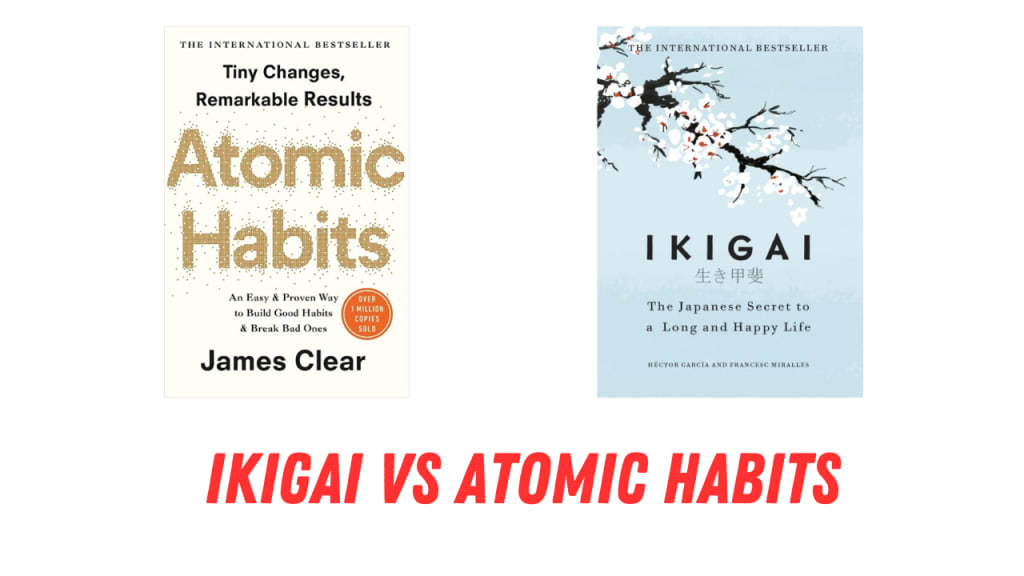
In the world of personal development, two concepts have risen to prominence: Ikigai and Atomic Habits. While they come from different cultural and philosophical backgrounds—Ikigai from Japan and Atomic Habits from modern behavioral science—they both aim to help individuals lead more meaningful, productive lives.
But what happens when we compare Ikigai vs Atomic Habits? Can these two powerful frameworks be used together? Which one is more effective for lasting change? In this article, we’ll explore both ideas in depth, compare their principles, and explain how to use them to improve your life.
What Is Ikigai?
Ikigai is a Japanese concept that roughly translates to "a reason for being." It represents the intersection of four elements:
- What you love
- What you’re good at
- What the world needs
- What you can be paid for
When these four elements align, you’ve found your Ikigai—a meaningful life purpose that gives you joy and fulfillment. Originating from Okinawa, Japan (a region known for its long-living people), Ikigai is not just about career success but about living a life of balance, passion, and service.
Core Principles of Ikigai:
- Purpose: Living each day with intention.
- Balance: Harmonizing passion, profession, mission, and vocation.
- Simplicity: Embracing the small joys of life.
- Longevity: Supporting a healthy lifestyle through purpose and community.
What Is Atomic Habits?
Atomic Habits is a best-selling book by James Clear that focuses on the science of habit formation. The core idea is that small habits, repeated consistently, lead to remarkable results.
Rather than relying on motivation or huge goals, Atomic Habits emphasizes the power of:
- Tiny changes that compound over time
- Systems over goals
- Identity-based habits (becoming the type of person you want to be)
The Four Laws of Atomic Habits:
- Make it obvious (Cue)
- Make it attractive (Craving)
- Make it easy (Response)
- Make it satisfying (Reward)
This system is grounded in behavioral psychology and aims to make good habits inevitable and bad habits difficult.
Ikigai vs Atomic Habits: Key Differences
Ikigai and Atomic Habits are both popular self-development concepts, but they differ significantly in focus, purpose, and approach. Here's a clear comparison:
1. Core Concept
- Ikigai: A Japanese philosophy meaning "a reason for being." It's about finding purpose and meaning in life by aligning what you love, what you're good at, what the world needs, and what you can be paid for.
- Atomic Habits: A practical guide to building better habits and breaking bad ones, written by James Clear. It focuses on the science of behavior change and personal improvement through small, consistent actions.
2. Focus
- Ikigai: Focuses on long-term fulfillment, life purpose, and emotional satisfaction.
- Atomic Habits: Focuses on short-term behavioral changes that lead to long-term success and personal growth.
3. Approach
- Ikigai: Reflective and philosophical. Encourages self-discovery and introspection.
- Atomic Habits: Practical and action-based. Provides tools and systems to change daily behaviors.
4. Goal
- Ikigai: Helps you understand your life's purpose and what makes life worth living.
- Atomic Habits: Helps you improve your life by building effective habits and breaking harmful ones.
5. Structure
- Ikigai: No fixed structure; it's a conceptual model. The Ikigai Venn diagram is often used to explore overlapping areas of interest and purpose.
- Atomic Habits: Structured around the four laws of behavior change — Cue, Craving, Response, Reward — and offers a step-by-step framework.
6. Source
- Ikigai: A traditional Japanese philosophy explored in books like Ikigai: The Japanese Secret to a Long and Happy Life by Héctor García and Francesc Miralles.
- Atomic Habits: A modern self-help book rooted in behavioral psychology, written by James Clear.
7. Best For
- Ikigai: People seeking meaning, direction, or purpose in life.
- Atomic Habits: People wanting to build discipline, improve productivity, or change daily routines effectively.
Can Ikigai and Atomic Habits Work Together?

Absolutely. In fact, combining these two frameworks can lead to deeper, more sustainable personal growth.
- Ikigai gives you the destination—your purpose in life.
- Atomic Habits gives you the map—the daily actions to help you get there.
For example, if your Ikigai is to become a wellness coach who helps others find balance, then Atomic Habits helps you build routines like daily reading, consistent workouts, and creating content—all essential habits for success in that role.
How to Combine Ikigai and Atomic Habits:
- Discover Your Ikigai: Reflect on your passions, strengths, values, and opportunities to serve the world. Write it down.
- Break It Down into Goals: Identify specific milestones or achievements related to your Ikigai.
- Build Atomic Habits Around Your Goals: Use the four laws to create habits that align with your purpose.
- Stay Consistent and Reflect Often: Check in with your Ikigai regularly to ensure your habits still align with your vision.
Practical Example: Applying Ikigai + Atomic Habits

Let’s say your Ikigai is to become an environmental educator who inspires children to care for the planet.
You would then:
- Set a goal to create an educational blog.
- Build habits such as writing 100 words daily, reading one environmental article per day, and posting one video per week.
- Use Atomic Habits’ techniques to make these actions easy and consistent (e.g., setting up a writing space, tracking progress, and rewarding yourself for milestones).
Over time, your actions—though small and consistent—will align with your purpose, creating long-term fulfillment.
Which One Should You Start With?

If you’re feeling lost or disconnected, start with Ikigai. It will help you reflect deeply and find meaning. If you already have a sense of purpose but struggle with consistency and discipline, start with Atomic Habits.
In truth, there is no competition between the two. They are complementary. Ikigai is the why, and Atomic Habits is the how.
The Power of Purpose-Driven Habits
In our fast-paced world, it's easy to chase goals that don’t truly fulfill us. That’s why Ikigai is powerful—it helps you align with your true self. But reflection alone isn’t enough. That’s where Atomic Habits comes in—helping you take small daily steps toward your purpose.
By combining the two, you can create a life that is both meaningful and productive.
- Find your why (Ikigai)
- Design your habits (Atomic Habits)
- Live with intention and discipline
Final Thoughts
When comparing Ikigai vs Atomic Habits, it's clear that both offer invaluable tools for self-development. Ikigai helps you discover your life purpose, while Atomic Habits gives you the blueprint to achieve it through small, consistent actions.
Rather than choosing one over the other, the real power lies in using them together. Start with self-reflection, define your goals with clarity, and then build systems that help you take daily steps toward your best life.
Whether you're aiming to be healthier, more focused, or more fulfilled, integrating Ikigai and Atomic Habits into your life can be the game-changer you’ve been looking for.
About the Creator
pestosol
Hi.
I am Hmimda 30 years old From Algeria. I am a blogger. I like to share articles about decoration and designs
7 Books On Confidence You Must Read In 2026
Confidence is not a personality trait reserved for the lucky few—it is a learnable skill, a muscle we can train with the right tools, mindset, and guidance. In a world where imposter syndrome, comparison culture, and constant pressure erode self-belief, confidence has become a survival skill. Whether we are leading teams, building relationships, speaking up, or simply trying to trust ourselves, confidence shapes how we show up in every area of life.
By Diana Meresc5 days ago in BookClub



Comments (1)
Ikigai sounds great for finding overall life purpose. Atomic Habits' focus on small, consistent habits is smart too. I wonder if you could use Atomic Habits' principles to build habits around your Ikigai. How would you start integrating these two concepts? Also, which do you think has a more immediate impact on daily life? The broad purpose of Ikigai or the small habit changes of Atomic Habits?