
Atomic Habits vs Kaizen: Which Approach Leads to Lasting Change?
One Focuses on Habits, the Other on Process—Which One Wins?

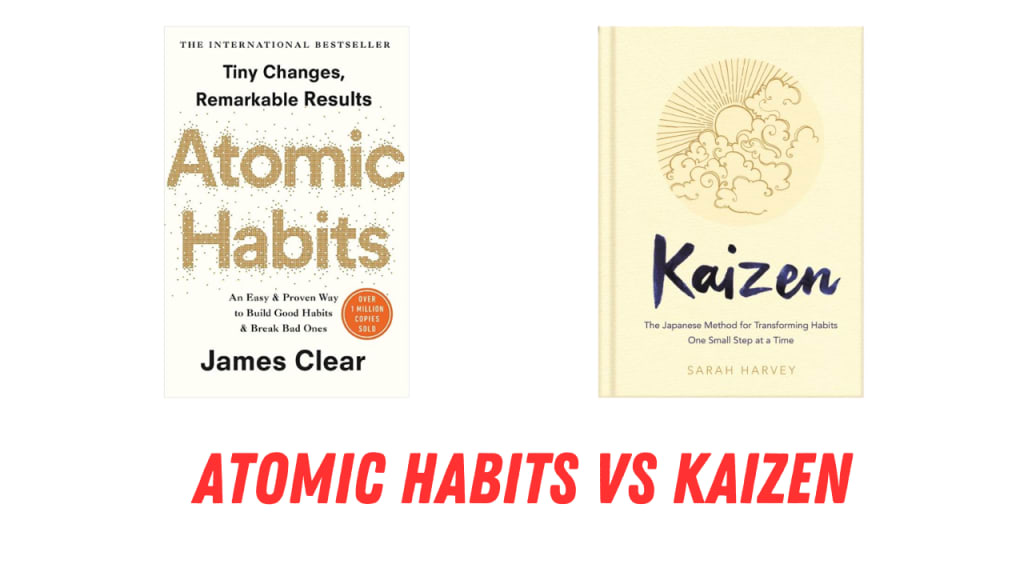
When it comes to self-improvement and building better habits, two popular methodologies stand out: Atomic Habits, a concept popularized by James Clear, and Kaizen, the Japanese philosophy of continuous improvement. While both strategies focus on gradual progress, their origins, techniques, and mindset differ. In this article, we'll explore the key differences and similarities between Atomic Habits and Kaizen, and help you decide which one may work best for your personal development journey.
What Are Atomic Habits?
Atomic Habits is a framework developed by James Clear in his bestselling book of the same name. The word "atomic" refers to something extremely small yet powerful. Clear argues that small daily changes, when compounded over time, can lead to remarkable results.
At the core of Atomic Habits is the idea that habits are the building blocks of identity. Instead of focusing on goals, Clear emphasizes building systems—daily routines that support your desired identity.
Key Principles of Atomic Habits:
- Make it obvious: Design your environment to trigger good habits.
- Make it attractive: Tie habits to something you enjoy.
- Make it easy: Start small to reduce friction.
- Make it satisfying: Reward yourself to reinforce the behavior.
Atomic Habits is based on behavioral science and provides actionable steps for habit formation. It helps people break bad habits and create good ones by focusing on identity-based change, cue-response mechanisms, and the power of habit stacking.
What Is Kaizen?
Kaizen is a Japanese term that means "change for better" or "continuous improvement." It originated in post-WWII Japan, most notably in Toyota's manufacturing system, but has since expanded into personal development and business management worldwide.
Unlike Atomic Habits, which focuses on individual habits, Kaizen is more of a holistic philosophy. It encourages slow, steady progress through incremental improvements. Kaizen values patience, discipline, and a long-term mindset.
Key Principles of Kaizen:
- Small, incremental steps: Improve by 1% every day.
- Consistency over intensity: Avoid burnout by doing less, but doing it regularly.
- Reflection and feedback: Evaluate what's working and adjust.
- Eliminate waste: Focus on efficient use of time and energy.
In personal development, Kaizen teaches that even the smallest effort matters. Instead of making massive changes overnight, it’s about asking yourself, “What’s one small thing I can improve today?”
Similarities Between Atomic Habits and Kaizen

Despite their different cultural origins and methods, Atomic Habits and Kaizen share several core similarities:
Focus on Small Changes
Both approaches emphasize the power of starting small. They reject the “all-or-nothing” mentality and encourage making minor improvements that accumulate over time.
Long-Term Growth
Whether you’re building habits or improving a process, both strategies are committed to sustainable, long-term development rather than short-lived motivation.
Consistency Is Key
Daily repetition is essential. Both methods stress that showing up regularly, even with minimal effort, leads to exponential growth.
Self-Awareness and Feedback
Kaizen encourages daily reflection, while Atomic Habits focuses on tracking progress and habit cues. Both value awareness of your behavior as a foundation for change.
Differences Between Atomic Habits and Kaizen

Atomic Habits by James Clear and Kaizen are both approaches to self-improvement, but they differ in focus and origin.
Atomic Habits emphasizes the power of small, consistent changes to build better habits. It focuses on the science of behavior change, identity shifts, habit stacking, and creating environments that support long-term success. The approach is practical and rooted in psychology, aiming for noticeable life improvements through daily 1% gains.
Kaizen, a Japanese philosophy meaning "continuous improvement," originated in business practices after World War II. It promotes gradual, ongoing improvement in processes, productivity, and efficiency. While it can apply to personal growth, its foundation lies in teamwork, standardization, and eliminating waste, especially in industrial or organizational settings.
In short:
- Atomic Habits is a personal development method focused on habit formation.
- Kaizen is a broader philosophy for incremental improvement, often applied in business.
Both promote small steps but differ in application and depth.
When to Use Atomic Habits
If you're struggling to stick to new behaviors like exercising, reading, or eating healthy, Atomic Habits provides a highly practical and structured approach. It’s especially useful for:
- Breaking bad habits (e.g., procrastination, junk food)
- Creating identity-based habits (“I’m the kind of person who…”)
- Designing your environment for success
- Building discipline using behavior science
Atomic Habits gives you actionable techniques you can start using right away, such as pairing new habits with current ones (habit stacking), using visual cues, and tracking your progress to stay motivated.
When to Use Kaizen
Kaizen is perfect if you're looking for a more mindful, long-term philosophy of improvement. It works well when:
- You’re feeling overwhelmed by big goals
- You prefer a slow, thoughtful approach
- You want to improve systems in your life or business
- You value reflection, journaling, and patience
Kaizen also applies to teams and businesses, making it a great fit for leaders and entrepreneurs who want to implement a culture of continuous improvement.
Can You Combine Atomic Habits and Kaizen?

Absolutely. In fact, many people have found success by merging the practical strategies of Atomic Habits with the mindset of Kaizen.
For example:
- Use Atomic Habits to build a morning routine by habit stacking.
- Apply Kaizen by improving that routine one small step at a time each week.
- Reflect weekly on what’s working and make slight adjustments.
- Focus on identity-based change while maintaining the Kaizen principle of patience.
Together, they can create a powerful framework for sustainable personal growth.
Final Thoughts
When it comes to Atomic Habits vs Kaizen, there’s no clear winner—only the approach that suits your personality and goals best.
Choose Atomic Habits if you want:
- Actionable techniques to form or break habits
- A structured behavior-change system
- Quick wins that lead to long-term identity shifts
Choose Kaizen if you want:
- A mindset of lifelong, steady improvement
- A focus on process over results
- To avoid overwhelm with minimal daily effort
Or combine both for the best of both worlds.
Whichever path you choose, remember: Small steps every day can lead to massive transformation over time.
About the Creator
pestosol
Hi.
I am Hmimda 30 years old From Algeria. I am a blogger. I like to share articles about decoration and designs
The Spirit of Place: Understanding the Genius Loci
When Place Becomes Presence Across human history, landscapes have rarely been regarded as neutral or empty. Valleys, rivers, forests, shorelines, crossroads, and built environments have consistently been experienced as possessing a distinct presence. Archaeological evidence, religious texts, and oral traditions reveal a shared understanding that land carries character, intention, and memory. Settlements emerged where land felt favorable. Shrines rose where terrain inspired reverence. Routes followed paths believed to be watched over or guided by unseen forces. Geography shaped culture not only through resources and climate, but through perceived meaning.
By Marcus Hedarea day ago in BookClub



Comments
There are no comments for this story
Be the first to respond and start the conversation.