
How Reading Shapes Empathy and Emotional Intelligence
Link book reading with personal development and social skills.

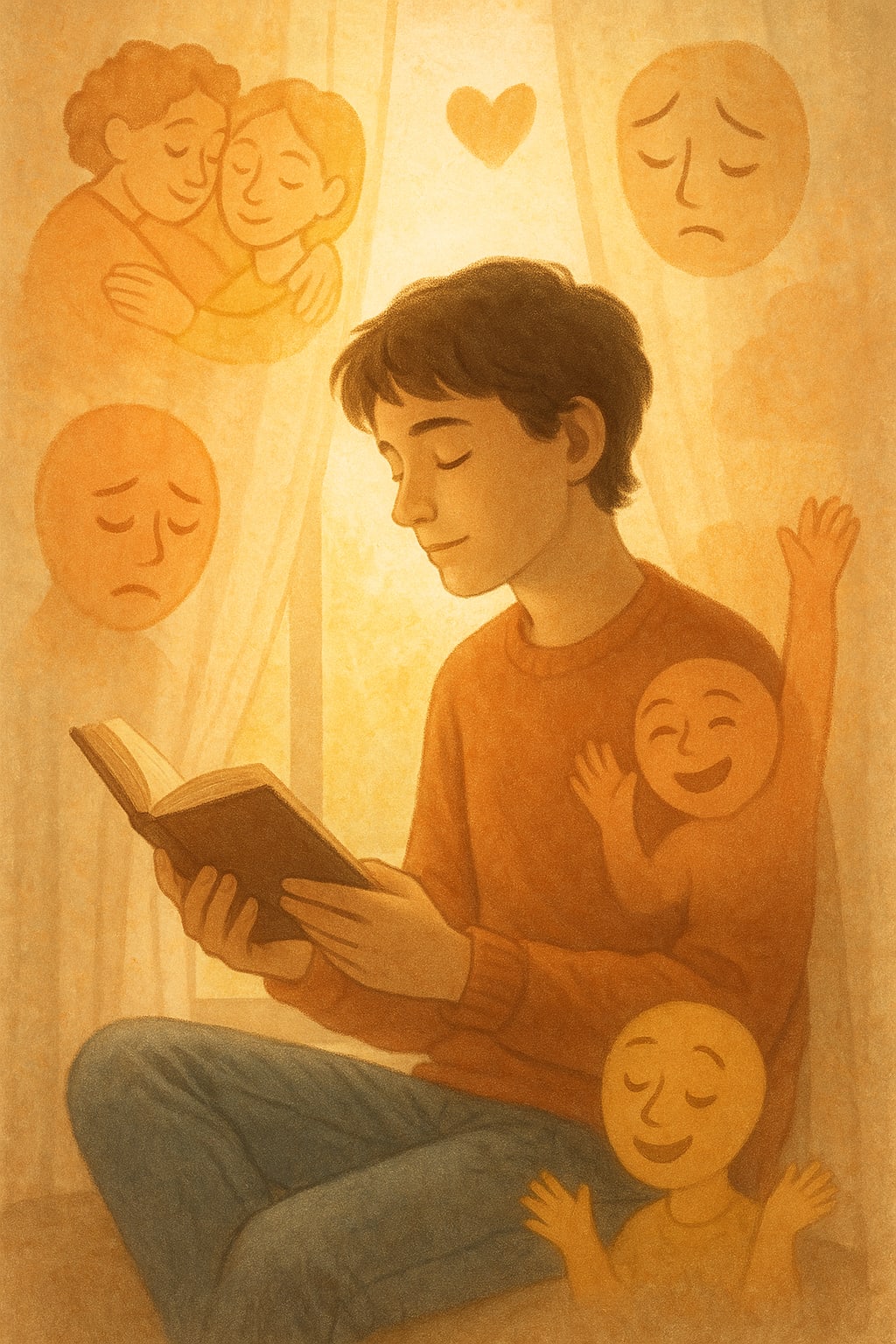
In a world where emotional understanding and human connection are more important than ever, reading stands out as a powerful tool for nurturing empathy and emotional intelligence. While reading is often seen as a source of knowledge or entertainment, its deeper psychological and emotional impacts are just as significant. Books — especially fiction and personal narratives — give us a window into the lives, thoughts, and emotions of others, allowing us to experience the world from different perspectives. This unique ability helps develop both empathy and emotional intelligence, skills that are crucial for personal relationships, leadership, and social harmony.
What is Empathy and Emotional Intelligence?
Empathy is the ability to understand and share the feelings of another person. It’s what allows us to connect emotionally with people, even if we haven’t experienced the same situations as them. Emotional intelligence, on the other hand, includes empathy but is broader. It’s the ability to recognize, understand, and manage your own emotions as well as the emotions of others.
Both of these traits are not only valuable in personal life but are also highly sought-after in professional environments. They help build strong relationships, reduce conflict, and promote better communication. Interestingly, one of the most effective and accessible ways to develop these qualities is through the simple act of reading.
Reading Fiction as an Empathy Exercise
Fiction is particularly effective in building empathy. When you read a novel, you’re often placed inside the mind of a character. You follow their thoughts, feelings, struggles, and triumphs. This kind of deep engagement is like a simulation of real-life social interaction. You’re not just observing from the outside — you are experiencing their emotions from within.
Studies have shown that people who read literary fiction score higher on tests of empathy and theory of mind — the ability to understand that others have beliefs and desires different from one’s own. Books by authors like Charles Dickens, Toni Morrison, or Khaled Hosseini allow readers to see the world through the eyes of characters who come from different cultures, backgrounds, and time periods.
Even a short story can provide insight into how people react to grief, joy, anger, or love. These insights stay with readers and can influence how they treat others in real life.
Real-World Benefits of Empathy Through Reading
Reading about characters from different walks of life broadens your understanding of humanity. For example, reading about the struggles of a refugee family, the challenges faced by someone with a disability, or the inner thoughts of a person dealing with mental illness helps dismantle stereotypes and prejudices. It promotes compassion and reduces judgment.
These lessons don’t just stay within the pages of the book. Readers often find themselves more open-minded and thoughtful in their day-to-day interactions. They become better listeners, more patient partners, and more understanding coworkers.
Teachers who read regularly are more empathetic toward their students. Leaders who engage with literature tend to show greater emotional awareness when managing teams. In essence, reading creates better people.
Emotional Intelligence: Reading Helps You Understand Yourself
Apart from understanding others, reading also helps readers become more in tune with their own emotions. This is a core aspect of emotional intelligence. Through reading, people are exposed to a variety of emotional situations — betrayal, love, failure, forgiveness. They learn how characters cope, make decisions, and grow from their experiences. These lessons become part of the reader’s emotional vocabulary.
Autobiographies and memoirs are particularly useful here. They provide raw, honest accounts of human emotion. Reading someone’s life story teaches readers how people manage pain, loss, or trauma, and how they build resilience. This not only fosters empathy but also guides readers in navigating their own emotional challenges.
In this way, books serve as emotional mirrors, allowing readers to recognize, reflect, and regulate their feelings. A person who can name and understand their emotions is less likely to be overwhelmed by them, and more likely to manage stress and relationships effectively.
Children and Empathy: Why Early Reading Matters
For children, reading is especially powerful. When kids read stories, they naturally begin to relate to characters, imagine other people’s feelings, and recognize moral dilemmas. This early emotional training through stories helps them develop social awareness and emotional control.
Parents and educators who encourage children to read — particularly books with strong characters and moral themes — are investing in their emotional growth. Books like Charlotte’s Web, The Little Prince, or Wonder help children understand kindness, loyalty, courage, and compassion.
Research shows that children who read regularly are more likely to show empathy toward their peers, handle conflict better, and have higher levels of emotional maturity.
Non-Fiction and Emotional Growth
While fiction is especially effective, non-fiction books also play a role. Books on psychology, human behavior, and emotional well-being can provide readers with practical tools to understand and manage emotions.
Books such as Daniel Goleman’s Emotional Intelligence, Brené Brown’s The Gifts of Imperfection, or Viktor Frankl’s Man’s Search for Meaning offer not only knowledge but emotional insight. They help readers reflect on their own feelings, make better decisions, and cultivate empathy in intentional ways.
Biographies also open the door to empathy. When you read about someone’s real-life journey — their struggles, hopes, and achievements — you begin to see the human side of history, success, and leadership.
The Digital Age and the Return to Reading
In an age dominated by quick content and short attention spans, reading provides a much-needed space for deep emotional reflection. Social media, while connecting us, often lacks depth and nuance. Reading, on the other hand, slows us down and invites us into meaningful emotional experiences.
By making time to read — especially thoughtfully chosen books — we’re not only feeding our intellect but also nurturing our hearts. In a divided and fast-paced world, that is more important than ever.
Final Thoughts
Reading is more than just a pastime or academic exercise. It is a journey into the emotional landscapes of others, and in turn, into our own hearts. Whether it’s fiction, memoir, or self-help, the stories we engage with shape the way we feel, think, and connect.
Empathy and emotional intelligence are not fixed traits; they can be developed, and reading is one of the most effective, accessible, and enjoyable ways to do so. As we turn each page, we grow — not just as readers, but as more understanding and emotionally aware human beings.
About the Creator
Voice of Simplicity
''Voice of Simplicity'' shares thoughtful insights on life, personal growth, and everyday wisdom. Focused on clarity and calmness, this platform explores meaningful ideas through a simple, relatable lens.
Keep reading
More stories from Voice of Simplicity and writers in BookClub and other communities.
5 Life-Changing Lessons from Reading Just One Book a Month
In a world full of distractions, reading a book might seem like a slow or outdated habit. With social media feeds refreshing every second and short-form content demanding constant attention, sitting quietly with a book can feel unfamiliar to many. But the rewards go far beyond simple entertainment for those who commit to reading even one book a month. A consistent reading habit can transform the way we think, feel, and live.
By Voice of Simplicity10 months ago in BookClub
Rachel Reviews: Lakefront Wolves by Joseph Deegan
Meet Finn. He's an 18 year old kid who has potential. He's bright with great school scores and he's also an athlete, a footballer of some prowess. He has it all going for him, it would seem, and yet, he's determined to send what could be a well-planned, stable existence firmly off the rails. He drinks, he smokes, he takes drugs, he has violent tendencies and he's in danger of losing not only his mind but all that he holds dear.
By Rachel Deeming9 days ago in BookClub
Dion Fortune
A Voice Within the Occult Revival The early twentieth century witnessed a resurgence of interest in esoteric philosophy, ritual magic, and comparative mysticism across Britain and Europe. Within that climate of spiritual experimentation and intellectual crosscurrents, Dion Fortune emerged as one of the most articulate and disciplined exponents of the Western Mystery Tradition. Born Violet Mary Firth in 1890 in Llandudno, Wales, and later raised in England, Fortune brought together trained psychological insight, ceremonial practice, and a distinctly literary imagination at a time when occultism often struggled for intellectual credibility.
By Marcus Hedare4 days ago in BookClub
From ad men to mad men
It's after 2am in the morning when a local police patrol vehicle in Northern New Jersey spots a figure costumed as Quasimodo, The Hunchback of Notre Dame, proceeding southbound on the sidewalk along Lydecker Street. Though the hunchback’s costume stuffing offers added insulation, it's January, and friggin’ freezing. Carefully, the officers slow down, gently question the subject, and offer him a ride home.
By David W. Maury5 days ago in Humor


Comments
There are no comments for this story
Be the first to respond and start the conversation.