
Hillbilly Elegy Book Summary
A memoir of a Family and Culture in Crisis
Disclaimer: There are affiliate links in this post, meaning, at no additional cost to you, I may receive a small commission if you click through and take action. Clicking does not initiate any commitment.
Introduction:
"Hillbilly Elegy: A Memoir of a Family and Culture in Crisis" is a memoir by J.D. Vance, published in 2016. The book offers a deeply personal account of growing up in a poor Rust Belt town and provides a broader commentary on the struggles of America's white working class. Vance's narrative interweaves his family's history with sociological insights, exploring themes of poverty, addiction, and social mobility.
Through his own journey from a turbulent childhood in Middletown, Ohio, to becoming a Yale Law School graduate, Vance examines the cultural and economic factors that have contributed to the decline of the white working class in America. He offers a unique perspective on the challenges faced by this demographic, drawing from his experiences as both an insider and an outsider to the "hillbilly" culture.
Click Here to get a Copy of the Hillbilly Elegy Audio Book at no cost.
Chapter 1: A Hillbilly Elegy
Vance begins by painting a vivid picture of his Appalachian roots, detailing the migration of his family from the hills of eastern Kentucky to the industrial town of Middletown, Ohio. He introduces the concept of "hillbilly" culture, characterized by a fierce sense of loyalty, strong family ties, and a deep-seated distrust of outsiders. Vance describes how this cultural background shaped his worldview and the challenges it presented in adapting to a changing economic landscape. He touches on the poverty, addiction, and social dysfunction that plagued his community, setting the stage for a deeper exploration of these issues in subsequent chapters.
Chapter 2: The Geography of Hope
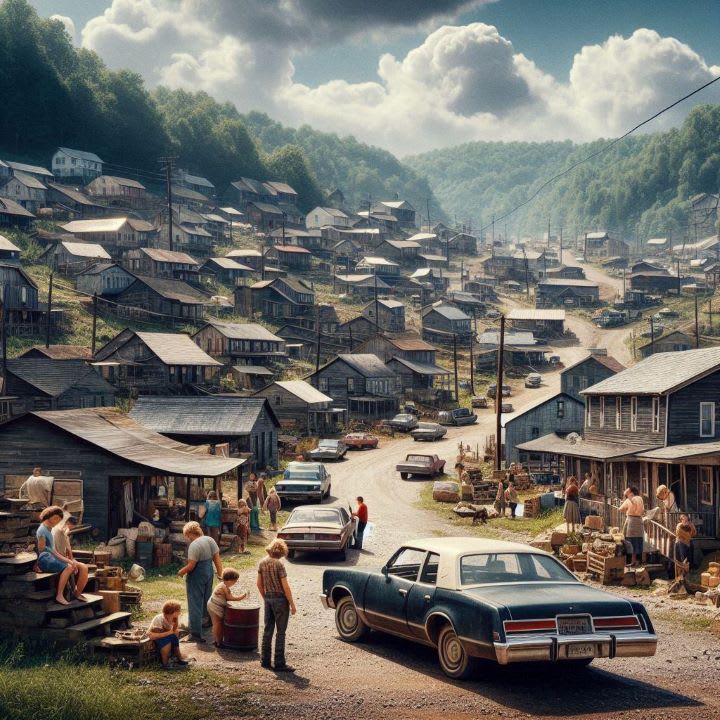
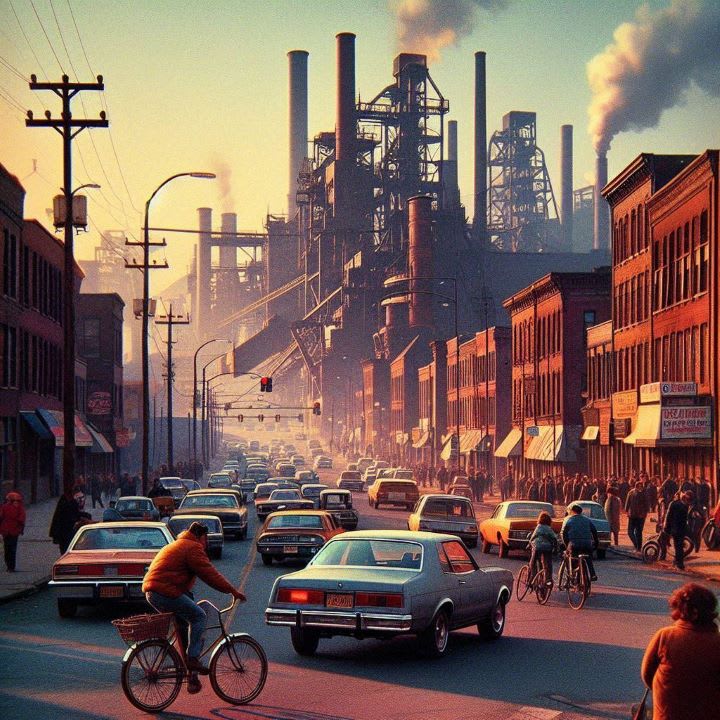
This chapter delves deeper into the story of Vance's grandparents, Mamaw and Papaw, who epitomize the Appalachian migration to the Midwest in search of better opportunities. Vance describes their journey from Jackson, Kentucky, to Middletown, Ohio, drawn by the promise of steady work in the booming steel industry.

He explores how this geographical shift affected their cultural identity, as they struggled to maintain their hillbilly values while adapting to a more urban environment. Vance also introduces the concept of the "hillbilly highway," the route taken by many Appalachian families in search of economic prosperity, and discusses how this migration pattern influenced the social and economic landscape of the Rust Belt.
Chapter 3: The Old Man and the Bottle
Vance focuses on his grandfather's battle with alcoholism and its far-reaching effects on the family. He describes Papaw's transformation from a hard-working family man to an unreliable and often violent alcoholic. The author explores how this addiction strained the relationship between his grandparents and created a tumultuous environment for their children. Vance uses this personal story to illustrate the broader issue of substance abuse in his community, discussing how alcoholism and, later, drug addiction became pervasive problems that contributed to the cycle of poverty and dysfunction. He also touches on the theme of resilience, describing how his grandmother eventually stood up to Papaw's behavior, forcing him to choose between his family and his addiction.

Chapter 4: The Tombstone-White Cadillac
In this chapter, Vance shifts focus to his mother's struggles with addiction and instability. He recounts her numerous failed relationships and marriages, each one adding to the chaos of his childhood. Vance describes the emotional toll of living with a parent battling drug addiction, including periods of neglect interspersed with moments of intense, often misguided, affection. He introduces his sister Lindsay, who became a stabilizing force in his life, often taking on a parental role despite her own young age. Vance uses these personal experiences to comment on the breakdown of family structures in his community and the impact of this instability on children's development and future prospects
Chapter 5: The Lord's Work
Vance explores the complex relationship between religion, social class, and personal responsibility in his community. He describes the prevalence of religious belief among the hillbilly population, noting how faith often provided comfort and a sense of community in difficult times. However, he also observes a disconnect between professed religious values and actual behavior, with many community members engaging in activities that seemed at odds with their faith. Vance discusses how religion sometimes served as a crutch, allowing people to abdicate personal responsibility by leaving everything "in God's hands." He also touches on the role of the church in providing social services and support in a community often neglected by official institutions.

Chapter 6: Hillbilly Hellraisers
This chapter examines the culture of violence and confrontation that Vance experienced growing up. He describes how physical aggression was often seen as a valid and even admirable way to resolve conflicts or defend one's honor. Vance recounts personal experiences and family stories that illustrate this mindset, including instances of relatives engaging in physical altercations over perceived slights. He reflects on how this culture of violence affected his own behavior and relationships, discussing the challenges of unlearning these ingrained responses. The author also explores the roots of this confrontational culture, linking it to the historical experiences of Scots-Irish settlers in Appalachia and the harsh conditions they faced.
Chapter 7: Above the Law
Vance delves into the widespread distrust of institutions and authority figures in his community. He describes how this attitude, combined with a sense of victimhood, often led to a disregard for rules and a tendency to blame others for personal failures. Vance recounts instances where family members and neighbors flouted laws or manipulated systems, justifying their actions as necessary for survival in a world they perceived as stacked against them. He discusses the paradox of simultaneously distrusting the government while relying heavily on public assistance programs. This chapter also touches on the impact of this mindset on education, with many in the community viewing academic achievement with suspicion or as a form of betrayal to their roots.
Chapter 8: Ridin' the Bull at Whataburger
In this chapter, Vance recounts his experiences working at a Middletown Whataburger during high school. He describes how this job provided him with valuable life lessons and a strong work ethic, largely due to the influence of his grandparents who emphasized the importance of hard work and self-reliance. Vance contrasts his attitude with that of some coworkers who seemed less invested in their jobs or quick to quit when faced with challenges. He uses these observations to comment on broader issues of work and welfare in his community, discussing the complex factors that contribute to unemployment and underemployment. Vance also touches on the decline of manufacturing jobs in the region and its impact on the local economy and work culture.

Chapter 9: Back in Middletown
After a brief and tumultuous period living with his biological father, Vance returns to Middletown to live with Mamaw. This chapter highlights the crucial role his grandmother played in his life, providing stability and high expectations that helped shape his future. Vance describes Mamaw's tough love approach, which combined unconditional support with strict rules and a focus on education. He reflects on how this stable environment allowed him to focus on his studies and begin to envision a future beyond the limitations of his upbringing. This chapter also explores the concept of social capital, discussing how Mamaw's guidance and connections helped Vance navigate systems and opportunities that might otherwise have been inaccessible to him.

Chapter 10: Hillbilly Values
In this chapter, Vance provides a nuanced examination of the complex set of values that define hillbilly culture. He discusses the importance of family loyalty, personal honor, and self-reliance, explaining how these values shaped his upbringing and the community around him. Vance describes the strong emphasis on kinship and the expectation of unwavering support for family members, even in difficult circumstances. He explores how this loyalty can be both a source of strength and a burden, sometimes enabling destructive behaviors or hindering individual progress. The author also delves into the concept of personal honor, describing how perceived slights or disrespect could quickly escalate into confrontations. Vance reflects on the double-edged nature of self-reliance, praising its role in fostering resilience while acknowledging how it can lead to a reluctance to seek help or admit vulnerability. He concludes by considering how these values, once adaptive for survival in Appalachia, may be ill-suited to the challenges of modern society.
Chapter 11: The Marine Corps
Vance's decision to join the Marine Corps after high school marks a significant turning point in his life. He describes the culture shock of basic training and how the military's structure and discipline provided a stark contrast to the chaos of his upbringing. Vance details the physical and mental challenges he faced, emphasizing how the Marine Corps instilled in him a sense of confidence and self-efficacy he had previously lacked. He explores how exposure to diverse perspectives and backgrounds in the military helped broaden his horizons and challenge some of the ingrained prejudices from his hillbilly upbringing. Vance also discusses the practical skills he gained, from financial management to personal organization, which proved crucial in his later academic and professional life. He reflects on how his military experience provided him with a new framework for understanding personal responsibility and achievement, setting the stage for his future success.

Chapter 12: The Ghosts of the Past
Returning to civilian life, Vance grapples with the lasting impact of his upbringing on his behavior and relationships. He describes the challenges of overcoming ingrained patterns of thought and reaction, particularly in moments of stress or conflict. Vance provides examples of how his hillbilly background influenced his interactions in college and early work experiences, sometimes leading to misunderstandings or self-sabotaging behaviors. He discusses the concept of "imposter syndrome" and how his working-class background made him feel out of place in more affluent or educated circles. Vance also explores the psychological impact of childhood trauma, discussing how experiences of neglect and instability continued to affect his emotional responses and ability to form healthy relationships. He concludes by reflecting on the ongoing process of self-awareness and growth required to address these "ghosts" of his past.
Chapter 13: A Culture in Crisis
In this chapter, Vance broadens his focus to examine the wider cultural and economic factors contributing to the struggles of the white working class. He discusses the decline of manufacturing jobs in the Rust Belt, exploring how the loss of stable, well-paying blue-collar work has eroded the economic foundation of many communities. Vance delves into the opioid epidemic, describing its devastating impact on families and communities already struggling with poverty and lack of opportunity. He examines the breakdown of traditional family structures, linking it to economic instability and changing social norms. Vance also explores the role of education in this crisis, discussing how distrust of institutions and a lack of emphasis on academic achievement have limited opportunities for younger generations. He concludes by reflecting on the sense of hopelessness and disillusionment that has taken root in many working-class communities, considering how this mindset perpetuates cycles of poverty and social dysfunction.
Chapter 14: What's the Matter with Kentucky?
Vance analyzes the political and social attitudes prevalent in his community, exploring why many working-class whites feel alienated from mainstream politics and often vote against their economic interests. He discusses the growing distrust of government institutions and the media, examining how this skepticism has been exploited by various political movements. Vance explores the concept of cultural resentment, describing how many in his community feel looked down upon by coastal elites and urban liberals. He examines the role of identity politics in shaping voting patterns, discussing how appeals to cultural values and traditional ways of life often outweigh economic considerations. Vance also touches on the impact of conservative media in shaping political opinions in working-class communities. He concludes by reflecting on the complexity of political motivations in his community, cautioning against simplistic explanations for voting behaviors.

Chapter 15: The Power of Agency
In this pivotal chapter, Vance emphasizes the importance of personal responsibility and agency in overcoming adversity. While acknowledging the systemic challenges faced by his community, he argues that individual choices and attitudes play a crucial role in determining outcomes. Vance provides examples from his own life and those of others who managed to break the cycle of poverty and dysfunction through determination and hard work. He discusses the concept of learned helplessness and how it can trap individuals in patterns of failure and dependency. Vance also explores the role of mentorship and positive role models in fostering a sense of agency, reflecting on how figures like his grandmother helped him envision and work towards a different future. He concludes by considering how to balance recognition of systemic barriers with an empowering message of personal responsibility
Chapter 16: Hillbilly Justice
Vance examines the concept of justice within hillbilly culture, describing how it often involves personal vendettas and a disregard for legal processes. He recounts stories of family members taking the law into their own hands, whether to settle disputes or protect their interests. Vance explores the historical roots of this attitude, linking it to the frontier justice of early Appalachian settlers and a longstanding distrust of outside authority. He discusses how this approach to justice can perpetuate cycles of violence and hinder social progress, making it difficult for communities to address systemic issues. Vance also touches on the complex relationship between his community and law enforcement, describing how police are often viewed with suspicion even as their presence is demanded in times of crisis. He concludes by reflecting on the challenges of reconciling this cultural understanding of justice with the needs of a modern, law-based society.
Chapter 17: The College Climb
Vance's journey through higher education forms the core of this chapter, beginning with his experiences at Ohio State University and culminating in his time at Yale Law School. He vividly describes the culture shock he experienced upon entering these institutions, detailing the stark contrasts between his working-class background and the predominantly middle and upper-class environments he encountered.
At Ohio State, Vance recounts his initial struggles with academic rigor and social integration. He describes feeling out of place among peers who seemed to navigate college life with ease, while he grappled with basic skills like time management and study habits. Vance shares anecdotes about his financial struggles, including the stress of managing student loans and working part-time jobs to make ends meet.
The narrative then shifts to his experiences at Yale Law School, where the sense of cultural dislocation intensified. Vance describes feeling like an impostor among classmates from privileged backgrounds, many of whom had been groomed for elite institutions from an early age. He recounts moments of social awkwardness, such as not knowing which fork to use at formal dinners or feeling out of place during discussions of summer homes and exotic vacations.

Throughout this chapter, Vance reflects on the invisible barriers faced by students from working-class backgrounds in elite educational settings. He discusses the concept of "cultural capital" - the social assets that facilitate social mobility beyond economic means - and how its absence can hinder success even for academically capable students from disadvantaged backgrounds.
The chapter concludes with Vance's reflections on the transformative power of education and the complex emotions that accompany social mobility. He acknowledges the opportunities his education has afforded him while grappling with the sense of displacement it has created.
Chapter 18: The Fruits of Our Labor
In this penultimate chapter, Vance reflects on his journey from Middletown to the upper echelons of academia and professional success. He begins by describing his entry into the world of law and finance, detailing the culture shock of working in corporate environments and the challenges of adapting to professional norms that were foreign to his upbringing.
Vance explores the concept of "code-switching" - the practice of alternating between different cultural and linguistic spaces - and how he found himself constantly adjusting his behavior and speech depending on whether he was in his professional world or back in his hometown. He shares anecdotes that highlight the stark contrasts between these two realms of his life, from attending high-powered business meetings to visiting family members struggling with addiction and poverty.
The author delves into the complex emotions that accompany his success, particularly the sense of survivor's guilt he experiences. Vance describes feeling torn between pride in his achievements and a nagging sense that he has somehow betrayed his roots or left his community behind. He discusses the challenges of maintaining connections with family and childhood friends while his life has taken such a different trajectory.

Vance also examines the broader implications of social mobility, reflecting on the societal factors that enabled his success and questioning why such opportunities remain out of reach for many others from similar backgrounds. He considers the role of mentors, educational programs, and personal determination in his journey, while acknowledging the element of luck that played a part in his story.
The chapter concludes with Vance's musings on the nature of the American Dream and its accessibility in contemporary society. He grapples with the tension between the narrative of meritocracy and the realities of systemic barriers to upward mobility, drawing on both his personal experience and broader societal observations.
Chapter 19: A New Direction
In the final chapter, Vance broadens his focus to consider the future of his community and the broader working class in America. He begins by summarizing the key issues he's explored throughout the book: the decline of industrial jobs, the opioid crisis, family instability, and cultural dislocation.
Vance then offers his thoughts on potential solutions to these complex problems, emphasizing the need for both policy changes and cultural shifts. He discusses the importance of education reform, suggesting ways to make higher education more accessible and relevant to working-class students. Vance also explores the potential of vocational training and apprenticeship programs as alternatives to traditional four-year college degrees.
The author addresses the need for economic diversification in regions heavily dependent on single industries, proposing strategies for attracting new businesses and fostering entrepreneurship in struggling communities. He also discusses the importance of addressing the opioid epidemic, advocating for a combination of increased addiction treatment resources and stricter regulation of pharmaceutical companies.
Vance delves into the cultural aspects of the challenges facing the white working class, suggesting ways to rebuild a sense of community and restore faith in institutions. He emphasizes the importance of cultivating a culture that values education, work ethic, and personal responsibility, while also acknowledging the need for empathy and support for those struggling with generational poverty and trauma.
The author reflects on his own role in addressing these issues, discussing his efforts to give back to his community and use his platform to raise awareness about the challenges facing the white working class. He shares his vision for bridging the growing divide between rural and urban America, emphasizing the need for greater understanding and dialogue across cultural and class lines.
Vance concludes the book by returning to his personal story, reflecting on how his experiences have shaped his worldview and his hopes for the future. He reiterates the complexity of the issues facing his community, cautioning against simplistic solutions while maintaining a sense of cautious optimism about the potential for positive change.
The chapter, and the book, end with a call to action for readers to consider their own roles in addressing social and economic inequality, encouraging a nuanced and compassionate approach to understanding and tackling the challenges facing America's working class.
Click here to get a copy of the Hillbilly Elegy audio book at no cost.
Final Thoughts
"Hillbilly Elegy" is a poignant and thought-provoking memoir that offers valuable insights into the challenges faced by America's white working class. Through his personal story, J.D. Vance illuminates the complex interplay of cultural, economic, and social factors that have contributed to the decline of this demographic.
The book's strength lies in its ability to humanize statistics and headlines, providing a nuanced perspective on issues often oversimplified in political discourse. Vance's narrative challenges both conservative and liberal orthodoxies, arguing that while systemic factors play a significant role in perpetuating poverty and social dysfunction, personal responsibility and cultural attitudes are equally important.
Vance's journey from a turbulent childhood in Middletown to success at Yale Law School serves as a testament to the potential for upward mobility, even in the face of significant obstacles. However, he is careful to acknowledge the exceptional nature of his story and the support systems that made it possible, particularly the stabilizing influence of his grandparents.
The memoir raises important questions about the American Dream and its accessibility in the 21st century. It highlights the erosion of traditional working-class jobs, the impact of globalization and technological change, and the cultural divide between rural and urban America. Vance's analysis of these issues is deeply personal yet broadly applicable, offering readers a framework for understanding the discontentment and alienation felt by many in the white working class.
The book's publication in 2016 coincided with a period of heightened political polarization and economic anxiety in the United States. Its exploration of the cultural and economic factors that have shaped the white working class's worldview provided timely insights into the political shifts occurring in regions like Appalachia and the Rust Belt.
Ultimately, "Hillbilly Elegy" is a call for empathy and understanding. It challenges readers to look beyond stereotypes and easy explanations, encouraging a more nuanced approach to addressing the complex issues facing America's working class. While Vance doesn't offer simple solutions, his memoir serves as a starting point for crucial conversations about opportunity, culture, and the American Dream in the 21st century.
Disclaimer: To increase productivity and maintain consistency, this work was partially created using AI writing assistance. The final product represents a blend of human creativity and AI-enhanced composition.
About the Creator
Keep reading
More stories from writers in BookClub and other communities.
My New Book is Finally Here
My poetry collection Beautiful and Brutal Things is done. It's actually done and finally published over 270 pages. Over a year of my life went into this book. More than a year, really. Long days at my computer, sometimes seven days a week because I couldn't stop even when I probably should have. Then two months of editing that felt harder than the writing itself. But it's finished, and I'm still standing, and the book is real.
By Tim Carmichael7 days ago in BookClub
The Planned Obsolescence of the Jedi Order
“Bound by temples and codes, the Force grows thin, for flow it must, not sit in stone. When orders cling to their names, blind they become to the living light. Only when the old walls fall does the Force remember how to breathe.”
By Peter Ayolov7 days ago in BookClub
The Path to Salvation
The late autumn evening air filled the monk's lungs, but it wasn't the season that chilled his bones. The heavy-handed presence of evil he had sensed upon entering the woods surrounding this mountain village had not bothered to conceal itself from him.
By Made in DNA3 days ago in Fiction




Comments