
Eileen Garrett
Medium, Maverick, and the Battle for Psychic Science


Opening the Circle
Some figures in spiritual and psychic history operate like hidden keystones. The public may not recognize the name at first glance, yet entire movements rest quietly on the work left behind. Eileen Jeanette Garrett belongs firmly in that category. Born in Ireland at the close of the nineteenth century and active across Europe and the United States for decades, Eileen Garrett shaped modern conversations about psychic phenomena while refusing to confine spiritual experience to spectacle or blind belief.
Even the circumstances of Eileen Garrett’s birth reflect a subtle but persistent ambiguity. Irish civil records list 1892 as the year of birth, while Eileen Garrett and several close associates consistently stated 1893. Biographers and historians continue to acknowledge both dates, commonly recording the lifespan as 1892/93 to 1970. This uncertainty has never been resolved definitively, yet the detail has become emblematic rather than problematic. A life devoted to investigating liminal states, uncertain evidence, and contested truths naturally resists neat categorization. What remains beyond dispute is the place and year of death. Eileen Garrett died in Nice, France, in 1970 after decades of international influence.
Early life in Ireland was marked by upheaval and loss. Orphaned at a young age and raised by relatives, Eileen Garrett experienced frequent displacement and instability. Later accounts describe spontaneous visions, altered states, and dissociative episodes beginning in childhood. Rather than dismissing these experiences as superstition or pathology, Eileen Garrett treated them as data requiring interpretation. This attitude would become a defining characteristic. Psychic ability, in Garrett’s view, demanded responsibility, structure, and inquiry rather than theatrical display.
By early adulthood, Eileen Garrett had relocated to Britain, where exposure to Spiritualist circles, psychical research societies, and intellectual debate sharpened both technique and skepticism. Trance mediumship became the primary public expression of psychic ability, yet the practice was never framed as infallible. Garrett openly acknowledged the risks of suggestion, unconscious fabrication, and emotional contamination during séances. This candor distinguished Eileen Garrett from many contemporaries and attracted both critics and serious investigators.
Public attention reached a peak in 1930 following séances connected to the crash of the British airship R101. During trance sessions held shortly after the disaster, Eileen Garrett produced technical descriptions and personal details attributed to deceased crew members. Newspapers in Britain and abroad reported the story extensively, transforming Garrett into an international figure almost overnight. Admirers hailed the communications as extraordinary evidence, while skeptics questioned sources of information and psychological mechanisms. Rather than retreat from controversy, Eileen Garrett leaned into examination, submitting transcripts, cooperating with researchers, and allowing the incident to remain open to debate.
The aftermath of the R101 case marked a turning point. Fame alone held little interest. Institutional influence became the true objective. Over the following decades, Eileen Garrett worked tirelessly to professionalize the study of psychic phenomena. In 1951, the Parapsychology Foundation was established in New York with the explicit goal of supporting scientific research into extrasensory perception, psychokinesis, and consciousness. Grants funded laboratory experiments, international conferences, and scholarly exchanges across disciplinary and national boundaries. Major researchers in psychology, physics, anthropology, and medicine engaged with the foundation’s work, often for the first time.
Publishing became another critical avenue of influence. Eileen Garrett served as editor of Tomorrow, a journal that defied easy classification. Articles ranged from depth psychology and parapsychology to philosophy, religion, and emerging scientific theories. Contributors included scientists, mystics, artists, and philosophers who rarely shared platforms elsewhere. The journal reflected Garrett’s conviction that knowledge advanced through dialogue rather than doctrinal purity.
Throughout a prolific writing career, Eileen Garrett produced books that blended autobiography, case study, and theoretical reflection. Titles such as My Life as a Search for the Meaning of Mediumship and Adventures in the Supernormal revealed both conviction and restraint. Psychic phenomena were presented neither as miracles nor as parlor tricks, but as imperfect signals emerging from poorly understood layers of mind and reality. Doubt was treated as an ally rather than an enemy.
By the time of death in 1970, Eileen Garrett had become a central architect of modern parapsychology, not through claims of certainty but through infrastructure, funding, and intellectual courage. Laboratories existed where none had before. Journals circulated ideas that once belonged only to private circles. Researchers found support without being required to surrender critical rigor.
For contemporary practitioners of magic, occult philosophy, and spiritual inquiry, the legacy remains strikingly relevant. Eileen Garrett demonstrated that wonder and discipline need not cancel each other out. Psychic experience could be honored without abandoning reason. Mystery could be approached without surrendering responsibility. In a field often split between belief and dismissal, Eileen Garrett insisted on a third path built from curiosity, patience, and sustained human effort.
Voices from the Wreckage: Early Mediumship and the R101 Séances
Eileen Garrett’s public life as a medium took shape during the 1920s, a period when Spiritualism still carried cultural weight in Britain but faced growing scrutiny from scientists and journalists. Early séances were typically small, private affairs held among acquaintances rather than ticketed performances. These gatherings emphasized observation and record keeping rather than spectacle. From the outset, Eileen Garrett displayed an unusual combination of intellectual confidence and restraint. Claims of infallible spirit contact were consistently avoided. Instead, Garrett treated trance communication as a phenomenon deserving examination rather than unquestioned reverence.
Mediumship during this period often relied on rigid spirit hierarchies and named guides presented as absolute authorities. Eileen Garrett diverged sharply from this pattern. Trance communications attributed to the control known as Ulvani were never framed as definitive proof of survival after death. Garrett repeatedly acknowledged alternative explanations, including dissociation, subconscious imagery, and telepathic impressions drawn from living minds. This willingness to entertain psychological interpretations set Garrett apart from many contemporaries and attracted the attention of psychical researchers who sought cooperation rather than evangelism.
Public anonymity ended abruptly in October 1930. On October 5 of that year, the British rigid airship R101 crashed near Beauvais, France, while en route to India on a high profile maiden voyage. The airship represented years of government investment and national ambition. The crash killed forty eight people, including the Secretary of State for Air Lord Thomson and several leading engineers involved in the program. News coverage was immediate and intense. Official inquiries began almost at once, while public grief mixed with anger and disbelief.
Within days of the disaster, Eileen Garrett was invited to participate in séances conducted at the National Laboratory of Psychical Research in London. The laboratory was directed by Harry Price, a controversial but meticulous investigator known for exposing fraudulent mediums while remaining open to genuine anomalies. Price arranged controlled sittings attended by observers who included engineers, journalists, and researchers familiar with aviation.
During trance states recorded by shorthand and later published, the control Ulvani delivered detailed statements concerning the final flight of the R101. Descriptions included references to excessive strain on the airship’s structure, difficulty maintaining lift, and poor performance under adverse weather conditions. Statements also addressed design compromises and pressure placed on engineers to proceed despite unresolved technical concerns. Some remarks appeared to contradict official narratives circulating at the time, while others aligned closely with findings that would later emerge during the Air Ministry investigation.
The séances ignited international attention almost immediately. British and American newspapers reported the sessions in dramatic language, often presenting the communications as posthumous testimony from the dead crew. Public reaction divided sharply. For bereaved families, the sittings offered a sense of connection and acknowledgment. Spiritualist communities cited the material as compelling evidence of survival after death. Critics, including several psychologists and journalists, questioned whether Garrett could have absorbed technical information from prior reading, conversation, or inference. The possibility of cryptomnesia, the unconscious recall of forgotten information, was frequently raised.
Harry Price adopted a more cautious position. Transcripts were preserved, witnesses interviewed, and claims neither endorsed nor dismissed outright. Price acknowledged the difficulty of explaining the content entirely through fraud while stopping short of attributing the communications to literal spirit intervention. The ambiguity frustrated partisans on both sides but secured the R101 séances a lasting place in psychical research literature.
The controversy permanently altered Eileen Garrett’s public standing. International recognition followed, accompanied by sustained scrutiny that never fully receded. Rather than retreating from debate, Garrett continued to cooperate with investigators and allowed the R101 material to remain open to reinterpretation as new evidence emerged. Later technical analyses of the crash confirmed several structural and performance issues mentioned during the séances, although no consensus was ever reached regarding the source of the information.
Today, the R101 séances remain among the most analyzed events in twentieth century psychical research. The sessions endure not because of simple answers but because of unresolved questions. Eileen Garrett emerged from the episode neither canonized nor discredited, but firmly established as a central figure willing to stand at the intersection of mystery, evidence, and intellectual risk.
Testing the Invisible: Mediumship Under Controlled Conditions
During the interwar years, public mediumship and scientific investigation often existed in open conflict. Many trance mediums rejected laboratories outright, arguing that instruments, observers, and rigid protocols interfered with psychic sensitivity. Eileen Garrett adopted a markedly different stance. Scientific scrutiny was treated as an ethical obligation rather than a threat. Garrett maintained that authentic phenomena should tolerate examination, and that negative outcomes could still advance understanding of altered states and unconscious processes.
This position placed Eileen Garrett among a small minority of mediums willing to submit abilities to formal testing. Cooperation with researchers was not framed as a bid for validation but as an experiment in honesty. Mediumship, in Garrett’s view, was not a fixed power that could be summoned at will, but a complex interaction involving attention, emotion, expectation, and mental imagery. Laboratories offered an opportunity to isolate some of those variables, even at the risk of disappointment.
In 1933, Eileen Garrett traveled to Duke University in Durham, North Carolina, to work with Joseph Banks Rhine. Rhine, originally trained as a botanist, had become the leading American figure in parapsychology and was developing statistical methods to test claims of extrasensory perception. Rhine rejected séance conditions in favor of standardized tasks designed to eliminate sensory leakage and subjective interpretation. The primary tool used during these sessions was the Zener card deck, composed of five simple symbols repeated in random order.
Garrett participated in clairvoyance trials requiring identification of concealed symbols without visual or auditory cues. Conditions were intentionally monotonous and emotionally neutral. Results showed no deviation from chance expectation. Rhine reported the findings plainly, noting that no evidence of extrasensory perception emerged under those circumstances. The outcome contradicted popular portrayals of Garrett as an infallible psychic and offered skeptics clear ammunition.
Reaction from Eileen Garrett was notable for restraint. No accusations of bias or sabotage followed. Instead, Garrett accepted the results as accurate within the limits of the experiment and continued correspondence with Rhine regarding methodological constraints. Rhine later acknowledged Garrett’s cooperation as sincere, even while remaining unconvinced of paranormal ability.
Further testing followed in Britain. In 1937, Eileen Garrett participated in an extensive series of experiments conducted by Samuel George Soal, a mathematician and psychical researcher associated with the Society for Psychical Research. Soal emphasized large sample sizes and rigorous statistical analysis. Over twelve thousand individual trials were conducted using card guessing protocols comparable to those employed at Duke. Once again, aggregate scores remained within chance limits. No sustained psychic effect could be demonstrated.
These findings intensified existing divisions. Critics interpreted the repeated failures as decisive evidence against mediumistic claims. Supporters of psychic phenomena argued that the experimental environment itself suppressed performance. Trance states, emotional resonance, narrative continuity, and interpersonal dynamics were cited as essential elements absent from repetitive laboratory tasks. The debate reflected a broader tension between experiential knowledge and empirical measurement.
Eileen Garrett refused to resolve the tension through denial or dogma. Public statements and private writings emphasized curiosity over certainty. Laboratory failure was not treated as proof of fraud, nor was séance success treated as proof of survival after death. Garrett repeatedly expressed greater interest in understanding the psychology of trance, dissociation, and intuition than in defending metaphysical conclusions.
This intellectual posture carried costs. Spiritualist audiences accustomed to firm assurances found the ambiguity unsettling. Some researchers viewed the lack of definitive claims with suspicion. Yet others recognized a rare seriousness. Mediumship was presented not as a finished answer but as an unresolved human phenomenon shaped by mind, context, and expectation.
By participating openly in laboratory studies that produced null results, Eileen Garrett challenged the assumption that belief required selective evidence. The willingness to record failure alongside mystery altered the tone of psychical research discussions. Mediumship could be examined without spectacle, tested without hostility, and discussed without premature certainty. In an era defined by extremes, Garrett occupied a narrower and more demanding intellectual ground built on discipline, candor, and sustained inquiry.
Building the Infrastructure of Inquiry: Publishing, Patronage, and Intellectual Community
Public séances introduced Eileen Garrett to a wide audience, yet lasting influence emerged through quieter and more durable work. Publishing, archiving, and institutional organization became the mechanisms through which ideas survived beyond individual performances. Eileen Garrett understood that unconventional subjects required stable platforms if serious discussion was to continue across generations. Without journals, libraries, and funding structures, inquiry dissolved into anecdote and rumor.
The first major step in that direction appeared in 1941 with the founding of Tomorrow. Launched during a period of global upheaval, the magazine resisted narrow categorization. Parapsychology shared space with psychology, philosophy, literature, religious studies, and cultural criticism. Articles on clairvoyance and telepathy appeared alongside essays on depth psychology, modern art, Eastern philosophy, and emerging scientific ideas. Contributors included scholars, writers, artists, and researchers rarely published together elsewhere.
Editorial policy emphasized curiosity over dogma. Tomorrow avoided rigid allegiance to Spiritualism, materialism, or any single metaphysical system. The magazine functioned as a crossroads rather than a pulpit. Readers encountered competing interpretations presented side by side, allowing disagreement without dismissal. Such editorial openness was rare in a cultural climate often polarized between belief and debunking.
Publishing decisions reflected Eileen Garrett’s conviction that psychic phenomena could not be isolated from broader human experience. Mediumship was treated as one expression of consciousness rather than a supernatural exception demanding special pleading. By embedding parapsychology within wider intellectual conversations, Tomorrow attracted readers who might otherwise have avoided psychic subjects entirely. Circulation remained modest, yet influence extended far beyond raw numbers through citation, correspondence, and scholarly engagement.
Institution building reached a new level in 1951 with the establishment of the Parapsychology Foundation in New York. The organization was co-founded by Eileen Garrett and Frances P. Bolton, a United States Congresswoman with a strong interest in scientific research and education. The partnership combined private patronage with public credibility at a time when parapsychology struggled for institutional legitimacy.
The Parapsychology Foundation pursued multiple objectives simultaneously. Research grants supported experimental work in laboratories across the United States and Europe. International conferences created rare opportunities for scholars to share findings without fear of professional marginalization. Specialized publications disseminated technical research to academic audiences rather than general readers alone.
One of the foundation’s most enduring contributions was the creation of a comprehensive research library. Books, journals, manuscripts, correspondence, and experimental records were systematically collected and preserved. The resulting archive became one of the most extensive collections devoted to parapsychology and related fields anywhere in the world. Researchers gained access to historical materials that might otherwise have been lost, scattered, or dismissed as ephemera.
Administrative leadership required patience as much as vision. Fundraising, grant evaluation, editorial oversight, and international coordination demanded sustained effort rarely visible to the public. Eileen Garrett devoted considerable personal resources to these tasks, often prioritizing infrastructure over personal recognition. The work transformed parapsychology from a loose network of individuals into a field with continuity and memory.
Through publishing and organizational leadership, Eileen Garrett altered the conditions under which psychic research could exist. Ideas were no longer dependent solely on charismatic personalities or sensational events. Journals, archives, and institutions provided stability, accountability, and intellectual shelter. In a century marked by ideological extremes, Eileen Garrett demonstrated that curiosity flourished best when supported by durable structures and open exchange rather than certainty alone.
From Séance Room to Contemporary Practice: A Living Current of Influence
Eileen Garrett’s impact did not remain confined to parapsychology laboratories or mid twentieth century publishing circles. Ideas cultivated through decades of séance work, experimental cooperation, and intellectual exchange quietly migrated into broader currents of modern mysticism. Long before contemporary discussions of evidence based spirituality or psychologically informed magic became common, Garrett articulated a model that treated altered states as meaningful experiences requiring discipline, context, and critical reflection.
Modern witchcraft and esoteric practice often emphasize trance, intuition, and direct experience while rejecting unquestioned authority. This balance echoes principles Eileen Garrett articulated repeatedly. Mediumship was never framed as passive possession or divine certainty. Trance states were approached as skills shaped by training, emotional regulation, and self awareness. Magical and psychic practices rooted in such an approach emphasize responsibility over spectacle and inquiry over dogma.
Garrett’s insistence on dialogue between scientific language and mystical experience also reshaped how psychic phenomena could be discussed without reduction or exaggeration. Psychological vocabulary became a tool rather than a threat. Concepts such as dissociation, subconscious imagery, and altered perception entered conversations previously dominated by spirit hierarchies and doctrinal explanations. Contemporary practitioners who speak openly about shadow work, integration, and mental health within magical frameworks often unknowingly follow paths Garrett helped clear.
The publishing work surrounding Tomorrow further expanded influence by normalizing interdisciplinary exploration. Modern occult communities frequently draw inspiration from psychology, art theory, anthropology, and philosophy alongside ritual practice. Such synthesis mirrors the editorial ethos Garrett championed decades earlier. Mystical insight was presented as inseparable from culture, history, and creative expression rather than isolated supernatural exception.
Equally significant was the ethical posture embedded in Garrett’s legacy. Claims were not protected from scrutiny by appeals to belief. Failure was permitted without collapse of meaning. Magical and psychic practitioners today increasingly emphasize discernment, peer discussion, and reflective practice. This cultural shift owes much to figures who modeled intellectual humility within visionary work.
Eileen Garrett’s life demonstrated that mystery did not require obscurity and that enchantment did not require gullibility. Psychic sensitivity, trance exploration, and magical awareness could coexist with documentation, debate, and restraint. That synthesis continues to inform contemporary approaches to witchcraft and modern mysticism, where wonder is cultivated alongside discernment and where experience is honored without surrendering critical thought.
Shaping Contemporary Mysticism: Garrett’s Lasting Footprint on Modern Witchcraft
Eileen Garrett occupies a unique position in the evolution of modern witchcraft and contemporary mystical traditions. While Garrett did not identify as a practitioner of witchcraft, the methodologies and principles developed through decades of mediumship and parapsychological work created frameworks that many modern occultists have adopted, adapted, and integrated into practice. Trance states, psychic experimentation, and disciplined observation formed a triad of influence that continues to resonate within ritual, divinatory, and magical systems.
Mediumship, as practiced and documented by Garrett, emphasized disciplined engagement with altered states of consciousness. Trance was treated not as passive channeling or automatic dictation, but as a cultivated skill shaped by mental focus, emotional regulation, and awareness of subconscious processes. Modern witchcraft, particularly traditions emphasizing inner work, visionary journeying, or spirit communication, often mirrors these techniques. Exercises in meditation, trance induction, and intuitive attunement in contemporary practice reflect methods Garrett used to prepare for and structure séances. Structured preparation, such as grounding, protective visualizations, and mental concentration, can be traced directly to her insistence on creating safe and controlled conditions for psychic work.
Scientific rigor also played a crucial role in shaping the modern approach to magical practice. Garrett’s participation in laboratory studies with Joseph Banks Rhine at Duke University and Samuel Soal in London modeled the integration of observation, record keeping, and statistical analysis into spiritual work. Modern occult practitioners frequently adopt similar frameworks, keeping journals of visions, noting the conditions of trance experiences, and evaluating outcomes critically. The ethos of questioning, experimentation, and disciplined reflection that Garrett championed creates a bridge between mystical exploration and structured inquiry, allowing magical practice to maintain credibility and depth while retaining its experiential richness.
Publishing and institutional efforts further amplified Garrett’s influence. The magazine Tomorrow demonstrated that esoteric subjects could coexist with cultural, psychological, and artistic discourse. Essays on mysticism alongside philosophy and literature encouraged cross-disciplinary thinking, an approach now common in contemporary witchcraft circles where psychology, anthropology, and ecology intersect with magical theory and ritual practice. Likewise, the Parapsychology Foundation’s archival and research initiatives established a model for maintaining intellectual rigor and historical memory within mystical traditions, inspiring modern organizations that curate resources, sponsor research, and facilitate practitioner networks. These institutional models made it possible for practitioners to access historical material, scientific studies, and first-hand reports, bridging gaps between experiential practice and scholarly inquiry.
Ethical and methodological transparency is another enduring contribution. Garrett consistently emphasized honesty, careful documentation, and openness to alternative explanations. This approach instilled the value of discernment, a principle that modern witchcraft increasingly prizes. Practices emphasizing consent, reflection, and accountability in spirit work, divination, and energy manipulation reflect a philosophical continuity with Garrett’s insistence that curiosity should be balanced with responsibility. Rituals designed with attention to safety, psychological awareness, and clarity of intention reflect Garrett’s influence on how mystical practice is conducted in contemporary circles.
The pedagogical impact of Garrett’s work is also notable. By combining direct experience with reflective inquiry, Garrett provided an indirect template for teaching psychic and magical skills. Workshops, training programs, and online courses in modern witchcraft frequently incorporate elements that echo Garrett’s methods: emphasis on journaling, repeated structured practice, safe induction into altered states, and critical evaluation of subjective experience. This approach fosters practitioner development without requiring doctrinal adherence or blind faith.
Cultural influence extends beyond technique into the philosophical framing of mystical work. Garrett demonstrated that the pursuit of psychic or magical experience could coexist with intellectual curiosity, skepticism, and cross-disciplinary awareness. Rituals and practices in contemporary witchcraft often reflect this integrative ethos, blending meditation, visualization, ethical reflection, and research-informed practice. The result is a model of mystical engagement that is dynamic, reflective, and resilient, capable of adapting to diverse spiritual and cultural contexts.
Garrett’s legacy in modern witchcraft is therefore both practical and philosophical. Trance and psychic practice, experimental curiosity, interdisciplinary thinking, ethical rigor, and attention to pedagogy converge in a model that empowers practitioners to explore mystical phenomena without abandoning reason. The work demonstrates that magical experience can coexist with reflection, skepticism can coexist with wonder, and spiritual pursuit can coexist with disciplined inquiry. In this sense, Garrett’s life and work continue to provide a blueprint for integrating the mystical and the methodological in contemporary magical practice, influencing both how magic is performed and how it is conceptualized as a living, evolving discipline.
Trance as a Gateway: Method, Discipline, and Ethical Practice
Eileen Garrett’s work in mediumship represents one of the most comprehensive examinations of trance states conducted in the twentieth century. Trance was not treated as a mystical accident or purely theatrical display but as a skill requiring preparation, focus, and sustained observation. Detailed records of séance practices, the interaction with named “controls,” and reflections on subjective experience created a framework that modern practitioners of magic, ritual, and meditation continue to draw from when exploring altered states of consciousness.
Trance, in Garrett’s methodology, involved both mental and physical discipline. Preparation included relaxation, grounding, and concentration exercises designed to stabilize attention while minimizing emotional or environmental interference. Ethical safeguards were emphasized, including the careful management of suggestion, the protection of participants’ psychological wellbeing, and the avoidance of coercion or manipulation. This level of intentionality ensured that trance states could be explored safely and reproducibly, setting a standard that later ritual and meditative systems would adopt.
Interaction with “controls” was a distinctive element in Garrett’s approach. These entities, often named and characterized with distinct personalities and communicative styles, were treated as intermediaries or symbolic extensions of the subconscious rather than unquestioned external spirits. Detailed accounts documented the subtle differences between spontaneous intuition, subconscious elaboration, and apparently autonomous communication. This emphasis on discernment allowed later magical and mystical practitioners to develop skills in distinguishing personal insight from externalized or projected guidance. Such distinctions remain central in contemporary occult pedagogy, particularly in traditions that integrate divination, channeling, or visionary work.
Garrett also contributed to the understanding of the phenomenology of trance. Observers noted variations in voice, posture, breathing, and cognitive patterns when the medium entered altered states. Descriptions of mental clarity, emotional receptivity, and selective focus provided early observational data linking subjective experience with measurable behavior. Modern witchcraft and occult training programs often draw on similar protocols when teaching visualization, guided meditation, or ritual embodiment, emphasizing the integration of psychological awareness with mystical practice.
Intentionality was a consistent theme. Trance work, as outlined by Garrett, required clearly defined purpose, whether for communication, insight, or exploration of consciousness. Mental clarity and focus were cultivated as tools to navigate complex psychic or visionary experiences, reducing the likelihood of confusion, projection, or emotional overwhelm. Contemporary magical traditions mirror these principles in structured meditation, ceremonial preparation, and safety-oriented practices for visionary work.
Ethical responsibility underpinned every aspect of Garrett’s exploration. The mediumic process was treated as an exchange with psychological and potentially spiritual consequences. Consideration for participants, accuracy in reporting, and respect for boundaries established norms that continue to inform ritual ethics, spirit work, and trance training today. Modern practitioners who emphasize consent, reflective journaling, and careful interpretation in altered states are continuing principles pioneered and exemplified by Garrett.
In sum, Garrett’s exploration of trance provided a practical, methodical, and ethically informed model for working with altered consciousness. Techniques for preparation, focus, and discernment, combined with careful observation of internal and external dynamics, created tools that transcend mediumship alone. These methods continue to inform meditation, ritual, and magical practice, offering structured guidance for safely navigating states that are at once psychological, mystical, and deeply human.
The Language of the Unseen: Defining Psychic Experience
Eileen Garrett played a pivotal role in shaping how psychic phenomena are discussed, documented, and conceptualized. Through books, journals, and interviews, Garrett helped codify terms such as clairvoyance, telepathy, and extrasensory perception (ESP), providing a shared vocabulary that allowed researchers, practitioners, and curious observers to communicate subtle psychic experiences with greater precision. This standardization transformed the study of psychic phenomena from anecdotal storytelling into a field capable of sustained dialogue and comparative study.
Clairvoyance, as defined in Garrett’s accounts, encompassed the perception of events, objects, or conditions beyond ordinary sensory reach. Telepathy described the reception of thoughts or emotions between individuals without conventional communication, while extrasensory perception functioned as an umbrella term capturing subtle abilities that eluded traditional scientific categories. Garrett presented these terms alongside detailed case studies, experimental results, and personal reflections, demonstrating their practical application in both controlled research settings and spontaneous mediumship.
Modern witchcraft often integrates these concepts into ritual, divination, and energy work. Practices such as scrying, pendulum use, automatic writing, and intuitive perception frequently employ the vocabulary Garrett helped standardize. The ability to articulate psychic experience allows practitioners to distinguish between intuition, projection, and potential external influence, promoting clarity in both teaching and practice. Garrett’s insistence on careful description and differentiation laid the groundwork for this analytical approach, bridging mystical insight with disciplined observation.
Garrett also framed psychic abilities within dual perspectives, blending mystical interpretation with psychological understanding. Trance phenomena, visions, and messages received from “controls” were described not solely as supernatural events but as complex interactions of consciousness, memory, and perception. By encouraging reflection on the origins, conditions, and reliability of psychic experiences, Garrett promoted a culture of discernment that remains central to modern spiritual practice. This approach encouraged practitioners to cultivate both receptivity and critical evaluation, preventing unexamined credulity while valuing lived experience.
Editorial work in Tomorrow reinforced this approach by publishing essays that explored psychic abilities from multiple angles, including parapsychology, philosophy, art, and cultural theory. Readers encountered a vocabulary of psychic phenomena consistently applied across diverse contexts, which encouraged interdisciplinary thinking and integration into broader intellectual and spiritual frameworks.
The influence of Garrett’s language extends into contemporary education and community practice. Training in modern witchcraft often emphasizes careful observation, journaling, and the use of consistent terminology when recording visions, divinatory results, or spirit communications. This practice fosters shared understanding, supports comparative study of experiences, and creates a foundation for ethical teaching and mentorship.
In essence, Garrett’s contribution to the language of psychic phenomena was both practical and conceptual. By defining terms, providing frameworks for analysis, and situating psychic experiences within both mystical and psychological contexts, Garrett enabled generations of practitioners to approach intuition, divination, and altered states with precision, clarity, and reflective insight. The vocabulary established remains central to the discourse of modern witchcraft, guiding practice, documentation, and ethical engagement with subtle realms of consciousness.
Where Measurement Meets Mystery: The Practice of Integrative Inquiry
Eileen Garrett advanced a model of mystical practice grounded in active dialogue between experiential knowledge and empirical investigation. At a time when spiritual authority often relied on certainty and spectacle, Garrett insisted that mediumship and psychic perception should withstand scrutiny without surrendering meaning. Participation in controlled laboratory studies signaled a commitment to intellectual honesty rarely embraced by public mediums of the era. Psychic phenomena were treated not as unquestionable revelations but as experiences requiring documentation, replication, and interpretation.
Scientific engagement extended beyond passive cooperation. Garrett studied experimental design, probability, and statistical reasoning in order to understand how psychic claims were evaluated. Work with researchers such as Joseph Banks Rhine at Duke University and Samuel George Soal in London placed mediumship within structured protocols emphasizing controlled conditions and careful measurement. Although results frequently fell within chance expectation, the willingness to publish negative findings reinforced a culture of transparency rather than defensive belief.
This approach reframed mysticism as an evolving field of inquiry rather than a fixed doctrine. Psychic experiences retained spiritual significance without being insulated from critique. Trance states, visions, and intuitive impressions were described as phenomena emerging from complex interactions of mind, memory, emotion, and perception. Psychological explanations were not treated as threats but as tools capable of deepening understanding. Such framing allowed mystical experience to coexist with intellectual rigor rather than being diminished by it.
The synthesis of science and mysticism also influenced ethical standards. Claims were carefully contextualized. Observations were recorded with attention to uncertainty and bias. Emotional impact on participants was acknowledged as part of the phenomenon rather than ignored. This methodology encouraged responsibility toward both audience and subject, reinforcing the idea that spiritual exploration carried consequences deserving thoughtful consideration.
Contemporary magical traditions reflect this integrative legacy through practices that balance ritual immersion with reflective analysis. Meditation, trance work, and energy practices are often accompanied by journaling, peer discussion, and critical evaluation of results. Magical efficacy is explored through repeated observation rather than unquestioned assertion. This disciplined curiosity mirrors Garrett’s insistence that mystery thrives best when approached with patience and intellectual care.
Eileen Garrett demonstrated that science and mysticism need not exist in opposition. Measurement did not extinguish wonder. Inquiry did not erase meaning. The integration of disciplined observation with visionary experience created a path where spiritual insight could deepen without abandoning clarity. That synthesis remains a powerful model for those drawn to both the rigor of evidence and the depth of inner knowing.
Architecture of Exchange: Building Living Communities of Inquiry
Eileen Garrett understood that mystical exploration could not survive on private experience alone. Sustainable inquiry required communities, records, and shared spaces where ideas could be tested, preserved, and challenged over time. Publishing and organizational leadership became essential tools for transforming isolated experiences into collective knowledge. Through deliberate institution building, Garrett created durable environments where curiosity, skepticism, and spiritual imagination could coexist.
The founding of Tomorrow magazine in 1941 marked a decisive shift away from insular spiritual publishing. Rather than serving a single belief system, Tomorrow functioned as an intellectual meeting ground. Articles on parapsychology appeared alongside essays on psychology, philosophy, religion, literature, and the visual arts. Contributors included scientists, mystics, cultural critics, and creative thinkers whose work rarely intersected elsewhere. The magazine cultivated dialogue rather than agreement, encouraging readers to encounter unfamiliar perspectives without defensive allegiance.
Editorial practice emphasized continuity and memory. Ideas were recorded, revisited, and debated across issues rather than treated as fleeting inspiration. Such continuity allowed conversations to mature over years instead of dissolving after public fascination faded. For spiritual communities accustomed to oral transmission and charismatic leadership, Tomorrow offered an alternative model rooted in documentation and reflection.
Institutional ambition expanded further with the founding of the Parapsychology Foundation in New York in 1951, established in partnership with United States Congresswoman Frances P. Bolton. The foundation addressed a critical absence within psychical research: stable infrastructure. Research funding, conference organization, scholarly publication, and archival preservation were coordinated under one roof. Laboratories and independent researchers gained access to grants and international networks that had previously been unavailable.
One of the foundation’s most significant contributions lay in the systematic collection of materials. Books, journals, correspondence, experimental reports, and unpublished manuscripts were preserved as part of a growing research library. Knowledge that might otherwise have been lost to private estates or dismissed as fringe material was instead curated and made accessible to scholars and serious investigators. Preservation transformed ephemeral inquiry into a cumulative body of work.
Community formation extended beyond physical institutions. Conferences and symposia sponsored by the foundation fostered direct exchange between researchers from different countries and disciplines. Psychology, physics, anthropology, medicine, and religious studies intersected in settings designed to encourage respectful disagreement. Such gatherings reduced isolation among researchers working on controversial topics and helped establish professional standards within parapsychology.
Modern witchcraft communities often mirror this structural legacy. Shared libraries, study groups, archives, and mentorship networks reflect similar priorities. Knowledge is preserved through writing and teaching rather than guarded as personal authority. Discussion is encouraged across traditions rather than restricted by dogma. Community becomes both safeguard and catalyst, allowing mystical practice to develop depth without losing accountability.
Eileen Garrett demonstrated that spiritual inquiry flourishes when supported by collective effort. Platforms for conversation, research, and preservation create resilience across generations. Through publishing and institutional design, Garrett transformed individual curiosity into shared endeavor, proving that community itself can function as a powerful instrument of exploration and continuity.
Eileen Garrett and the Practice of Critical Curiosity
Eileen Garrett’s most enduring contribution lies not in any single séance, publication, or institution, but in the cultivation of a disciplined approach to mystery. Critical curiosity defined both method and temperament. Exploration of psychic and mystical experience proceeded without haste toward certainty and without fear of uncertainty. This posture continues to resonate strongly within contemporary witchcraft and modern mystical traditions, where experience is valued alongside discernment.
Critical curiosity, as modeled by Garrett, required sustained engagement with ambiguity. Psychic impressions, trance communications, and intuitive insights were neither accepted as absolute truth nor dismissed as illusion. Each experience was treated as provisional, worthy of attention but subject to reflection and verification. This approach resisted the extremes of credulity and denial that often dominate discussions of the unseen.
Garrett’s writings repeatedly emphasized responsibility in the handling of extraordinary claims. Mediumship carried emotional and psychological consequences for participants, audiences, and practitioners alike. Careful language, accurate reporting, and acknowledgement of uncertainty were presented as ethical obligations rather than signs of weakness. Such standards echo through modern magical communities that emphasize consent, self awareness, and accountability in ritual and psychic work.
Intellectual openness formed another pillar of this legacy. Garrett encouraged dialogue between disparate fields including psychology, philosophy, religion, and experimental science. No single discipline was granted final authority over mystical experience. Instead, understanding emerged through comparison, contradiction, and continued inquiry. This pluralistic mindset remains central to contemporary practices that draw from multiple traditions while resisting rigid orthodoxy.
The model also challenged the role of authority within spiritual communities. Charismatic certainty was treated with caution. Personal experience was valued but never elevated above shared knowledge or collective reflection. Journaling, discussion, peer review, and archival preservation were encouraged as safeguards against isolation and self deception. Modern witchcraft frequently reflects these principles through collaborative learning and emphasis on personal responsibility rather than hierarchical control.
Eileen Garrett demonstrated that skepticism need not extinguish enchantment. Wonder thrived alongside restraint. Mystery deepened when approached with patience and care. Psychic and mystical exploration gained resilience when anchored in humility and intellectual honesty.
The legacy of critical curiosity endures as an invitation rather than a doctrine. Exploration remains open ended. Questions remain valuable even without definitive answers. Through example rather than prescription, Eileen Garrett showed that engagement with the unknown becomes richer, safer, and more meaningful when guided by discernment, ethical awareness, and sustained inquiry.
Essential Concepts in Garrett’s World
Understanding the work of Eileen Garrett requires familiarity with a specific language developed at the intersection of mysticism, psychology, and early scientific inquiry. These terms were not decorative labels but functional tools used to describe experience with precision and restraint. Each concept reflects an effort to make subtle states discussable, comparable, and open to examination.
Trance Mediumship
Trance mediumship refers to the deliberate entry into an altered state of consciousness for the purpose of communication beyond ordinary awareness. In the work of Eileen Garrett, trance was neither sudden nor uncontrolled. Preparation involved mental quieting, focused attention, and the intentional suspension of ordinary cognitive activity. Garrett described the experience as stepping aside from habitual consciousness while maintaining a degree of internal observation. Speech, gesture, and cognition changed measurably during trance, yet the process was approached as a skill refined through practice rather than a supernatural takeover. Modern magical and occult traditions often adapt similar methods through meditation, rhythmic breathing, chanting, or ritual structure, using altered states to access intuition, ancestral memory, or symbolic insight.
Control
A control is the distinct personality or voice that emerges during trance mediumship. Controls often display consistent patterns of speech, temperament, and knowledge across multiple sessions. In Garrett’s work, the most widely documented control was Ulvani, a communicative presence that appeared during the R101 séances and other sittings. Controls were not presented as unquestionable external beings. Garrett consistently acknowledged the possibility of subconscious origin, symbolic embodiment, or complex psychological construction. Careful attention to the nature of controls helped distinguish intuitive material, memory fragments, emotional resonance, and potential external influence. Contemporary practitioners often use similar conceptual frameworks when working with spirit guides, archetypal figures, or internal personifications during ritual and trance work.
ESP and Psi
Extrasensory perception, commonly abbreviated as ESP, refers to the reception of information without reliance on the five conventional senses. The broader term psi encompasses ESP as well as related phenomena such as telepathy, clairvoyance, precognition, and psychokinesis. Eileen Garrett used these terms to bridge personal experience with experimental language. Written accounts described spontaneous impressions alongside participation in formal research studies. The vocabulary of psi allowed psychic experience to be discussed without immediate recourse to spiritual doctrine. Within modern witchcraft and esoteric practice, these concepts appear in divination, energy sensing, dream work, and ritual perception, offering a neutral framework for discussing subtle awareness.
Zener Cards
Zener cards are testing tools developed in the early 1930s by psychologist Karl Zener in collaboration with Joseph Banks Rhine at Duke University. Each deck consists of cards marked with five simple symbols: a circle, a cross, wavy lines, a square, and a star. The design minimized visual complexity in order to reduce ambiguity and chance interpretation. Eileen Garrett participated in extensive Zener card trials under controlled laboratory conditions, contributing to early efforts to quantify clairvoyance and telepathy. Although results remained within statistical chance, the experiments established methodological standards that shaped the emerging field of parapsychology. Zener cards remain a historical reference point for discussions of scientific approaches to psychic claims.
Parapsychology
Parapsychology is the systematic study of phenomena that appear to exceed conventional explanations of mind and matter. Areas of focus include telepathy, clairvoyance, psychokinesis, and mediumship. Eileen Garrett stood among a small number of public mediums willing to collaborate fully with parapsychologists. Work with researchers such as Joseph Banks Rhine and Samuel George Soal reflected a belief that disciplined study could illuminate psychic experience without stripping away meaning. Parapsychology offered tools for measurement, documentation, and critical debate, creating a space where mystery could be examined rather than dismissed or sanctified.
Tomorrow Magazine
Founded in 1941, Tomorrow magazine served as an intellectual crossroads rather than a niche spiritual publication. Essays on parapsychology appeared alongside contributions addressing psychology, philosophy, religion, literature, and contemporary culture. Editorial direction emphasized dialogue across disciplines and resistance to doctrinal certainty. Contributors approached psychic phenomena as part of broader human inquiry rather than isolated marvels. For many readers and later practitioners, Tomorrow exemplified a model of thoughtful exploration grounded in curiosity, cultural awareness, and intellectual openness.
Together, these terms form a working vocabulary shaped by experience, experimentation, and reflection. The language established by Eileen Garrett continues to provide clarity where sensation alone often fails, allowing subtle phenomena to be discussed with care, precision, and respect for uncertainty.
Debate Surrounding Eileen Garrett
Public and academic response to the work of Eileen Garrett has never settled into consensus. From the beginning, serious investigation was matched by sustained skepticism. This tension forms a significant part of the historical record and reveals much about twentieth century attitudes toward psychic research.
Psychical researcher Harry Price played a central role in documenting Garrett’s trance performances, most notably during the séances following the 1930 R101 airship disaster. Detailed transcripts, controlled conditions, and independent witnesses were emphasized, yet Price consistently resisted claims of definitive supernatural proof. Caution remained a guiding principle, shaped by earlier encounters with fraud and exaggeration within the Spiritualist movement. Documentation was preserved for study rather than used to advance conclusive explanations.
Psychological interpretations further complicated reception. Thinkers such as Whately Carington proposed that trance controls functioned as dissociated aspects of personality rather than external intelligences. This perspective drew on emerging theories of the subconscious, automatic writing, and divided consciousness. From this view, trance speech reflected internal symbolic processes shaped by memory, emotion, and expectation. Such interpretations did not necessarily imply deception, but reframed mediumship as a psychological phenomenon rather than evidence of spirit survival.
Experimental research added another layer of uncertainty. Laboratory studies involving Zener cards, telepathy trials, and controlled clairvoyance tests frequently produced results within statistical chance. Inconsistency became a persistent problem. Some sessions yielded intriguing deviations, while others showed no measurable effect. Methodological challenges, small sample sizes, and the difficulty of replicating altered states under laboratory conditions prevented firm conclusions. The scientific community remained divided, with critics citing weak evidence and supporters pointing to unresolved anomalies.
Cultural context also shaped skepticism. Public fascination with psychic phenomena surged during periods of war, loss, and technological upheaval. Critics argued that mediums flourished in climates of grief and uncertainty, where suggestion and emotional vulnerability played powerful roles. From this angle, Garrett symbolized the human desire for reassurance and meaning rather than proof of unseen realities.
Supporters offered a contrasting assessment. Transparency, cooperation with investigators, and willingness to submit to critical examination distinguished Garrett from many contemporaries. Claims were often presented as experiences rather than doctrines. Uncertainty was acknowledged rather than denied. This posture earned respect even among cautious researchers who rejected paranormal explanations.
The enduring significance of Eileen Garrett lies less in resolved answers than in the unresolved questions. The record presents a figure situated between conviction and doubt, mysticism and analysis, experience and explanation. That unresolved position continues to invite careful thought, reminding readers that inquiry into the unknown often reveals as much about human perception and belief as about the mysteries under examination.
Recommended Reading: #commissionearned
Many Voices: The Autobiography of a Medium by Eileen J. Garrett
In this deeply personal autobiography, Garrett opens the doors to her life as one of the world’s most famous mediums. She recounts her early experiences with trance, the challenges of public scrutiny, and her unique relationship with her “controls,” especially Ulvani. The book is a fascinating mix of memoir, spiritual reflection, and psychological insight, offering readers a front-row seat to both her mystical experiences and her internal doubts. Garrett does not shy away from discussing failures, controversies, or the skepticism she faced, making her story remarkably honest and relatable. Through her narrative, readers gain an intimate sense of what it means to live between worlds—the ordinary and the extraordinary. This book is essential for anyone looking to understand both the human and mystical dimensions of psychic life.
Behind the Medium's Mask: Eileen Garrett's Shadow Self by Elisabeth J.C. Warwood
Warwood’s biography explores the often-overlooked psychological and personal dimensions of Garrett’s life. Delving into her “shadow self,” the book examines the interplay between her subconscious, her mediumistic work, and the pressures of fame. Rather than presenting Garrett as a flawless figure, Warwood portrays her as a complex, sometimes conflicted woman navigating the blurred lines of psychic responsibility and personal identity. The narrative offers both historical context and reflective analysis, giving readers insight into how Garrett’s inner life shaped her public persona. It’s a deeply human exploration that complements her own writings, emphasizing that even renowned mediums are subject to doubt, fear, and self-reflection. This biography is especially valuable for students of psychology, spirituality, and modern occultism.
Airmen Who Would Not Die by John G. Fuller
Fuller’s work focuses on the legendary R101 séances, a defining moment in Garrett’s career. He provides a meticulous account of the airship tragedy, the subsequent investigations, and Garrett’s mediumistic sessions that allegedly communicated the final moments of the crew. The book balances historical fact, eyewitness accounts, and Garrett’s trance transcripts, allowing readers to evaluate the controversy themselves. Fuller does not aim to convince readers of the supernatural, but rather presents the events in a way that sparks both curiosity and debate. It’s a gripping narrative that blends history, tragedy, and psychic phenomena, showing how Garrett’s abilities were received by a world eager for answers. For anyone fascinated by the intersection of historical events and mediumship, this book is both informative and compelling.
Adventures in the Supernormal: A Personal Memoir by Eileen J. Garrett
In this memoir, Garrett offers a more reflective and philosophical look at her lifelong exploration of psychic phenomena. She recounts not only her séances and laboratory experiences but also her travels, encounters with other psychics, and philosophical musings on the nature of the mind and spirit. The tone is intimate and conversational, giving readers the sense of walking beside Garrett through her most extraordinary experiences. She reflects on both successes and failures with honesty and humor, making the book accessible to skeptics and believers alike. Throughout, Garrett emphasizes curiosity, critical thinking, and ethical responsibility in approaching the supernormal, encouraging readers to explore the unknown thoughtfully. This work is an inspiring and practical companion for those interested in psychic exploration or the human experience of extraordinary consciousness.
Informed Wonder and Disciplined Inquiry
The life and work of Eileen Garrett reveal a sustained commitment to curiosity tempered by analysis. Psychic experience was never treated as immune to examination. Mediumship, trance states, and extrasensory perception were approached as phenomena worthy of both reverence and scrutiny. This posture placed Garrett in a rare position between spiritual enthusiasm and scientific restraint, a position that demanded patience, humility, and intellectual courage.
Repeated collaboration with psychologists, psychical researchers, and medical professionals reflected a belief that mystery deepens rather than collapses under careful study. Laboratory testing, public séances, interviews, and published reflections formed a record that remains available for examination. Failures were acknowledged alongside successes. Uncertainty was recorded rather than erased. This openness stands as one of the most instructive aspects of the Garrett legacy.
Serious study of such material benefits from deliberate engagement with primary sources. Memoirs written by Garrett, including autobiographical works and published lectures, provide firsthand insight into internal experiences and evolving interpretations. Contemporary séance transcripts, preserved in archival collections, reveal the language, structure, and emotional atmosphere surrounding trance phenomena. Scholarly biographies and critical essays offer historical context and competing interpretations that challenge easy conclusions.
Public libraries remain one of the most reliable gateways to this material. University collections, regional archives, and interlibrary loan systems often provide access to out of print books, academic journals, and original documents unavailable through casual internet searches. Librarians trained in research methods can assist in locating credible sources and distinguishing scholarship from speculation.
Free online resources require caution. Digitized texts, scanned pamphlets, and summary articles vary widely in accuracy and completeness. Context is often missing, citations may be absent, and editorial bias can shape presentation. Cross checking claims against multiple sources helps guard against distortion. Preference should be given to materials that reference original publications, named researchers, and verifiable dates.
The example set by Eileen Garrett encourages active participation in the search for understanding. Ideas gain strength through comparison, contradiction, and reflection. Mystical traditions, scientific inquiry, and historical study each offer partial perspectives that become richer when held in conversation. Wonder thrives when paired with discernment, and belief gains integrity when informed by evidence.
Curiosity guided by critical attention remains one of the most enduring lessons drawn from the Garrett record. Careful reading, thoughtful skepticism, and respect for complexity allow exploration to proceed without surrendering either imagination or reason. The enduring value of this approach lies not in definitive answers, but in the disciplined pursuit of understanding itself.
About the Creator
Marcus Hedare
Hello, I am Marcus Hedare, host of The Metaphysical Emporium, a YouTube channel that talks about metaphysical, occult and esoteric topics.
https://linktr.ee/metaphysicalemporium
Keep reading
More stories from Marcus Hedare and writers in BookClub and other communities.
The Witch of Lime Street
Origins and Rise to Fame Mina Marguerite Stinson Crandon was born in 1888 on a family farm near Princeton, Ontario, Canada, into a household shaped by rural labor and close sibling bonds. The death of an older brother, Walter Stinson, in 1911 from a railroad accident left a profound mark on the family and local community. Early adulthood brought relocation to Boston, where social and educational opportunities expanded, including work as a secretary and engagement in civic and church circles. A first marriage produced a son, who was later adopted by a second husband, Dr. Le Roi Goddard Crandon, a distinguished Boston surgeon with ties to Harvard Medical School. Dr. Crandon’s professional prominence and military medical service established a household at 10 Lime Street, where both family life and spiritual exploration would intersect.
By Marcus Hedare2 days ago in BookClub
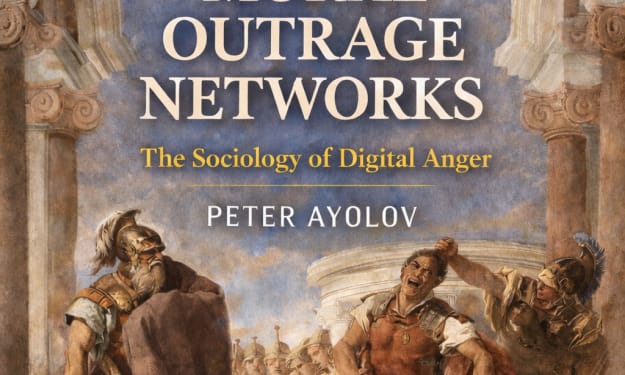
Moral Outrage Networks, The Sociology of Digital Anger (2026)
Peter Ayolov, Moral Outrage Networks: The Sociology of Digital Anger (2026) Moral Outrage Networks: The Sociology of Digital Anger continues and deepens Peter Ayolov’s earlier work The Economic Policy of Online Media (2023), in which he developed the theory of the Manufacture of Dissent and outlined the Propaganda 2.1 Model as an update to classical propaganda theory under conditions of platform capitalism. While the earlier book focused on the political economy of digital media and the monetisation of dissent, this new volume turns decisively toward the emotional infrastructure that makes such systems viable. Ayolov now advances a more fundamental claim: moral anger is not merely exploited by digital media systems but constitutes one of the basic structural conditions of morality itself, and therefore of social life in networked societies.
By Peter Ayolovabout 20 hours ago in BookClub



Comments
There are no comments for this story
Be the first to respond and start the conversation.