
Dune Messiah
A Profound and Intriguing Continuation of Frank Herbert's Legendary Series.

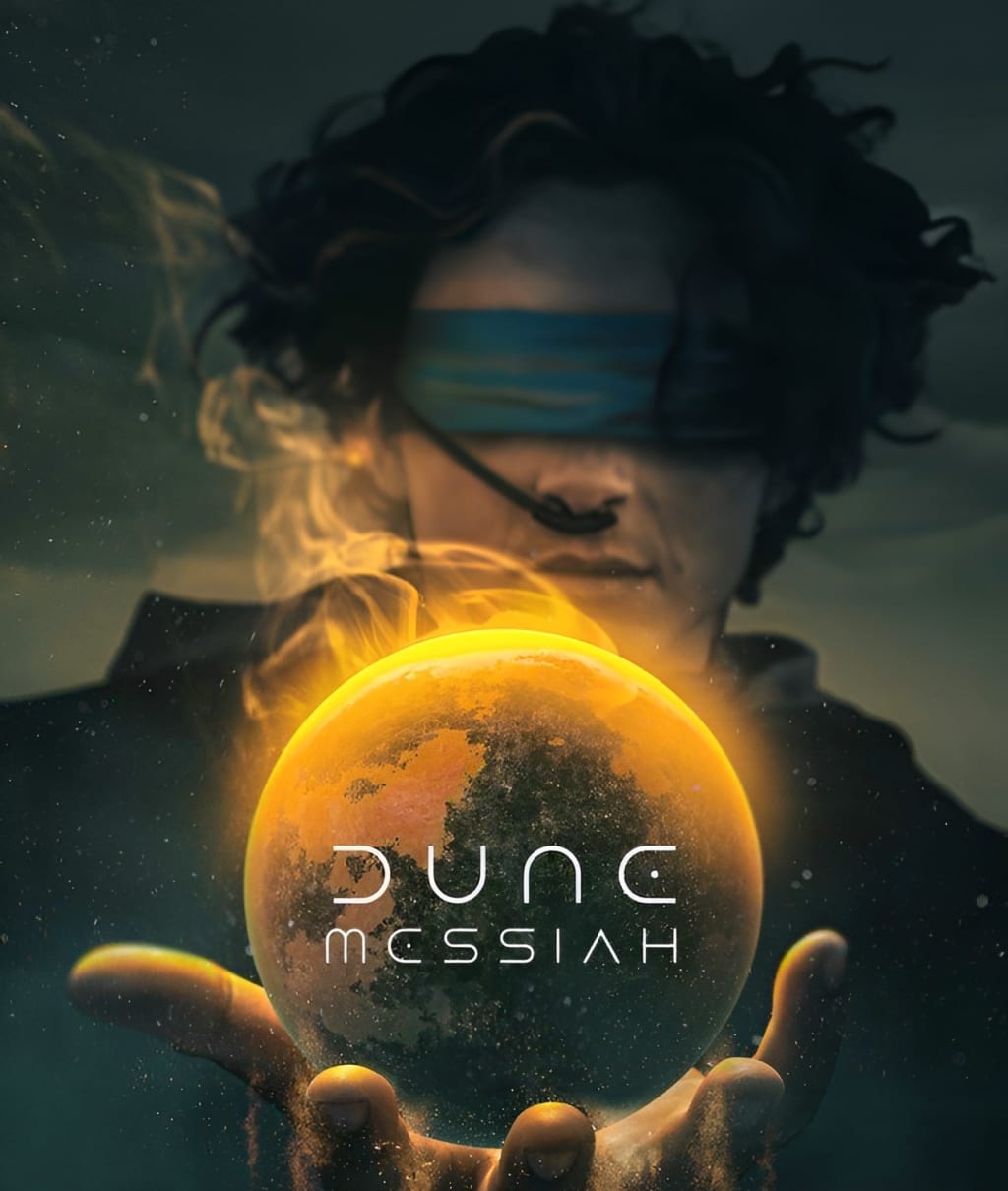
Frank Herbert's Dune Messiah, released in 1969, serves as the second book in the influential Dune series. While the first book, Dune (1965), is widely regarded as a seminal work in science fiction, Dune Messiah ventures into new territory, examining the ramifications of power, prophecy, and the essence of humanity. This sequel presents readers with a more somber atmosphere, intricate themes, and ethically complex characters, further establishing Herbert's status as a pioneering author willing to navigate the complexities of his narrative world.
Dune Messiah takes place twelve years after the conclusion of Dune, with Paul Atreides now established as the Emperor of the known universe. Having attained a god-like status as the Kwisatz Haderach and led the Fremen to triumph over the Harkonnens and the Padishah Emperor, Paul's authority appears unassailable. However, in this sequel, Herbert deconstructs the hero archetype, exposing the burdens and tragedies associated with absolute power. Paul's prescient abilities, once advantageous for securing victory, now torment him as he anticipates the catastrophic repercussions of his decisions, including the jihad waged in his name, which has resulted in the loss of billions of lives.
The narrative delves into the notion that even the most well-meaning leaders can become ensnared by their own legends. Paul's battle to shape the future and his increasing disillusionment with his messianic role create a thought-provoking and reflective storyline. Herbert skillfully illustrates the conflict between Paul's humanity and the expectations thrust upon him as a divine entity, compelling readers to contemplate the true cost of heroism and the essence of leadership.
Dune Messiah contrasts sharply with its predecessor, Dune, as it delves into themes of decline rather than triumph. The narrative is steeped in political machinations, with various factions within the empire plotting against Paul. Key players such as the Bene Gesserit, the Spacing Guild, and the Tleilaxu are integral to a sophisticated scheme aimed at destabilizing his reign. Herbert's masterful world-building is evident as he introduces new concepts, including the Tleilaxu's advancements in genetic engineering and the introduction of a ghola—a clone derived from the cells of a deceased individual—of Paul's former mentor, Duncan Idaho.
The character of Hayt, the ghola, enriches the storyline by encapsulating themes of identity, memory, and redemption. His relationships with Paul and other figures contribute significant philosophical layers to the plot, as Herbert probes the essence of humanity in a world rife with manipulation and control.
One of the most notable features of Dune Messiah is its significant shift from the victorious tone established in Dune. This sequel presents a markedly darker narrative, emphasizing the unforeseen repercussions of Paul's ascent to power. The novel delves into themes such as fate, autonomy, and the repetitive patterns of history. Herbert's writing adopts a more reflective style, capturing Paul's internal conflicts and the ethical complexities of his decisions. The narrative compels readers to face challenging inquiries regarding the essence of power and the sacrifices necessary to uphold it.
The supporting characters are also integral to this thematic exploration. Chani, Paul's concubine, and Irulan, his wife, are developed more fully, illustrating the personal sacrifices associated with Paul's rise. Alia, Paul's sister, emerges as a poignant character, weighed down by her ancestral memories and the burden of her prescient gifts. These characters infuse the story with emotional depth, anchoring the grand scope of the narrative in individual struggles and relationships.
Dune Messiah may lack the grand adventure and heroic victories found in Dune, yet it serves as a crucial and intellectually stimulating continuation of the narrative. Frank Herbert employs this sequel to question the norms of traditional hero stories, providing a sophisticated examination of power, prophecy, and the sacrifices associated with greatness. The novel's more somber tone and intricate themes may have polarized readers upon its initial release, but it has since been acknowledged as a vital component of the Dune series, enhancing the universe and paving the way for the monumental events that follow.
In Dune Messiah, Herbert demonstrates that science fiction transcends mere escapism; it can act as a reflection of our reality, showcasing the intricacies and contradictions inherent in human nature. For those prepared to explore its depths, Dune Messiah offers a fulfilling and memorable experience.
About the Creator
A História
"Hi. My name is Wellington and I'm a passion for general history. Here, I publish articles on different periods and themes in history, from prehistory to the present day.
Keep reading
More stories from A História and writers in BookClub and other communities.
Dune (1965)
Frank Herbert's Dune, originally released in 1965, is not merely a science fiction novel; it is a landmark achievement that has significantly influenced the genre and remains a source of fascination for readers almost sixty years later. Featuring elaborate world-building, multifaceted characters, and deep thematic elements, Dune is a timeless masterpiece that weaves together a complex narrative of political maneuvering, ecological insight, and spiritual inquiry.
By A Históriaabout a year ago in BookClub
Rachel Reviews: Lakefront Wolves by Joseph Deegan
Meet Finn. He's an 18 year old kid who has potential. He's bright with great school scores and he's also an athlete, a footballer of some prowess. He has it all going for him, it would seem, and yet, he's determined to send what could be a well-planned, stable existence firmly off the rails. He drinks, he smokes, he takes drugs, he has violent tendencies and he's in danger of losing not only his mind but all that he holds dear.
By Rachel Deeming6 days ago in BookClub
7 Great Books That Turn Potential Into Power
We all sense it — that quiet awareness that we are capable of more. More impact. More confidence. More meaningful success. Yet potential alone changes nothing. Potential without direction is like electricity without wiring: powerful, but unusable.
By Diana Meresc6 days ago in BookClub


Comments
There are no comments for this story
Be the first to respond and start the conversation.