
Does Atomic Habits Work for People with ADHD?
Atomic Habits and ADHD

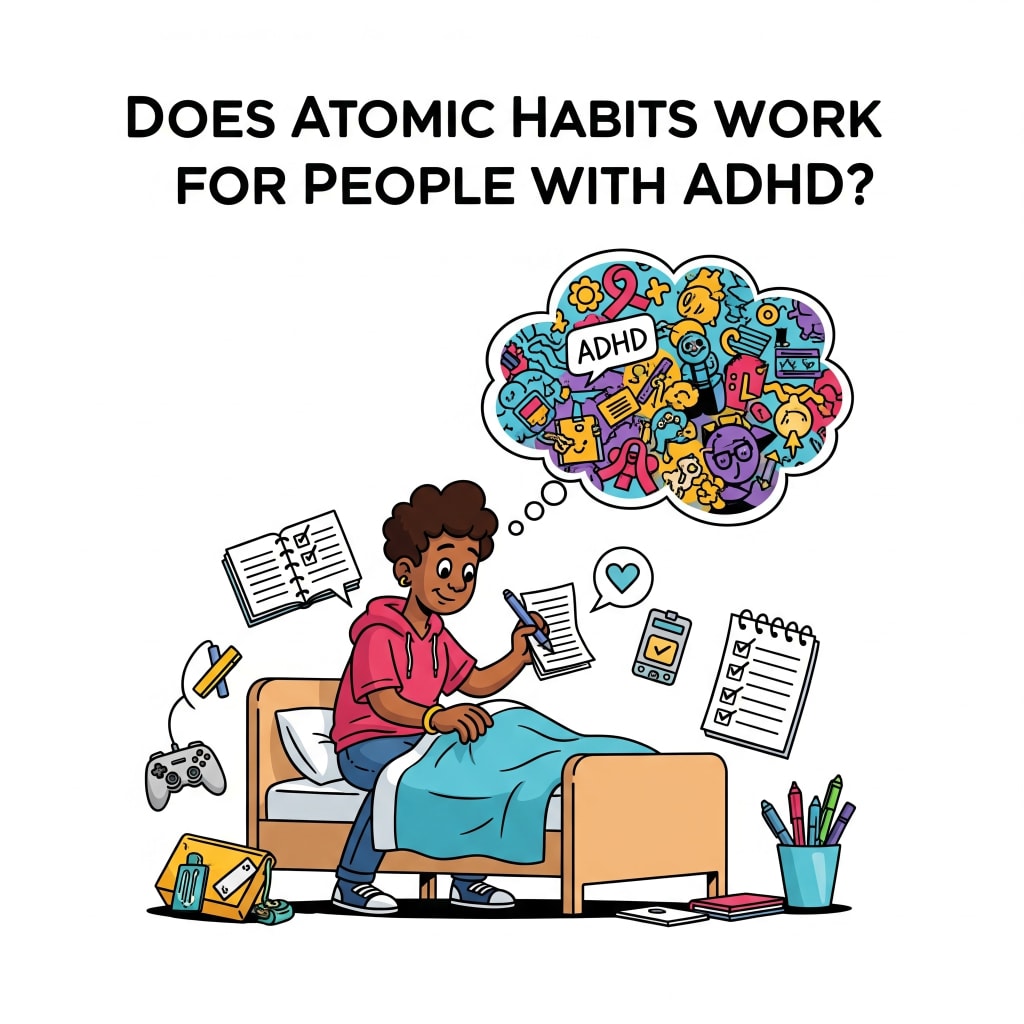
Living with ADHD can feel like running a marathon with untied shoes—you're capable, motivated, and smart, but staying consistent and organized can be exhausting. When James Clear released his best-selling book Atomic Habits, many people found it revolutionary. But if you have ADHD, you might wonder: Can this actually work for me?
The short answer is: Yes—but with adjustments. While the core principles of Atomic Habits offer powerful strategies, people with ADHD may need to adapt them to better suit their unique brain wiring.
Understanding ADHD and Habit Formation
Attention Deficit Hyperactivity Disorder (ADHD) is a neurodevelopmental condition that affects executive functions—planning, time management, self-regulation, and organization. This means routines and consistency, which are crucial for habit-building, can be especially hard.
People with ADHD often struggle with:
- Initiation: Getting started with a task.
- Consistency: Following through on routines.
- Working memory: Remembering to perform a habit at the right time.
- Delayed gratification: Finding motivation for actions with long-term rewards.
These challenges can make traditional productivity advice feel out of touch. But Clear’s approach in Atomic Habits—focused on small, incremental changes—can be surprisingly ADHD-friendly, if applied with a flexible mindset.
What Is Atomic Habits About?
Atomic Habits is based on the idea that small, consistent actions compound over time to create big results. The book introduces a framework for habit formation built on four steps:
- Cue – a trigger for the behavior.
- Craving – the desire or motivation to act.
- Response – the actual habit or behavior.
- Reward – the benefit or positive feeling that reinforces the habit.
Clear also introduces the Four Laws of Behavior Change:
- Make it obvious
- Make it attractive
- Make it easy
- Make it satisfying
These concepts can work for people with ADHD, but the way they're implemented may need some tweaking.
Why Atomic Habits Can Work for ADHD
Here’s how the book’s methods align with the needs of ADHD minds—and how to adjust them to make them more effective.
1. Start Small—Really Small
Clear recommends starting with “atomic” (tiny) habits, like doing one push-up or writing one sentence. This is especially helpful for ADHD, where motivation fluctuates and overwhelm can be paralyzing.
Tip for ADHD: Set micro-habits so tiny that they feel too easy to skip. For example, “Open my planner” instead of “Plan my whole day.”
2. Use Visual Cues
ADHD brains respond well to visual reminders. “Make it obvious” by using sticky notes, wall calendars, phone alarms, or a visual habit tracker.
Tip for ADHD: Create “in-your-face” cues—like leaving your running shoes by the door or putting your medication next to your toothbrush.
3. Make the Habit Attractive
Clear explains that the more appealing a habit is, the more likely we are to do it. ADHD brains thrive on novelty and stimulation, so bundling habits with something fun is key.
Tip for ADHD: Try temptation bundling—listen to your favorite podcast only while folding laundry, or watch YouTube while on the treadmill.
4. Make It Easy—and Eliminate Friction
The ADHD brain resists complex routines. Making a habit “easy” means reducing the number of steps or barriers to doing it.
Tip for ADHD: Prepare the night before. Lay out clothes, prep your workspace, or pre-fill your water bottle. The fewer decisions in the moment, the better.
5. Immediate Rewards Matter More
ADHD brains are wired for instant gratification, so long-term goals like “getting in shape” or “saving money” might not be motivating enough.
Tip for ADHD: Give yourself a small reward every time you complete a habit. This can be something as simple as checking a box, using a habit app with fun animations, or a five-minute break.
Where Atomic Habits May Fall Short for ADHD
While the framework is solid, Atomic Habits doesn’t directly address the emotional and cognitive challenges of ADHD—like rejection sensitivity, emotional dysregulation, or executive dysfunction. Here’s where it may need additional support:
- Executive function support: You may need to pair the habit-building process with therapy, coaching, or accountability tools.
- Boredom: Habits can become dull, and ADHD brains hate monotony. You may need to constantly reinvent your routines.
- Time blindness: Time management tools—like timers or alarms—are necessary companions to any habit system.
ADHD-Friendly Modifications
To make Atomic Habits work better for ADHD, consider:
- External accountability: Join habit groups, use shared checklists, or work with an ADHD coach.
- Gamification: Turn habit tracking into a game using apps like Habitica or Streaks.
- Novelty rotation: Swap out how you perform a habit (e.g., change your workout style every few weeks).
- Grace and flexibility: Perfection is not required. Missing a day doesn’t mean starting over. The goal is progress, not perfection.
Real-Life Success Stories
Many people with ADHD have shared how Atomic Habits helped them build real change. For example, someone with ADHD might struggle with flossing daily. But by using the cue of brushing their teeth, placing floss on the counter, and rewarding themselves with a sticker on a chart, the habit became consistent over time.
Another person used Clear’s advice to build a writing habit by starting with just one sentence a day—eventually writing a full novel.
Final Thoughts: Can Atomic Habits Work for ADHD?
Yes—Atomic Habits can be an incredibly useful tool for people with ADHD, if used with compassion and creativity. The key is to adapt the principles to your own needs, celebrate small wins, and build flexibility into your routines.
ADHD isn’t a failure of discipline. It’s a different way of thinking. With the right tools—and a bit of experimentation—you can build habits that stick, even with a wandering mind.
About the Creator
pestosol
Hi.
I am Hmimda 30 years old From Algeria. I am a blogger. I like to share articles about decoration and designs
Rachel Reviews: Lunch Tales: Teagan by Lucille Guarino
Well, I did enjoy this! Sometimes, all you need is just great storytelling and this is what Lucille Guarino delivers here. There's no big message to this book; it's just about folks and families, living their lives and coping with everything that's being thrown at them and finding their way. But when it's done well, like it is here, then you have characters to whom you can relate, tension which leaves you rooting for a better outcome, attraction which has your heart racing and an urge, as a reader, to see the characters happy with the people with whom they belong.
By Rachel Deeming25 days ago in BookClub
The 4-Hour Workweek: How This Book Completely Transformed My Life, My Career, and My Freedom
When I first picked up The 4-Hour Workweek, I assumed it would be another self-help book promising impossible shortcuts to wealth. What I didn’t anticipate was how revolutionary it would feel, how practical the advice could be, and how profoundly it would change the way I think about work, time, and life itself. Timothy Ferriss doesn’t just offer strategies for making money faster; he offers a blueprint for designing life deliberately, achieving freedom, and reclaiming the hours that most of us spend on meaningless tasks.
By Lukáš Hrdlička3 days ago in BookClub



Comments
There are no comments for this story
Be the first to respond and start the conversation.