
Comparing Virginia Woolf’s and Alice Walker’s Conceptions of Women’s Writing: A Critique of Woolf’s Limitations Through Walker’s Analysis of Phillis Wheatley
Exploring the Intersection of Literary Voice, Gender, and Historical Context in Women's Writing

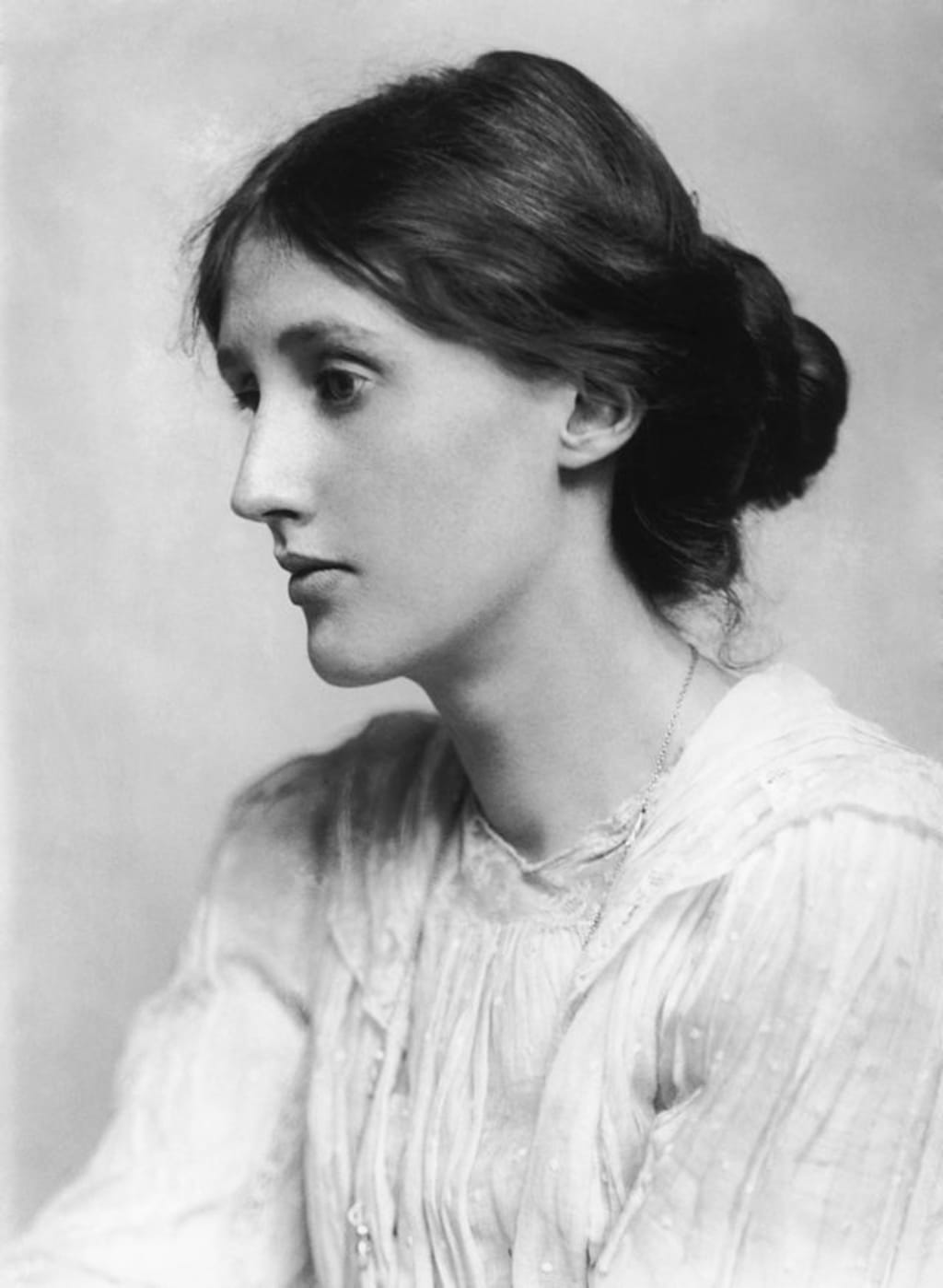
Virginia Woolf’s A Room of One’s Own (1929) and Alice Walker’s In Search of Our Mother’s Gardens (1983) are influential works that explore the conditions necessary for women to create art. Both authors, rooted in feminist thought, examine the barriers women face in accessing creative spaces. Woolf focuses on financial independence and a private space as essential for literary production, while Walker critiques Woolf’s Eurocentric framework and expands the conversation to include the diverse ways African American women have expressed creativity. Through Walker’s work, the limitations of Woolf’s approach, particularly in terms of race, class, and intersectionality, are more fully revealed.
Virginia Woolf’s A Room of One’s Own argues that material and social conditions significantly shape women’s ability to create, asserting that “a woman is to have money and a room of her own if she is to write fiction” (Woolf, 2015, p. 3). This assertion encapsulates Woolf’s materialist perspective on cultural production, where financial independence and private space are framed as essential for overcoming the systemic constraints historically imposed on women. The phrase “is to have” conveys a prescriptive and imperative tone, emphasising that these resources are not luxuries but prerequisites for creative success. Woolf’s deliberate wording underscores the structural barriers women face, positioning economic stability and autonomy as foundational to artistic freedom. By articulating this need so definitively, Woolf highlights the inextricable connection between material resources and intellectual liberty. In their absence, she argues, women are consigned to lives of interruption and unrealised potential, unable to fully engage in or sustain creative endeavours.
Woolf reinforces her argument through the example of Jane Austen, whom she admires for producing extraordinary novels despite the absence of a private space. She describes how Austen worked in a shared sitting room, often concealing her manuscripts, illustrating the physical and psychological constraints of her environment. Woolf observes, “What genius, what integrity it must have required in face of all that criticism, in the midst of that purely patriarchal society” (Woolf, 2015, p. 56). This acknowledgment reflects Woolf’s profound respect for Austen’s resilience and creative brilliance under challenging circumstances. At the same time, Woolf’s comment that Austen “held fast to the thing as [she] saw it” (Woolf, 2015, p. 56). suggests that while Austen’s work was remarkable, it might have reached even greater heights had she been granted uninterrupted time and privacy. This dual perspective, celebrating Austen’s accomplishments while lamenting the systemic barriers she endured, underscores the broader structural inequalities that have historically constrained women’s creative potential. Woolf also illustrates this point by imagining “Shakespeare’s sister,” a fictional sibling of the renowned playwright. Woolf speculates that this sister, with equal talent and ambition, would have been denied the same opportunities as her brother due to the gendered expectations and limited resources available to women in the 16th century. This serves as a metaphor for countless women throughout history who, like Austen, were denied the conditions necessary to fully develop their creative abilities, constrained by social and economic limitations. Woolf’s narrative of Shakespeare’s sister highlights how these barriers, financial independence and personal space, were not just obstacles, but essential elements that shaped women’s ability to express themselves and realise their full potential.
Virginia Woolf’s A Room of One’s Own also introduces the concept of literary androgyny, challenging traditional notions of gender in writing. Woolf argues that both men and women possess a blend of masculine and feminine traits, which influences their writing styles. She suggests that “any woman born with a great gift in the sixteenth century” would have struggled due to the societal constraints placed on women (Woolf, 2015, p. 38). This sociological viewpoint illustrates how women’s opportunities to express themselves have historically been limited by biological and social definitions of gender, making it difficult for women to thrive in male-dominated literary spaces. Woolf’s critique implies that gender roles have shaped writing styles, men tend to produce assertive and fact-based arguments, while women’s voices are often more tentative, exploratory, and emotionally driven. This distinction reflects the broader societal expectations imposed on women, making their expressions less defined and less valued. Women from diverse backgrounds experience oppression and creativity through intersecting systems of power, making it essential to examine how race, class, and other social factors inform their writing.
Literary androgyny, as proposed by Virginia Woolf ultimately suggests that great literature requires the combination of both assertive and intuitive qualities. She argues that writing does not need to adhere to rigid gender roles, and instead, great writers, regardless of their biological sex, should draw upon a mix of both masculine and feminine ways of thinking. This approach was progressive for the early 20th century, as it encourages a departure from strict gender binaries in literature. Woolf’s theory, however, risks simplifying complex gender dynamics, as she does not fully account for how intersecting social factors, such as race, class, and colonialism, shape women’s creativity. Her argument seems sociologically bounded, focusing primarily on the experiences of white, upper-middle-class women, and she anticipates critiques, yet fails to consider how women from marginalised communities, such as African American, working-class, or immigrant women, might experience writing differently. Simone de Beauvoir’s The Second Sex (1949) similarly argues that women’s subjectivity has long been shaped by societal limitations, but Woolf’s androgyny framework, while progressive, lacks a more intersectional perspective that would fully account for these differences. Women from diverse backgrounds experience oppression and creativity through intersecting systems of power, making it essential to examine how race, class, and other social factors inform their writing. Woolf’s singular focus on gender as a dividing line overlooks these crucial dynamics, failing to acknowledge that creativity cannot be fully understood without addressing the layered complexities of identity shaped by both gender and broader social contexts.
Woolf’s literary androgyny theory is avant-garde in its attempt to transcend traditional gendered approaches to writing, but it does not fully escape the limitations of her time. Her understanding of creativity seems grounded in her own privileged socio-economic position, which allows her the financial freedom and private space she deems essential for artistic productivity. This narrow framework does not fully address the varied experiences of women, particularly those marginalised by race, class, or colonialism. Woolf’s reliance on universalised traits of masculinity and femininity in literature risks overlooking the realities of women whose creative expression is shaped by systemic oppression. By blending masculine and feminine traits, Woolf offers a vision that moves beyond binary thinking, but her theory ultimately falls short of fully embracing the complexity of women’s lived experiences.
Alice Walker’s In Search of Our Mother’s Gardens builds upon Virginia Woolf’s insights while offering a respectful yet pointed critique of Woolf’s Eurocentric and class-bound assumptions. Woolf’s foundational claim, that financial independence and private space are essential to artistic expression, fails to capture the lived realities of many marginalised women, particularly those in communities of colour. Walker challenges this by highlighting how African American women found and fostered creativity in ways that were often not dependent on financial stability or secluded spaces. Drawing on Kimberlé Crenshaw’s concept of intersectionality, Walker shows that race, class, and gender intersect to create distinct forms of oppression that cannot be understood separately. Crenshaw writes, “I used the concept of intersectionality to describe how race and gender interact in shaping Black women’s experiences… these systems cannot be understood in isolation” (Crenshaw, 1991, page 1244) This idea helps explain Walker’s critique of Woolf, revealing that African American women’s creativity emerged from the complex interaction of systemic oppressions something Woolf’s individualistic approach overlooks. Woolf’s narrow focus on gender, without consideration of how race, class, and other social factors shape women’s experiences, results in a limited and overly simplistic view of artistic expression. By focusing on these intersections, Walker highlights the broader, more complex nature of creativity among marginalised communities, a reality Woolf’s framework failed to fully address.
Walker draws on this intersectional approach to highlight that creativity for African American women often emerged in cultural practices that defied Woolf’s narrow definition of artistic expression. Quilting (Walker, 1983, page 239, gardening, and song, (Walker, 1983, page 234) artistic forms deeply embedded in African American life, became mediums through which women could express themselves and sustain their cultural heritage. These creative outlets, as Walker illustrates, were not simply artistic but also acts of survival, resistance, and community-building. In In Search of Our Mother’s Gardens, Walker emphasises, “Our foremothers gave us our first examples of creativity, a life that was itself an art, the creativity of quilts, gardens, food, words” (Walker, 1983, 235). This assertion challenges Woolf’s restrictive view by demonstrating that artistic production can thrive outside the confines of literary expression and in the everyday acts of reclaiming one’s identity and space within a racially and economically oppressive society.
Through her exploration of African American women’s creativity, Walker brings to light the ways in which art, in its many forms, functions as both resistance and a means of empowerment. Unlike Woolf, who primarily situates creativity in literature, Walker broadens the definition to include cultural and communal practices, spaces where women of African descent found ways to assert their voices and identities. Woolf’s approach to androgyny, while progressive in blending masculine and feminine traits, does not sufficiently account for the intersection of race and gender. African American women’s creativity, Walker argues, arises from the intersection of oppression, leading to artistic forms that are deeply rooted in their social realities. Quilts, gardens, and songs represent a rich tapestry of cultural expression that cannot be dismissed or reduced to mere replication of Eurocentric ideals. By focusing on these cultural forms, Walker critiques Woolf’s narrow, class-bound vision and offers a more inclusive framework for understanding women’s creative production, one that acknowledges the complexity of lived experiences beyond the boundaries of white, middle-class privilege.
Phillis Wheatley’s poetry stands as a powerful example of creativity that not only survives but thrives under oppressive conditions, directly challenging Virginia Woolf’s assertion that financial independence and private space are prerequisites for artistic expression. Wheatley, as an enslaved African American woman, lived within the constant tension of dual identity, one imposed by her oppressors, and one connected to her African heritage and personal voice. In her poem “On Being Brought from Africa to America,” Wheatley embodies W. E. B. Du Bois’s concept of “double consciousness,” (1903) where she is forced to navigate the conflicting demands of her external circumstances and her inner sense of self. The poem’s opening line, “Twas mercy brought me from my Pagan land,” at first appears to align with the Christian salvation narrative expected by her white audience. However, Wheatley’s subtle use of biblical allusions goes beyond mere compliance or acquiescence to the values of her oppressors. Her assertion that “Negroes, black as Cain, / May be refined, and join the angelic train” reveals this complex duality, on one hand, she critiques the dehumanisation imposed by her captors, while on the other, she subtly reaffirms her own spiritual equality and humanity. Through this, Wheatley confronts the contradictions of living under both the cultural dominance of her oppressors and the rich African heritage she seeks to preserve.
As William J. Scheick observes, Wheatley’s biblical references in her poetry go beyond mere authorization of her voice; instead, they become “sites where this license is transformed into artistry that in effect becomes exemplarily self-authorized” (Scheick, 1992, 135). In other words, Wheatley’s use of scripture serves as a rhetorical strategy, allowing her to subtly assert creative autonomy while embedding resistance within her work. Her ability to weave together Christian themes with expressions of her own identity reveals her skill in crafting poetry that resists both the limitations imposed by slavery and the imposed expectations of her audience. Wheatley’s artistry, deeply grounded in her African heritage and shaped by her lived experience, exemplifies a kind of resistance that Woolf’s more privileged, Eurocentric framework fails to address. Woolf’s theory, which focuses on the necessity of financial independence and private space, overlooks the reality that marginalised women like Wheatley must create art despite systemic oppression, often under conditions of extreme limitation. Through her poetry, Wheatley demonstrates that artistic expression can thrive in the face of these restrictions, making a significant contribution to the conversation about creativity that Woolf began.
Walker’s generational perspective on creativity connects contemporary artists to the artistic traditions passed down through their mothers and grandmothers. She redefines creativity as a communal and intergenerational process, challenging Woolf’s individualistic view. While Woolf focuses predominantly on literature as the primary means of artistic expression, Walker’s approach incorporates diverse cultural forms, bringing together the voices of multiple generations. This expands the scope of creative production beyond the confines of elite literature, emphasising collective memory and shared heritage. In contrast to Woolf’s narrow focus on individual achievement, Walker’s framework celebrates the communal and interconnected nature of creativity. Walker is also inspired by Woolf’s example, recognizing the value in carving out one’s own space to create, but she builds upon this idea by acknowledging that creativity does not require isolation or financial independence alone, it can emerge from shared cultural practices and the experiences of community. Their ideas, though converging on feminist themes, emerge from distinct cultural and temporal contexts, reflecting different responses to the question of how marginalized women express themselves creatively.
Walker’s critique of Woolf is not merely one of divergence, but one of enrichment, acknowledging that creativity exists in various forms, shaped by the specific social and historical conditions in which women find themselves. While Woolf’s framework offers an important foundation for understanding individual artistic expression, Walker’s broader view provides a more inclusive and intersectional understanding that considers the layered oppressions faced by women of colour. Both women, through their work, have contributed to a richer, evolving dialogue on what it means to create, but their approaches reflect differing responses to the question of creativity in relation to identity, community, and systemic power.
About the Creator
Alice Saldini
Hi, I'm Alice (pronounced ah-LEE-che), and I have a profound love for both writing and reading. For me, writing is a beautiful and powerful tool that allows me to express my innermost feelings and thoughts.
Keep reading
More stories from Alice Saldini and writers in BookClub and other communities.
How the ideas of nation represented in Salvador Espriu’s La pell de brau and the football teams of Barcelona.
The representation of nationhood is a multifaceted concept, often depicted through various mediums that encapsulate a society's identity. In Salvador Espriu's literary masterpiece, La pell de brau, and the ardent world of Barcelona's football teams, particularly FC Barcelona, we encounter two distinct yet interconnected narratives that illuminate the complexities of national identity, particularly within the context of Catalonia. Espriu's poetic exploration delves into Catalonia's rich heritage and its struggles for autonomy, while FC Barcelona emerges as a symbolic powerhouse, embodying the aspirations and struggles of Catalans through the realm of sports. This essay aims to explore the parallels and divergences between these two realms of representation, examining how they shape and reflect the ideas of nationhood in Catalonia. Through an analysis of Espriu's evocative imagery, historical allusions, and political undertones in La pell de brau, alongside an exploration of FC Barcelona's cultural significance, and political dimensions, this essay will delve into the nuanced ways in which ideas of nation are manifested and contested in both literary and sporting arenas. By juxtaposing these two forms of expression, it will aim to uncover the rich tapestry of Catalan identity and its complex relationship with Spain, shedding light on the intersections between literature, sport, and the quest for autonomy.
By Alice Saldini2 years ago in BookClub
My New Book is Finally Here
My poetry collection Beautiful and Brutal Things is done. It's actually done and finally published over 270 pages. Over a year of my life went into this book. More than a year, really. Long days at my computer, sometimes seven days a week because I couldn't stop even when I probably should have. Then two months of editing that felt harder than the writing itself. But it's finished, and I'm still standing, and the book is real.
By Tim Carmichael3 days ago in BookClub




Comments
There are no comments for this story
Be the first to respond and start the conversation.