

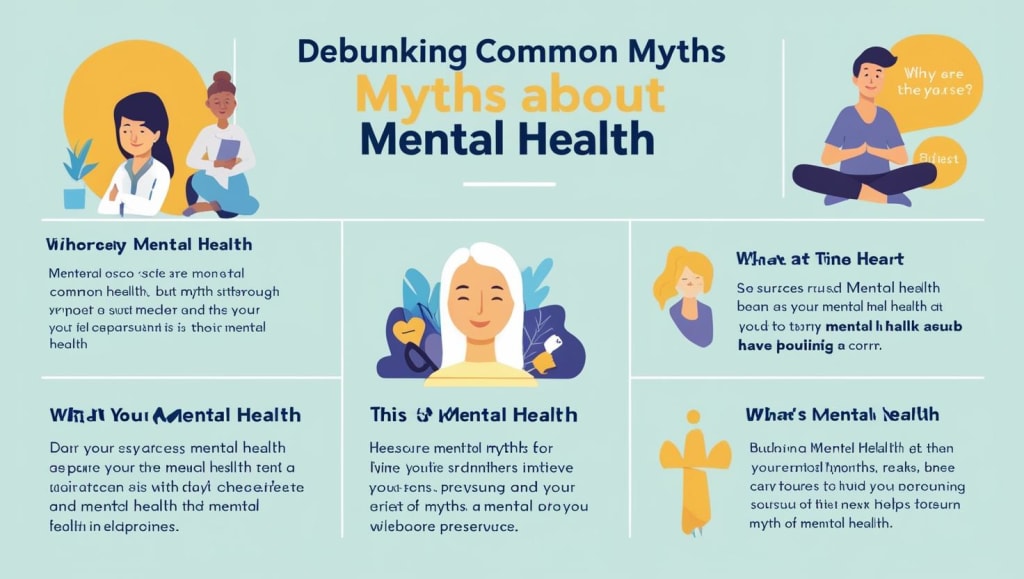
Common Myths About Mental Health Debunked
Mental health has become an increasingly important topic in recent years, as awareness continues to grow and conversations around emotional well-being become more mainstream. Despite the progress, there are still numerous myths and misconceptions surrounding mental health that prevent people from seeking the help they need or supporting others effectively. These myths not only contribute to the stigma surrounding mental health but also create misunderstandings about mental illnesses and those who live with them.
In this article, we’ll break down some of the most common mental health myths and set the record straight with evidence-based facts.
Myth 1: Mental Health Problems Are Rare
Debunked: Mental health issues are more common than most people think. According to the World Health Organization (WHO), one in every eight people in the world live with a mental disorder. In the U.S., the National Institute of Mental Health reports that nearly 1 in 5 adults experience a mental illness in any given year.
Mental health problems affect people of all ages, races, socioeconomic statuses, and walks of life. Just because you can’t always “see” a mental health condition doesn’t mean it’s not real or common. Mental health struggles are a part of the human experience and should be treated with the same seriousness as physical health conditions.
Myth 2: People with Mental Illness Are Violent
Debunked: This is one of the most damaging myths. The truth is, the vast majority of people with mental illnesses are not violent. In fact, individuals with mental health conditions are more likely to be victims of violence than perpetrators.
Media portrayals often sensationalize mental illness, associating it with violent behavior, which only deepens the stigma. According to the American Psychological Association, only 3% to 5% of violent acts can be attributed to individuals living with serious mental illnesses. Most people with mental health challenges lead peaceful, productive lives and pose no danger to society.
Myth 3: Mental Illness Is a Sign of Weakness
Debunked: Struggling with mental health has nothing to do with being weak or lacking character. Mental health disorders are medical conditions influenced by a complex mix of biological, psychological, and environmental factors, including genetics, trauma, brain chemistry, and life circumstances.
Just like diabetes or heart disease, mental illness can affect anyone and often requires professional treatment. In fact, seeking help is a sign of strength and courage, not weakness. It takes bravery to face mental health challenges and reach out for support.
Myth 4: Therapy and Talking About Problems Don’t Help
Debunked: On the contrary, psychotherapy—also known as talk therapy—is a proven, effective treatment for many mental health conditions. There are various forms of therapy, including cognitive behavioral therapy (CBT), dialectical behavior therapy (DBT), and psychodynamic therapy, all designed to help people understand and manage their thoughts, emotions, and behaviors.
Many people also benefit from simply having a safe, non-judgmental space to talk about what they’re going through. Therapy can lead to long-term healing, better coping skills, improved relationships, and a higher quality of life.
Myth 5: If You Have a Mental Illness, You Can’t Work or Be Successful
Debunked: Many people with mental health challenges lead successful, fulfilling lives, including holding demanding jobs, raising families, and contributing significantly to their communities. With the right treatment and support, individuals with mental illnesses can manage their symptoms and thrive in their personal and professional lives.
Some of the most accomplished artists, scientists, and leaders in history have lived with mental health conditions. The key is access to care, a supportive environment, and a society that encourages rather than stigmatizes.
Myth 6: Children Don’t Experience Mental Health Problems
Debunked Children and adolescents can and do experience mental health issues. In fact, half of all mental health conditions begin by age 14, according to the WHO. These issues can include anxiety, depression, ADHD, and behavioral disorders.
Early intervention is crucial in helping children and teens manage symptoms and develop healthy coping mechanisms. Ignoring signs of distress or chalking it up to “just a phase” can lead to more severe problems later on. It’s important to listen to young people and take their emotions seriously.
Myth 7: Medication Is a Crutch or a Quick Fix
Debunked: Psychiatric medication is not a "crutch"—it’s a legitimate and sometimes necessary part of treatment. Medications like antidepressants, mood stabilizers, and antipsychotics help many people manage their symptoms and improve their daily functioning. Like insulin for diabetes, these medications can be life-changing and, for some, life-saving.
While not everyone with a mental health condition needs medication, for many, it’s an essential part of a broader treatment plan that may include therapy, lifestyle changes, and support systems. The idea that medication is a “quick fix” dismisses the complexity of mental health treatment and the ongoing work involved in healing.
Myth 8: You Can Just ‘Snap Out of It’
Debunked:Mental health conditions are not something people can simply will away. Telling someone to "snap out of it" or "just be happy" is not only unhelpful but also dismissive of the real challenges they’re facing.
Depression, anxiety, and other disorders involve deep-rooted changes in brain chemistry, thought patterns, and emotional regulation. Overcoming these challenges often requires professional help, time, and sustained effort. Recovery is possible—but it’s not as simple as flipping a switch.
Myth 9: Mental Illness Is Always Permanent
Debunked:Many people recover fully from mental health conditions, while others learn to manage their symptoms effectively and live full lives. Mental health is not a static condition—it can change over time and improve with the right support and treatment.
Recovery looks different for everyone. For some, it may mean complete remission of symptoms. For others, it may mean managing their condition while maintaining relationships, work, and hobbies. What’s important is that recovery is possible, and people should be encouraged to pursue it without shame or hopelessness.
Myth 10: Only People Without Faith or Willpower Have Mental Health Issues
Debunked: Mental illness can affect anyone, regardless of religious beliefs, spiritual practices, or inner strength. While faith and spirituality can provide important sources of comfort and support, they are not substitutes for mental health care.
Blaming someone’s mental health condition on a lack of faith or willpower only adds to their distress and isolation. True healing often involves a combination of medical, psychological, social, and spiritual support systems working together—not one instead of the other.
Breaking the Stigma Starts With Us
Understanding and challenging mental health myths is crucial for building a more compassionate, informed, and supportive society. When we debunk these misconceptions, we reduce stigma, encourage people to seek help, and foster open conversations that can save lives.
Whether you're struggling with your own mental health or supporting someone else, remember: Mental health is just as important as physical health, and everyone deserves to be treated with empathy, respect, and dignity.
About the Creator
Gabriela Tone
I’ve always had a strong interest in psychology. I’m fascinated by how the mind works, why we feel the way we do, and how our past shapes us. I enjoy reading about human behavior, emotional health, and personal growth.
Keep reading
More stories from Gabriela Tone and writers in BookClub and other communities.
The Rhythm of Little Stars
The Rhythm of Little Stars A Journey to Finding the Perfect Baby Schedule When Emma first brought baby Oliver home from the hospital, she thought she was ready. She had read the books, joined the forums, listened to every piece of advice from mothers, grandmothers, neighbors, and strangers in grocery store lines. "Sleep when the baby sleeps," they said. "Feed on demand." "Let them cry it out." "Never let them cry it out."
By Gabriela ToneExclusive • 11 months ago
Rachel Reviews: Lakefront Wolves by Joseph Deegan
Meet Finn. He's an 18 year old kid who has potential. He's bright with great school scores and he's also an athlete, a footballer of some prowess. He has it all going for him, it would seem, and yet, he's determined to send what could be a well-planned, stable existence firmly off the rails. He drinks, he smokes, he takes drugs, he has violent tendencies and he's in danger of losing not only his mind but all that he holds dear.
By Rachel Deeming8 days ago in BookClub
8 Life-Changing Books That Will Help You Let Go
Whether we’re releasing past mistakes, painful relationships, regret, anger, or unrealistic expectations, the ability to let go determines how freely we live. Many people intellectually understand that they should move on, but emotionally, they remain trapped in cycles of rumination and attachment.
By Diana Merescabout 21 hours ago in BookClub


Comments (1)
Good