
Book Summaries: Top 5 Psychology Books
Learn Psychology
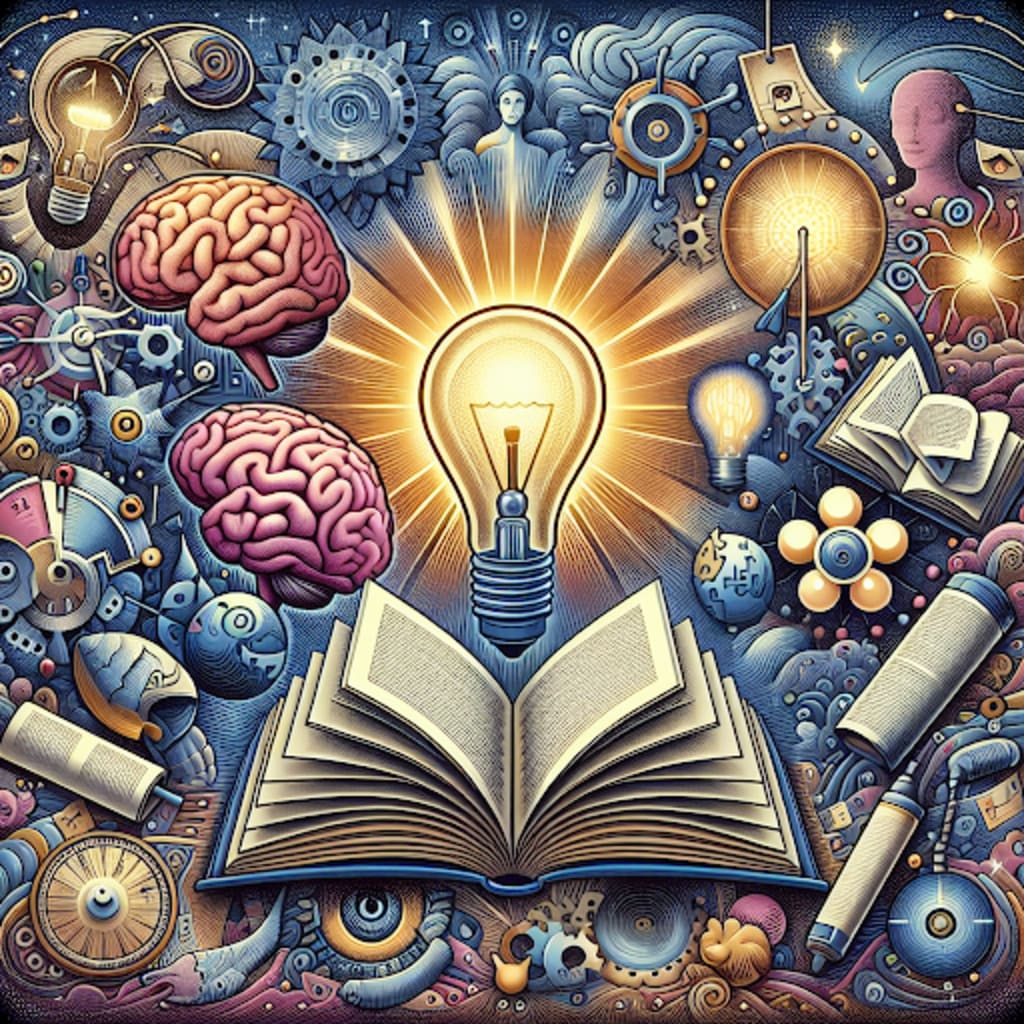
In the captivating field of psychology, certain publications have significantly shaped our comprehension of the human mind, conduct, and the foundational principles steering our actions and perceptions. Ranging from pioneering theoretical works to intriguing examinations of human behavior, these books provide essential insights. Below is a list of the top 5 psychology books, beginning with number 5 and culminating with the most influential.
5. "Flow: The Psychology of Optimal Experience" by Mihaly Csikszentmihalyi
Mihaly Csikszentmihalyi unveils the concept of "Flow," characterized by an intense concentration and deep involvement in tasks, which he posits as essential for attaining life fulfillment. Leveraging extensive research, Csikszentmihalyi delves into methods through which people can attain this peak state, showcasing its profound impact on enhancing both productivity and well-being. His contributions lay out a blueprint for grasping the essence of human contentment, facilitating a lifestyle rich in participation, innovative thinking, and pleasure.
4. "The Power of Habit" by Charles Duhigg
Charles Duhigg explores the intricate science behind habits, revealing how these entrenched patterns exert a greater influence on our lives than we often realize. "The Power of Habit" illuminates the pivotal function of habits through engaging stories and examples across diverse fields such as business, sports, and healthcare. This book not only emphasizes the significance of habits but also demystifies the process of modifying them. By comprehending the dynamics of how habits are formed, we are offered a strategic route to alter our behaviors and accomplish our aspirations.
3. "Influence: The Psychology of Persuasion" by Robert B. Cialdini
Psychologist and marketing expert Robert B. Cialdini delves into the fundamental principles that predispose people towards affirmative responses, shedding light on the ethical application of these principles in diverse life scenarios. He delineates six key persuasion tactics — reciprocation, commitment and consistency, social proof, authority, liking, and scarcity — which underline the nuanced factors influencing our choices. This work is crucial reading for those aiming to grasp or ethically steer human actions.
2. "Man’s Search for Meaning" by Viktor E. Frankl
Viktor E. Frankl’s moving account, framed by his harrowing experiences in Nazi concentration camps, unveils Logotherapy, a therapeutic method emphasizing life's meaningful pursuits. Contrary to the pleasure principle, Frankl argues that the essence of human motivation lies in seeking what resonates as meaningful to us. Merging a compelling personal story with deep psychological exploration, this book offers an inspiring view on our innate ability for endurance and finding purpose.
1. "Thinking, Fast and Slow" by Daniel Kahneman
Nobel laureate Daniel Kahneman introduces the dual-system theory of the mind, distinguishing between the fast, instinctive, and emotional workings of System 1, and the slow, analytical, and deliberate functions of System 2. His seminal work, "Thinking, Fast and Slow," covers an extensive range of psychological concepts, from cognitive biases to the intricacies of decision-making, with far-reaching implications across various fields. Kahneman's engaging investigation into our thought processes and decision-making not only deepens our grasp of human cognition but also illuminates ways to leverage this understanding for better decision-making in both our personal and professional realms.
Hope you enjoyed reading these book summaries.
Stay subscribed to know more book summaries.
Leave a Like
About the Creator
Keep reading
More stories from Jeevanantham Sakthivel and writers in BookClub and other communities.
Presidents' Day: A Look at the History and Significance of the Holiday
Washington's Birthday, also known as Presidents' Day, is a federal holiday celebrated in the United States on the third Monday of February. The holiday honors George Washington, the first President of the United States, and other presidents who have served the country.
By Jeevanantham Sakthivel3 years ago in Journal
My New Book is Finally Here
My poetry collection Beautiful and Brutal Things is done. It's actually done and finally published over 270 pages. Over a year of my life went into this book. More than a year, really. Long days at my computer, sometimes seven days a week because I couldn't stop even when I probably should have. Then two months of editing that felt harder than the writing itself. But it's finished, and I'm still standing, and the book is real.
By Tim Carmichaela day ago in BookClub
Hildegard von Bingen
Light, Intellect, and Authority in the Medieval World Hildegard von Bingen stands as one of the most extraordinary intellectual figures of the Middle Ages, a woman whose range of achievement resists narrow definition. Born in 1098 in the Rhineland region of what is now Germany, Hildegard entered a world shaped by monastic reform, theological debate, and emerging centers of learning. From this environment emerged a thinker whose influence reached far beyond the walls of any cloister. Across a long life, Hildegard produced visionary theology, original sacred music, works of natural history and medicine, and a vast body of correspondence that circulated among the most powerful religious and political leaders of the twelfth century. Recognition during life was not limited to local admiration but extended across the Holy Roman Empire and into the highest ranks of the medieval Church.
By Marcus Hedare2 days ago in BookClub



Comments
There are no comments for this story
Be the first to respond and start the conversation.