
Book review: The Picture of Dorian Gray by Oscar Wilde
The story explores themes of art, beauty, and morality, centering on the life of a young man named Dorian Gray, who becomes entranced by his own beauty.

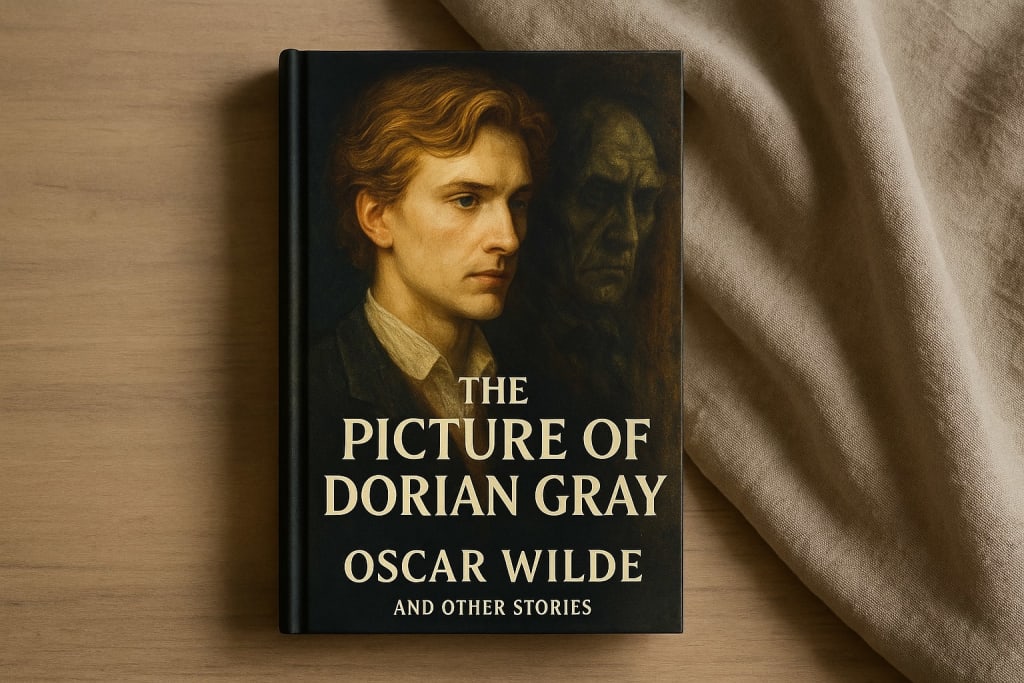
Reading The Picture of Dorian Gray was like stepping into a rich tapestry of decadence, morality, beauty, and horror. I went in expecting a classic Gothic novel and came out with a profound reflection on the human condition, the corrupting power of vanity, and the struggle between outward appearance and inner truth. Oscar Wilde’s only novel is more than a haunting tale; it is a philosophical exploration of art, youth, and conscience—woven together with dazzling prose and biting wit.
The Picture of Dorian Gray, written by Oscar Wilde and first published in 1890 (with an expanded edition in 1891), stands as a landmark in Gothic fiction and a pioneering work of philosophical and aesthetic literature. Wilde, a master of paradox and epigram, uses the novel to fuse elements of horror, romance, and social commentary into a distinctive work that has captivated readers for over a century. Though often labeled as a Gothic novel, its thematic complexity and stylistic flair make it a compelling read for mature audiences who enjoy psychologically layered fiction.
The story centers on Dorian Gray, a young man of extraordinary physical beauty who becomes the subject of a portrait by the artist Basil Hallward. Through the influence of Lord Henry Wotton, a cynical aristocrat with a fondness for hedonistic philosophy, Dorian becomes increasingly obsessed with preserving his youth and beauty. When he realizes that his portrait ages in his place—bearing the physical marks of his sins while his own appearance remains untouched—he embarks on a life of indulgence, corruption, and moral decline. The novel follows his descent and its effect on those around him, all set in the richly textured social world of late Victorian London.
From the outset, Wilde’s language is lush, elegant, and exquisitely crafted. He constructs sentences with the precision of a jeweler setting diamonds, imbuing every phrase with beauty and meaning. His talent for aphorism is unmatched; nearly every chapter contains lines that could stand alone as memorable quotes. Wilde’s style oscillates between lyrical and sardonic, between the ornate and the piercing. The dialogue sparkles with wit, particularly Lord Henry’s speeches, which serve as a vehicle for Wilde’s own philosophical musings on art, morality, and human nature.
Structurally, the novel is carefully composed, beginning with an almost theatrical setup—a studio conversation that sets the tone for the rest of the narrative—and evolving into something darker and more introspective. It moves steadily from the glamorous to the grotesque, reflecting the gradual decay of Dorian’s soul and the rising tension between illusion and reality. The plot, though deceptively simple on the surface, is layered with symbolic depth and moral questions. Wilde uses the supernatural conceit of the portrait to externalize conscience and to ask what might happen if one could sin without visible consequence.
Imagery in the novel is opulent and vividly sensory. Wilde doesn’t just describe rooms and clothes—he conjures them with sensual detail, making the reader feel the velvet, see the flickering candlelight, and smell the heavy perfume. This lush atmosphere contrasts powerfully with the book’s moral bleakness, creating a tension that underlines Dorian’s internal struggle. The portrait itself becomes a gothic totem, both captivating and horrifying, a visual diary of a man’s spiritual rot.
Beneath the surface glamour lies a haunting exploration of deep and uncomfortable themes. The novel delves into the duality of human nature—the contrast between our public personas and private selves. It asks whether the pursuit of beauty is noble or damning, whether art should be moral, and whether a life without consequence is worth living. Dorian’s descent is not merely the result of external influences like Lord Henry; it reflects a willing surrender to temptation, a conscious choice to silence the voice of conscience. The novel’s treatment of guilt, shame, and psychological fragmentation predates Freud but is startlingly modern in its psychological insight.
If there is a flaw in The Picture of Dorian Gray, it may be that some readers will find Lord Henry’s lengthy philosophical monologues overly abundant or repetitious. While I found them intellectually stimulating and often wickedly clever, they can occasionally feel like Wilde is indulging in a private dialogue with himself rather than advancing the plot. Additionally, the female characters are not as deeply drawn as their male counterparts, often serving more as symbols or plot devices than fully realized individuals. However, this may reflect Wilde’s intentional focus on the male psyche and social dynamics rather than a lack of narrative care.
Personally, what struck me most was the novel’s paradoxical nature. It seduces the reader with beauty while repelling them with moral horror. It praises aestheticism while exposing its dangers. I was fascinated by the way Wilde held up a mirror not only to Dorian, but to society—and, by extension, to the reader. It made me question the value I place on appearances and ponder how easily ethics can be eroded by charm and influence. The novel remains incredibly relevant in an age obsessed with youth, celebrity, and curated identities. Despite its setting in Victorian England, its psychological concerns feel disturbingly contemporary.
Reading The Picture of Dorian Gray was not just an aesthetic pleasure but an intellectual and emotional experience. Wilde’s prose mesmerized me; his characters intrigued and unsettled me; his themes stayed with me long after I closed the book. It’s not merely a cautionary tale—it’s a meditation on what it means to live authentically, to age with dignity, and to reconcile beauty with truth.
I would highly recommend this novel to anyone who enjoys psychologically rich literature, Gothic fiction, or philosophical drama. Those who appreciate beautifully written prose and moral complexity will find much to admire and reflect upon in these pages. As a final verdict: The Picture of Dorian Gray is a dazzling, disturbing masterpiece—both a work of art and a warning.
This book review was written using the following references 👇
About the Creator
Caleb Foster
Hi! My name is Caleb Foster, I’m 29, and I live in Ashland, Oregon. I studied English at Southern Oregon University and now work as a freelance editor, reviewing books and editing texts for publishers.
Keep reading
More stories from Caleb Foster and writers in BookClub and other communities.
Book review: The Moonstone by Wilkie Collins
When I first picked up The Moonstone by Wilkie Collins, I expected a solid Victorian mystery, but what I discovered was something far more complex and rewarding. This novel, often hailed as the first full-length detective novel in the English language, proved to be a rich, layered narrative that blends suspense, psychological insight, and social commentary into a remarkably sophisticated whole.
By Caleb Foster7 months ago in BookClub
My New Book is Finally Here
My poetry collection Beautiful and Brutal Things is done. It's actually done and finally published over 270 pages. Over a year of my life went into this book. More than a year, really. Long days at my computer, sometimes seven days a week because I couldn't stop even when I probably should have. Then two months of editing that felt harder than the writing itself. But it's finished, and I'm still standing, and the book is real.
By Tim Carmichael5 days ago in BookClub
Cursed Pages & Candlelight
Welcome, brave souls, to The Chapter Cafe—where stories steep like tea and mysteries simmer in the shadows. Tonight, under the flicker of candlelight and the watchful gaze of a harvest moon, we invite you to pull up a chair and sip from our Halloween Mystery Brew.
By Kristen Barenthaler7 days ago in BookClub



Comments
There are no comments for this story
Be the first to respond and start the conversation.