
Book review: The Island of Doctor Moreau by H. G. Wells
The Island of Doctor Moreau is an 1896 science fiction novel by English author H. G. Wells. It was published on 1 January 1896. The novel is set between 1 February 1887 and 5 January 1888. The text of the novel is the narration of Edward Prendick, a shipwrecked man rescued by a passing boat.


Reading The Island of Doctor Moreau by H. G. Wells was an experience both thrilling and disturbing, the kind that lingers in the mind long after the final page has been turned. For those unfamiliar with this work, it is one of Wells’ earlier novels, published in 1896, and belongs to the genre of science fiction and speculative horror. Intended for readers who appreciate philosophical undercurrents beneath adventurous plots, the novel explores themes that remain profoundly relevant even more than a century later.
The Island of Doctor Moreau is the story of Edward Prendick, a shipwreck survivor who finds himself stranded on a mysterious island in the Pacific. The island is inhabited by Dr. Moreau, a scientist whose grotesque experiments blur the lines between man and beast. The narrative unfolds through Prendick’s point of view as he gradually unravels the horrors behind the island's curious inhabitants—creatures that appear to be human-animal hybrids. The events take place in a setting far removed from civilization, a world where scientific boundaries have been not just pushed, but obliterated. It is a place where law, nature, and identity itself are questioned. Prendick, as the central character, serves as both a witness and a commentator on the events that unfold, reacting with a mixture of curiosity, revulsion, and moral conflict.
Wells' writing in this novel is deliberate and atmospheric. His language is precise, favoring clarity over ornamentation, but there is also an eerie elegance in his descriptions, especially when portraying the island's jungle or the unnatural qualities of the Beast Folk. He doesn’t rely on sensationalism; instead, he cultivates an unsettling tone through quiet but persistent dread. Structurally, the book moves efficiently, divided into short, vivid chapters that mirror the protagonist’s mounting unease. The novel reads quickly, but its ideas weigh heavily. The pacing is excellent—never too fast to lose depth, and never too slow to lose engagement.
One of the most striking aspects of the novel is its philosophical depth. At its heart, The Island of Doctor Moreau is not simply a story of survival or scientific experimentation. It is a meditation on the nature of humanity, the ethics of science, and the illusion of civilization. Dr. Moreau, in his pursuit of creating man from beast, plays God with chilling conviction, embodying a view of science that is detached from morality. His justification for his actions—that pain is irrelevant in the face of knowledge—sets up one of the book’s central questions: where do we draw the line between progress and cruelty? The Beast Folk, meanwhile, embody the tragic consequences of this disregard. Their struggle to adhere to the “Law” imposed upon them, and their inevitable regression, symbolize the fragility of imposed order and the chaos lurking beneath the surface of both man and animal.
There is also an emotional undercurrent to the novel, driven largely by Prendick’s evolution. As a narrator, he is more than a passive observer. His fear, compassion, and gradual disillusionment give the reader a lens through which to grapple with the novel’s themes. By the end, his psychological transformation becomes a reflection of humanity’s broader anxieties about identity, belonging, and the meaning of being truly human.
If I were to criticize any part of the novel, it might be the somewhat abrupt nature of its conclusion. While it effectively underscores the lasting impact of Prendick’s experience, it leaves certain philosophical threads unresolved, though perhaps intentionally so. Wells seems to prefer posing difficult questions rather than providing tidy answers. This ambiguity, while artistically valid, might leave some readers yearning for more closure or clarity.
What impressed me most about The Island of Doctor Moreau is how seamlessly it merges gripping narrative with profound intellectual inquiry. It reminded me, in its best moments, of the power of science fiction not just to entertain, but to challenge. Unlike many genre works that focus on spectacle or futuristic technology, this novel digs into the primal and the philosophical. It evokes horror not through monsters, but through the choices of a man convinced of his own infallibility. It made me reflect on modern debates surrounding genetic engineering, animal rights, and the limits of scientific freedom. Despite being over a century old, the issues it raises feel strikingly contemporary.
Emotionally, the book evokes a mixture of unease, pity, and awe. There’s a tragic grandeur to the creatures Moreau creates, and their suffering is not easy to dismiss. The sense of isolation and alienation that runs through the novel also resonates on a personal level. By the end, I was left with more questions than answers—but the best books often have that effect. It made me think not only about science, but about human arrogance, the value of empathy, and the uneasy space between reason and instinct.
So, The Island of Doctor Moreau is a powerful, thought-provoking novel that deserves its place among the great works of speculative fiction. H. G. Wells crafts a tale that is as engaging as it is unsettling, rich in both narrative tension and philosophical inquiry. I would strongly recommend it to anyone interested in classic science fiction, ethical dilemmas, or literature that challenges the reader’s comfort zone. Its blend of gothic horror, scientific speculation, and existential reflection is rare and deeply impactful. This is not just a novel to be read—it is a novel to be pondered. My final verdict: chillingly insightful and intellectually arresting, The Island of Doctor Moreau is a masterpiece of speculative fiction.
This book review was written using the following references 👇
About the Creator
Caleb Foster
Hi! My name is Caleb Foster, I’m 29, and I live in Ashland, Oregon. I studied English at Southern Oregon University and now work as a freelance editor, reviewing books and editing texts for publishers.
Keep reading
More stories from Caleb Foster and writers in BookClub and other communities.
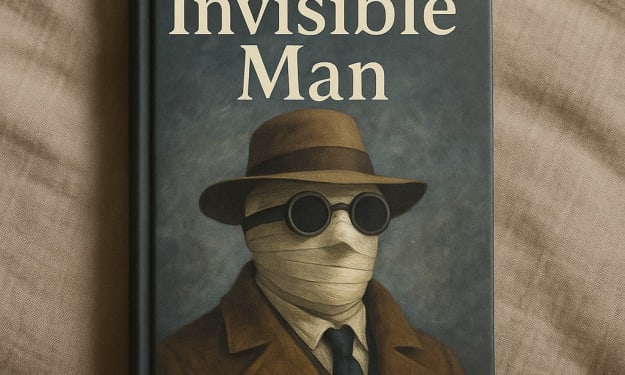
Book review: The Invisible Man by H. G. Wells
Some books make you marvel at the wonders of imagination, while others make you quietly shiver at what that imagination might reveal about human nature. The Invisible Man by H. G. Wells manages to do both. From the very beginning, I was captivated by its premise—not just because of the scientific impossibility it offers, but because of the very human consequences that unfold from it. Though published in 1897, the novel retains a startling relevance today, not only in its scientific curiosity but in its deep moral and psychological exploration of isolation, power, and identity.
By Caleb Foster7 months ago in BookClub
My New Book is Finally Here
My poetry collection Beautiful and Brutal Things is done. It's actually done and finally published over 270 pages. Over a year of my life went into this book. More than a year, really. Long days at my computer, sometimes seven days a week because I couldn't stop even when I probably should have. Then two months of editing that felt harder than the writing itself. But it's finished, and I'm still standing, and the book is real.
By Tim Carmichael5 days ago in BookClub
7 Best Productivity Books You Should Read In 2026
In today’s fast-paced world, productivity isn’t just a buzzword—it’s a critical skill that can transform your career, personal life, and overall well-being. Yet, many of us struggle with managing time, staying focused, and achieving meaningful results.
By Diana Meresc2 days ago in BookClub
How, Too
Many people wonder how, too. You are not alone, and I am an expert. I will teach you how, too! First, you need to remit a small application fee and fill out an application describing the nature of your financial situation and how often payments will be made, as this will have great bearing on how well I teach you how, too.
By Harper Lewis5 days ago in Fiction



Comments
There are no comments for this story
Be the first to respond and start the conversation.