


Book layout, also known as typesetting, is the process of preparing text for printing by arranging pages according to typographic principles. A well-designed layout enables smooth reading and aesthetically presents the content, enhancing the reader's comfort and giving the publication a professional look.
Statistics show that over 60% of readers are more likely to finish a book with an attractive and readable layout. Additionally, publications with carefully structured layouts have been found to achieve up to 40% higher retention rates compared to those with poor formatting.
An expertly designed book layout involves selecting appropriate fonts, spacing, margins, and chapter structures that align with the book’s theme and purpose. Whether you're self-publishing or working with a traditional publisher, professional typesetting can make a significant difference in how your book is perceived and enjoyed by readers.
Preparing Materials for Layout
Before starting the layout, ensure all materials are ready:
- Main Text - Make sure it is edited and formatted in its final version.
- Images and Illustrations - Should be in the appropriate resolution, typically 300 dpi.
- Quotes, Footnotes, and Author Notes - All supplementary elements should be prepared for integration with the main text.
Why Book Layout Matters?
A well-designed book layout enhances reader comprehension and engagement. Poor layouts—with inconsistent fonts, cramped spacing, and cluttered text—can distract and tire readers, leading them to abandon the book. In contrast, a clean, organized layout smoothly guides readers, allowing them to fully enjoy the content.
Choosing Format and Margins
The book format and margins are the foundation that determines the final appearance of the pages. The most popular formats are A5 (148 x 210 mm) and B5 (176 x 250 mm), but they can be adjusted based on the book's specifics. Side, top, and bottom margins should be set to allow for comfortable reading and an appealing page layout.
Setting the Typographic Grid
A typographic grid, dividing the page into columns and rows, allows for even text distribution. The grid helps control line arrangement, margins, and spacing between elements. Single or two-column grids are commonly used.
Choosing Fonts and Text Size
Fonts should be legible and aesthetically suitable for the publication's character. Popular fonts for book texts include Garamond, Times New Roman, and Minion Pro. Main text is usually set at 10-12 points, while footnotes are 8-9 points. Avoid using too many fonts to maintain layout harmony.
Chapter and Paragraph Layout
Each chapter should start on a new page. A larger gap before the chapter header is often used to highlight the beginning of a new section. Paragraphs should have appropriate spacing, typically 1.2 to 1.5 lines, to ensure readability and aesthetic balance.
Page Numbering and Sections
Page numbering is essential for the book’s order. In most books, left pages have even numbers, and right pages have odd numbers. Headers or footers containing the book or chapter title can also be added in sections for easier navigation.
Justification and Word Division Rules
Justification, or aligning text to both edges, gives the book an aesthetic look. To avoid large gaps between words, hyphenation is applied per language rules. Automatic typesetting tools, such as Adobe InDesign, allow for customized justification and word division to meet project requirements.
Final Check and Proofreading
Finally, thoroughly review the entire book for errors. Check:
- Page Layout - Ensure all elements align with the design.
- Style Consistency - Verify no inconsistencies in fonts, sizes, or spacing.
- Text Readability - Confirm the text is evenly distributed and easy to read.
Conclusion
Book layout is a crucial step in print preparation, requiring precision and typographic knowledge. A well-designed text layout not only enhances aesthetics but also makes reading enjoyable. This task is best entrusted to a professional company like Grafpa, specializing in such services - grafpa.pl/sklad-ksiazek/. Their expertise and dedication ensure that every publication achieves a professional look and meets the highest quality standards.
About the Creator
Zaheer Hussain
This is Zaheer Hussain, I am Social influencer and full time blogger, I am the CEO of 2 blogs websites LowCostVet.com and HairSalonGuider.com. I am part time blogger on the websites and I love the creating new ideas.
Keep reading
More stories from Zaheer Hussain and writers in BookClub and other communities.
Biography of Nick Millican: A Investor Point Of View
Nick Millican is a dynamic entrepreneur, business leader, and philanthropist whose career has been marked by an unwavering commitment to innovation, strategic growth, and community impact. Over the years, Millican has earned recognition for his leadership in the business world, particularly in areas related to technology, real estate, and investment. His journey is a testament to the power of visionary thinking, calculated risks, and a passion for creating value, not only in financial terms but also in enriching communities and fostering meaningful societal contributions.
By Zaheer Hussainabout a year ago in Interview
Rachel Reviews: Lakefront Wolves by Joseph Deegan
Meet Finn. He's an 18 year old kid who has potential. He's bright with great school scores and he's also an athlete, a footballer of some prowess. He has it all going for him, it would seem, and yet, he's determined to send what could be a well-planned, stable existence firmly off the rails. He drinks, he smokes, he takes drugs, he has violent tendencies and he's in danger of losing not only his mind but all that he holds dear.
By Rachel Deeming11 days ago in BookClub
Peter J. Carroll
The Emergence of Chaos Magic and the Influence of Peter J. Carroll The closing decades of the twentieth century witnessed a notable transformation within Western occult thought. Ceremonial traditions rooted in nineteenth century esoteric orders continued to influence magical practice, yet growing dissatisfaction with rigid doctrine encouraged new approaches. Within experimental occult circles in Britain and Europe, discussion increasingly focused on results, psychology, and personal experience rather than inherited authority. From that environment emerged chaos magic, a current that challenged long established assumptions about ritual, belief, and the nature of magical practice.
By Marcus Hedare4 days ago in BookClub
Early March 2026: 4 Goals Accomplished
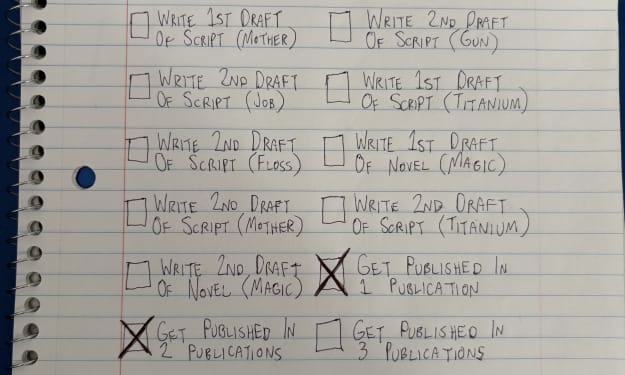
It's early March and I've now accomplished my 4th writing goal for the year of 2026. Before diving into the behind-the-scenes of it... why not tell you up front what that accomplishment was? I was published in a 2nd publication for this year. Published in Helix Literary Magazine out of Central Connecticut State University. You can read it for free right now!
By Stephen Kramer Avitabile6 days ago in Writers


Comments
There are no comments for this story
Be the first to respond and start the conversation.