
Atomic Habits vs. Tiny Habits: What's the Best Habit-Building System?
Is Tiny Habits the Better Version of Atomic Habits?

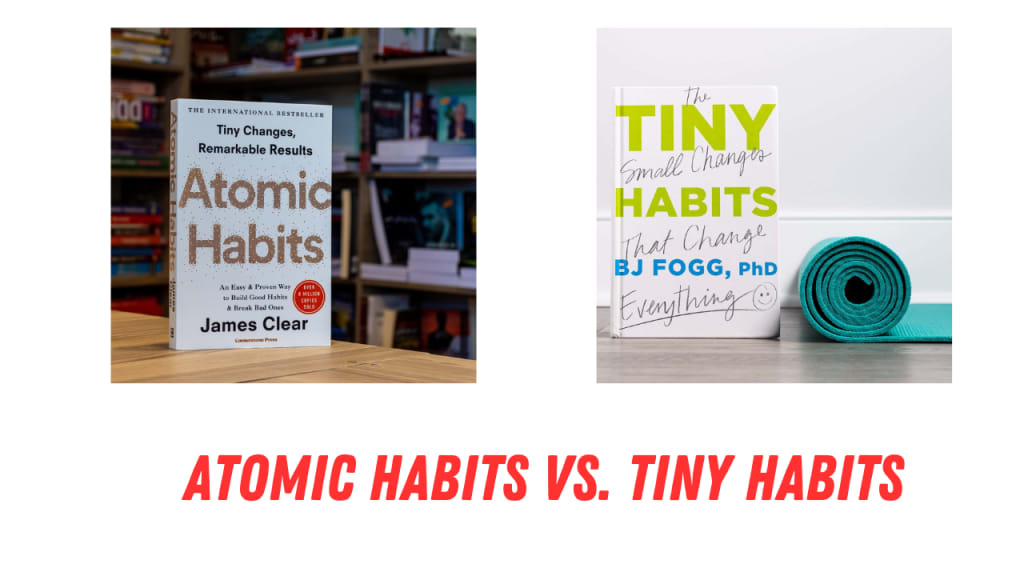
When it comes to building better habits, two of the most influential books in recent years are Atomic Habits by James Clear and Tiny Habits by BJ Fogg. While both aim to help people create lasting behavioral change, they take slightly different approaches. On the surface, they seem to promote the same message: start small. However, when we dig deeper, we see significant philosophical and practical differences that may make one more effective for certain people than the other.
So, is Tiny Habits actually a better version of Atomic Habits? Let's explore both and compare their core ideas, strengths, and weaknesses.
Overview of Atomic Habits
Atomic Habits by James Clear, published in 2018, quickly became a bestseller due to its clear writing style, relatable examples, and powerful framework. Clear's core message is that small changes—what he calls “atomic” (as in both tiny and powerful)—compound over time into significant outcomes.
The book is built around four laws of behavior change:
- Make it obvious
- Make it attractive
- Make it easy
- Make it satisfying
These laws guide readers on how to form good habits and break bad ones. Clear emphasizes identity-based habits, which means focusing on who you want to become rather than just what you want to achieve. For example, instead of trying to "run a marathon," you focus on "becoming a runner."
Overview of Tiny Habits
Tiny Habits, written by Stanford behavioral scientist BJ Fogg and released in 2019, is based on Fogg’s research at the Stanford Behavior Design Lab. The premise is simple yet profound: the key to lasting change is to make habits so small that they are almost impossible to fail at.
Fogg emphasizes starting with "tiny" actions—like flossing one tooth or doing two push-ups—and tying them to an existing habit (called an “anchor”). For example, after brushing your teeth (the anchor), you floss one tooth. Over time, these small wins create momentum and emotional reinforcement.
Unlike Clear, Fogg doesn’t focus much on identity or willpower. His method is rooted in emotion and ease. The goal is to feel good immediately after completing a habit, which reinforces it and makes it stick.
Core Differences

Starting Point: Identity vs. Simplicity
Clear believes the most powerful habits are identity-based. You need to become the type of person who does the habit. Fogg, on the other hand, believes in starting so small that the habit requires almost no motivation. His approach is more behavior-first, identity-later.
Emotion vs. Logic
Atomic Habits appeals to logic and systems. You design your environment, track your habits, and tweak the process. Fogg focuses more on emotional feedback—feeling good instantly after doing a habit is key to making it stick.
Tracking and Planning
Clear recommends using habit trackers, habit stacking, and deliberate planning. Fogg minimizes the need for tracking or planning. He believes that complexity adds friction, and friction kills habits.
The Role of Motivation
Clear talks about motivation but leans heavily on making habits easy and automatic. Fogg is more skeptical of motivation altogether. He says motivation is unreliable and habits should be designed to succeed without it.
Which Is More Practical?

Atomic Habits provides a comprehensive and systematic guide to habit formation. It is great for people who enjoy structure, frameworks, and long-term goals. It gives you a toolkit to dissect and reconstruct your life, one habit at a time.
Tiny Habits, in contrast, offers a more compassionate and accessible entry point. It’s ideal for people who struggle with consistency or feel overwhelmed by big goals. If you’ve failed repeatedly at building habits, Fogg’s method can rebuild your confidence through small wins.
Strengths of Atomic Habits
- Offers a clear, organized structure
- Emphasizes long-term identity change
- Great for ambitious goals and personal development
- Includes numerous practical tips and real-world examples
Weaknesses of Atomic Habits
- Can feel overwhelming for people who are struggling
- Requires more discipline and systemization
- Less emphasis on the emotional experience of habit formation
- Extremely easy to start
- Focuses on emotional reinforcement
- Encourages flexibility and celebration
- Suitable for people who are demotivated or lack time
- Less emphasis on long-term identity transformation
- May not offer enough structure for ambitious or complex habit systems
- Feels overly simple for some readers
Strengths of Tiny Habits
Weaknesses of Tiny Habits
Is Tiny Habits the Better Version?
The answer depends on who you are.
If you're looking for a comprehensive system to build a better life over months and years, Atomic Habits gives you the blueprint. If you want something immediately doable, forgiving, and rooted in joy rather than discipline, Tiny Habits may be the better fit.
In a way, Tiny Habits could be seen as a “gentler” or more beginner-friendly version of Atomic Habits. It focuses on emotional success and simplicity, making it more approachable for people just starting out or those who have failed before.
But that doesn't make it better—just different. Many people find success by starting with Tiny Habits and then graduating to the broader system outlined in Atomic Habits. Others may do well by jumping into Clear’s more structured model from the beginning.
Conclusion
Both Atomic Habits and Tiny Habits are powerful tools for creating lasting change. They’re not necessarily competing; in fact, they complement each other. BJ Fogg helps you start, and James Clear helps you scale. Whether one is “better” than the other depends on your personality, goals, and where you are in your habit-building journey.
For some, Tiny Habits will be the gateway to change they’ve always needed. For others, Atomic Habits offers the discipline and strategy to level up their life. The best version is the one that works for you—and sometimes, the smartest move is to take the best of both.
About the Creator
pestosol
Hi.
I am Hmimda 30 years old From Algeria. I am a blogger. I like to share articles about decoration and designs
7 Contemporary Romance Books Everyone Should Read In 2026
Love is timeless, but the stories we tell about it evolve with the world around us. Contemporary romance captures the pulse of modern relationships, blending passion, humor, and emotional depth with the realities of our everyday lives. Unlike classic romance, contemporary tales often tackle themes like career challenges, cultural differences, mental health, and personal growth—making them both relatable and inspiring. In a world where connection is increasingly digital, these books remind us of the beauty of vulnerability, the excitement of chemistry, and the transformative power of love.
By Diana Meresc5 days ago in BookClub




Comments
There are no comments for this story
Be the first to respond and start the conversation.