
Atomic Habits vs The Compound Effect: Which One Is Better for Personal Growth?
Which Habit-Building Philosophy Works Best for You?

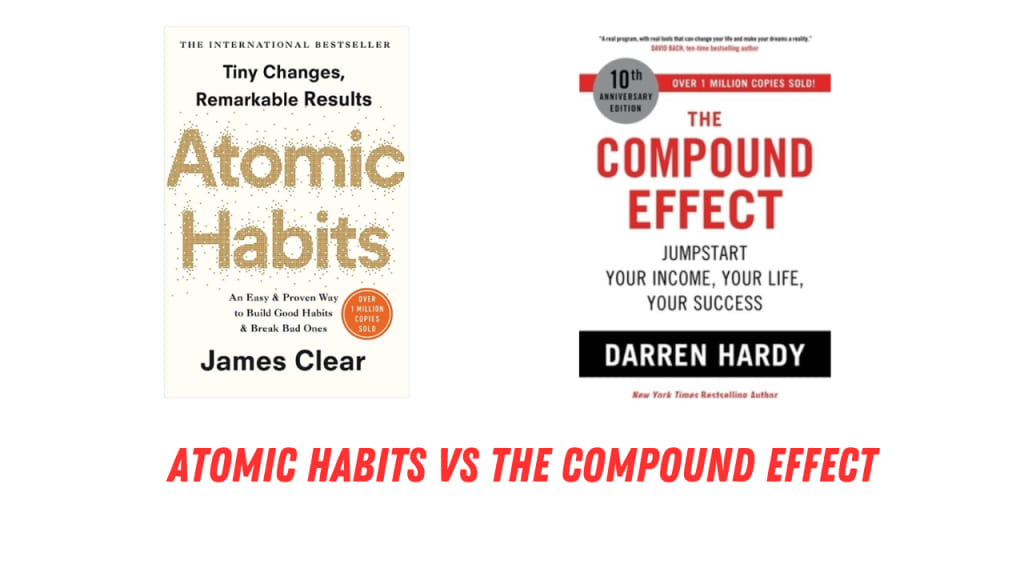
In the world of self-improvement, two books stand out as powerful guides for transforming your life through small, consistent actions: Atomic Habits by James Clear and The Compound Effect by Darren Hardy. Both books focus on the idea that tiny daily changes can lead to extraordinary results over time. But how do they differ, and which one should you read first?
In this article, we’ll compare Atomic Habits and The Compound Effect, explore their similarities and differences, and help you decide which one aligns best with your personal development goals.
Overview of Atomic Habits
Atomic Habits by James Clear is a bestselling book that explores how to build good habits, break bad ones, and master the tiny behaviors that lead to remarkable results. The book’s main premise is that habits are the compound interest of self-improvement. Just like money multiplies through compound interest, the effects of your habits multiply as you repeat them daily.
James Clear presents a four-step framework for habit formation:
- Cue – the trigger that starts the habit
- Craving – the desire or motivation behind it
- Response – the actual behavior
- Reward – the benefit you get from the behavior
Clear also introduces the Four Laws of Behavior Change to help you design better habits:
- Make it obvious
- Make it attractive
- Make it easy
- Make it satisfying
This science-backed approach emphasizes environment design, identity-based habits, and tracking your progress over time.
Overview of The Compound Effect
The Compound Effect by Darren Hardy takes a motivational approach to personal and professional success. The core idea is that small, smart choices made consistently over time lead to significant life changes. While James Clear dives into habit mechanics, Hardy emphasizes the philosophy of consistency and personal responsibility.
Key principles from The Compound Effect include:
- Choices shape your destiny
- Habits create momentum
- Daily disciplines build character
- Tracking leads to improvement
- Elimination of bad influences is essential
Hardy uses real-life stories and practical tools like tracking sheets, routines, and success journals to help readers stay consistent. He encourages a no-excuses mentality and promotes taking control of every action, thought, and habit to build long-term success.
Similarities Between Atomic Habits and The Compound Effect

Although their tones and strategies may differ, Atomic Habits and The Compound Effect share many common ideas:
1. Small Changes Matter:
Both authors emphasize that small, daily actions—if repeated over time—can lead to massive transformations. They discourage “quick fixes” and focus on the power of incremental growth.
2. Consistency is Key:
Success isn’t about making one big change; it’s about staying consistent with the right habits or choices. Whether it’s a 1% improvement each day or one smart choice at a time, both books highlight consistency as the ultimate multiplier.
3. Focus on the Long Term:
Clear and Hardy remind readers that results don’t come instantly. It might take weeks or months before your efforts show visible results, but over the long term, the payoff can be enormous.
4. Take Responsibility:
Both authors argue that personal responsibility is non-negotiable. You are in control of your behavior, your environment, and ultimately your success.
Key Differences Between Atomic Habits and The Compound Effect

While their messages are similar, the delivery and depth of content differ. Let’s break it down:
1. Writing Style and Tone:
James Clear writes with a calm, analytical tone rooted in psychology and neuroscience. His book is structured and methodical, appealing to readers who appreciate research and scientific evidence.
Darren Hardy, on the other hand, writes with a high-energy, motivational tone. His book feels like a personal coaching session—full of urgency and encouragement for readers who want a push to take action now.
2. Focus of Each Book:
Atomic Habits is highly focused on how habits form and provides a practical system to build and break them. The book is tactical, offering step-by-step guidance.
The Compound Effect is broader and more philosophical. It touches on habits but also covers topics like goal setting, time management, and influence. It’s about adopting the right mindset as much as the right behaviors.
3. Tools and Frameworks:
James Clear gives readers a clear roadmap through his Four Laws of Behavior Change and examples of habit stacking, habit tracking, and environment shaping.
Darren Hardy provides checklists, routines, and worksheets but leaves more room for interpretation. He gives you the tools, but you’re expected to find your own method of implementation.
4. Science vs. Motivation:
If you want a book rooted in behavioral science, Atomic Habits is your go-to. If you’re looking for personal stories and a motivational pep talk, The Compound Effect delivers that inspiration.
Who Should Read Atomic Habits?

- People who love data, systems, and psychology
- Anyone struggling to form or break specific habits
- Readers who want a practical, evidence-based guide
- Those who are patient and willing to commit to long-term growth
- Individuals who like habit trackers, tools, and measurable steps
Atomic Habits is perfect for someone looking to make sustainable behavior changes in health, productivity, or life routines.
Who Should Read The Compound Effect?

- Readers seeking motivation and a mindset shift
- Entrepreneurs and professionals who want to level up
- People who need a push to stop making excuses
- Individuals interested in achieving success through discipline
- Anyone struggling with inconsistency or procrastination
The Compound Effect works well for people who know what they want but need clarity and focus to get there consistently.
Can You Read Both?

Absolutely. In fact, reading both books can be a powerful combination.
Start with The Compound Effect to get fired up, develop a success mindset, and understand why small choices matter. Then follow it up with Atomic Habits to build a repeatable system and create real change in your habits and behavior.
They complement each other: Hardy gives you the “why,” and Clear gives you the “how.”
Read More: Atomic Habits vs The Psychology of Money: Which Book Will Change Your Life?
Final Thoughts: Atomic Habits vs The Compound Effect
In the debate between Atomic Habits and The Compound Effect, there’s no clear winner—just two different tools for the same goal: self-improvement.
Choose Atomic Habits if you're ready to implement a scientific, structured approach to habit change. Choose The Compound Effect if you want motivation and a clear philosophy for success.
Better yet, read both. Your future self will thank you.
About the Creator
pestosol
Hi.
I am Hmimda 30 years old From Algeria. I am a blogger. I like to share articles about decoration and designs
Rachel Reviews: Lakefront Wolves by Joseph Deegan
Meet Finn. He's an 18 year old kid who has potential. He's bright with great school scores and he's also an athlete, a footballer of some prowess. He has it all going for him, it would seem, and yet, he's determined to send what could be a well-planned, stable existence firmly off the rails. He drinks, he smokes, he takes drugs, he has violent tendencies and he's in danger of losing not only his mind but all that he holds dear.
By Rachel Deeming11 days ago in BookClub


Comments
There are no comments for this story
Be the first to respond and start the conversation.