
Atomic Habits vs Getting Things Done: Which Productivity Book Should You Read First?
A Clear Comparison of Two Popular Productivity Systems

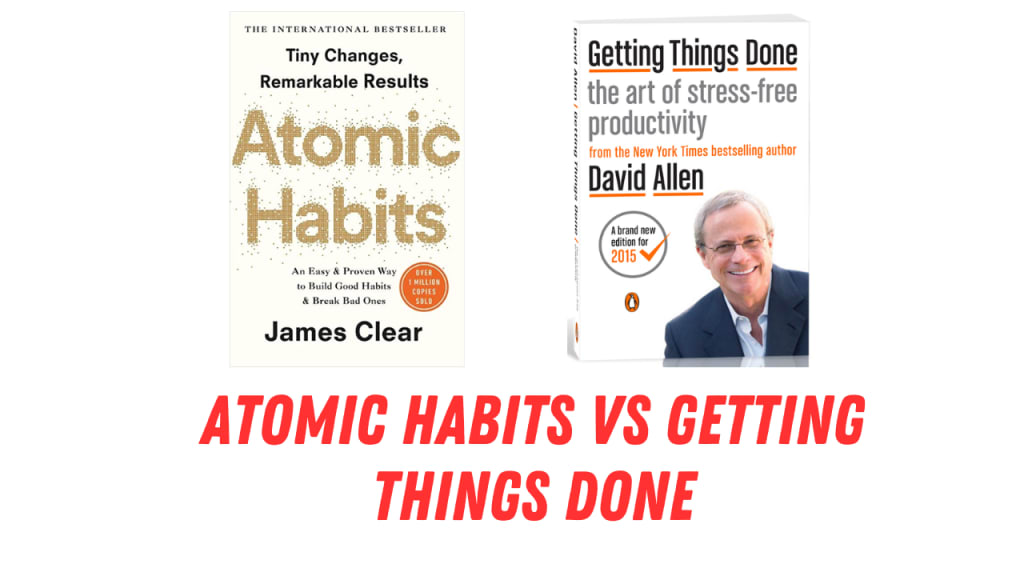
When it comes to mastering productivity, two books consistently stand out: Atomic Habits by James Clear and Getting Things Done by David Allen. Each offers powerful strategies, but they approach productivity from different angles. In this article, we’ll explore the core ideas of each book, their strengths, and which one might be the best fit for your current goals.
What Is Atomic Habits About?
Atomic Habits focuses on the science of habit formation. James Clear argues that tiny changes in your daily routine can lead to remarkable long-term results. Instead of chasing motivation or setting massive goals, Clear emphasizes building small, sustainable habits that align with the person you want to become.
Key Concepts from Atomic Habits:
- The 1% Rule: Small improvements every day compound over time.
- Habit Loop: Cue → Craving → Response → Reward.
- The Four Laws of Behavior Change:
- Make it obvious
- Make it attractive
- Make it easy
- Make it satisfying
- Identity-Based Habits: Focus on becoming the kind of person who naturally performs the desired actions.
Atomic Habits is ideal for those who want to make personal changes, overcome bad habits, and create positive routines that last.
What Is Getting Things Done About?
Getting Things Done (GTD) is a time-tested system for organizing your tasks, projects, and responsibilities. David Allen teaches a structured method to clear your mind and manage your workflow effectively.
Key Concepts from Getting Things Done:
- Capture Everything: Write down all tasks, ideas, and commitments.
- Clarify and Organize: Decide what each item means and where it belongs.
- Next Actions: Break projects into actionable steps.
- Weekly Review: Regularly reflect on your commitments and plan ahead.
The Two-Minute Rule: If a task takes less than two minutes, do it immediately.
Getting Things Done is perfect for professionals, entrepreneurs, or anyone juggling multiple responsibilities who needs a reliable system to stay on top of it all.
Atomic Habits vs Getting Things Done: The Main Differences

Atomic Habits by James Clear and Getting Things Done (GTD) by David Allen are two popular productivity systems, but they focus on different aspects of self-improvement. Here's a breakdown of their main differences:
1. Core Focus
- Atomic Habits:
Focuses on habit formation and how small, consistent changes lead to long-term results. It emphasizes identity-based habits and behavior change.
- Getting Things Done (GTD):
Focuses on task and time management. It’s a structured productivity method for organizing tasks, projects, and responsibilities.
2. Philosophy
- Atomic Habits:
Change your habits by shifting your identity (e.g., “I am a runner” vs. “I run sometimes”). It focuses on systems, not goals.
- GTD:
Clear your mind by capturing everything in an external system, so you can focus on execution without mental clutter.
3. Methodology
- Atomic Habits:
Cue → Craving → Response → Reward (habit loop)
Emphasizes environmental design, habit stacking, and tracking
Uses the “1% better every day” mindset
- GTD:
Five steps: Capture, Clarify, Organize, Reflect, Engage
Uses tools like to-do lists, context tags, project lists, and weekly reviews
Encourages a "mind like water" state by externalizing all commitments
4. Tools & Systems
- Atomic Habits:
Tools are psychological and environmental (e.g., habit trackers, cues, rewards).
- GTD:
Tools are organizational (e.g., inboxes, project folders, action lists, calendars).
5. Best For
- Atomic Habits:
Building or breaking personal habits, long-term behavioral change, motivation.
- GTD:
Managing overwhelming workloads, staying organized, reducing mental stress, increasing efficiency.
6. Style of Implementation
- Atomic Habits:
More flexible and adaptable, you can integrate it into everyday life with minimal structure.
- GTD:
Requires more setup and discipline. It’s a full-fledged system, often better suited for professionals or complex work environments.
In short, Use Atomic Habits to build better behaviors and develop consistency. Use Getting Things Done to organize your life and tasks for clear, productive action. Many people benefit from combining the two—building good habits while managing tasks effectively.
Which Book Should You Read First?
If your main goal is self-improvement and breaking bad habits, Atomic Habits should be your first choice. It’s easy to read, practical, and deeply rooted in behavioral science.
If you’re struggling with organization, productivity at work, or mental overload, then Getting Things Done is the better place to start. It provides a structured system to bring order to chaos.
In many cases, these two books complement each other. Start with Atomic Habits to build the behaviors that support a productive life, then use Getting Things Done to organize the results of your new habits into an efficient system.
Final Thoughts
Both Atomic Habits and Getting Things Done are must-reads for anyone serious about productivity. While Atomic Habits helps you become the kind of person who gets things done, Getting Things Done gives you the system to stay productive. The best results come when you combine the mindset of Clear with the methodology of Allen.
About the Creator
pestosol
Hi.
I am Hmimda 30 years old From Algeria. I am a blogger. I like to share articles about decoration and designs
Rachel Reviews: Lakefront Wolves by Joseph Deegan
Meet Finn. He's an 18 year old kid who has potential. He's bright with great school scores and he's also an athlete, a footballer of some prowess. He has it all going for him, it would seem, and yet, he's determined to send what could be a well-planned, stable existence firmly off the rails. He drinks, he smokes, he takes drugs, he has violent tendencies and he's in danger of losing not only his mind but all that he holds dear.
By Rachel Deeming8 days ago in BookClub
The Anti-Language Divide
Divided Tongues, Divided Worlds: A Review of The Anti-Language Divide The Anti-Language Divide, the third part of Volume I in THE MISCOMMUNICATION TRILOGY, marks a decisive deepening of Peter Ayolov’s broader inquiry into the decay, distortion, and fragmentation of contemporary communication. If the earlier parts of the volume analyse the structural obsolescence of language and the conspiratorial nature of speech as coalition-building, this book turns inward to examine a subtler and more insidious phenomenon: the proliferation of anti-languages within shared linguistic space. It is here that the trilogy’s philosophical ambition becomes most explicit.
By Peter Ayolov3 days ago in BookClub


Comments (1)
I've read both. Atomic Habits really helped me change some of my daily routines for the better. The 1% Rule made sense. But GTD's system is great for work chaos. How do you think they'd mesh if someone wanted to use both? I like how Atomic Habits focuses on the person behind the habits. It made me more aware of my actions. GTD, on the other hand, is all about getting stuff organized. Which one do you think would be a better starting point for someone new to productivity books?