
A Review of Mini Habits: Smaller Habits, Bigger Results by Stephen Guise
One afternoon, after another failed attempt to motivate myself to exercise, I (accidentally) started my first mini-habit. I initially committed to doing one push-up, and it turned into a full workout. I was shocked. This "stupid idea" wasn't supposed to work.

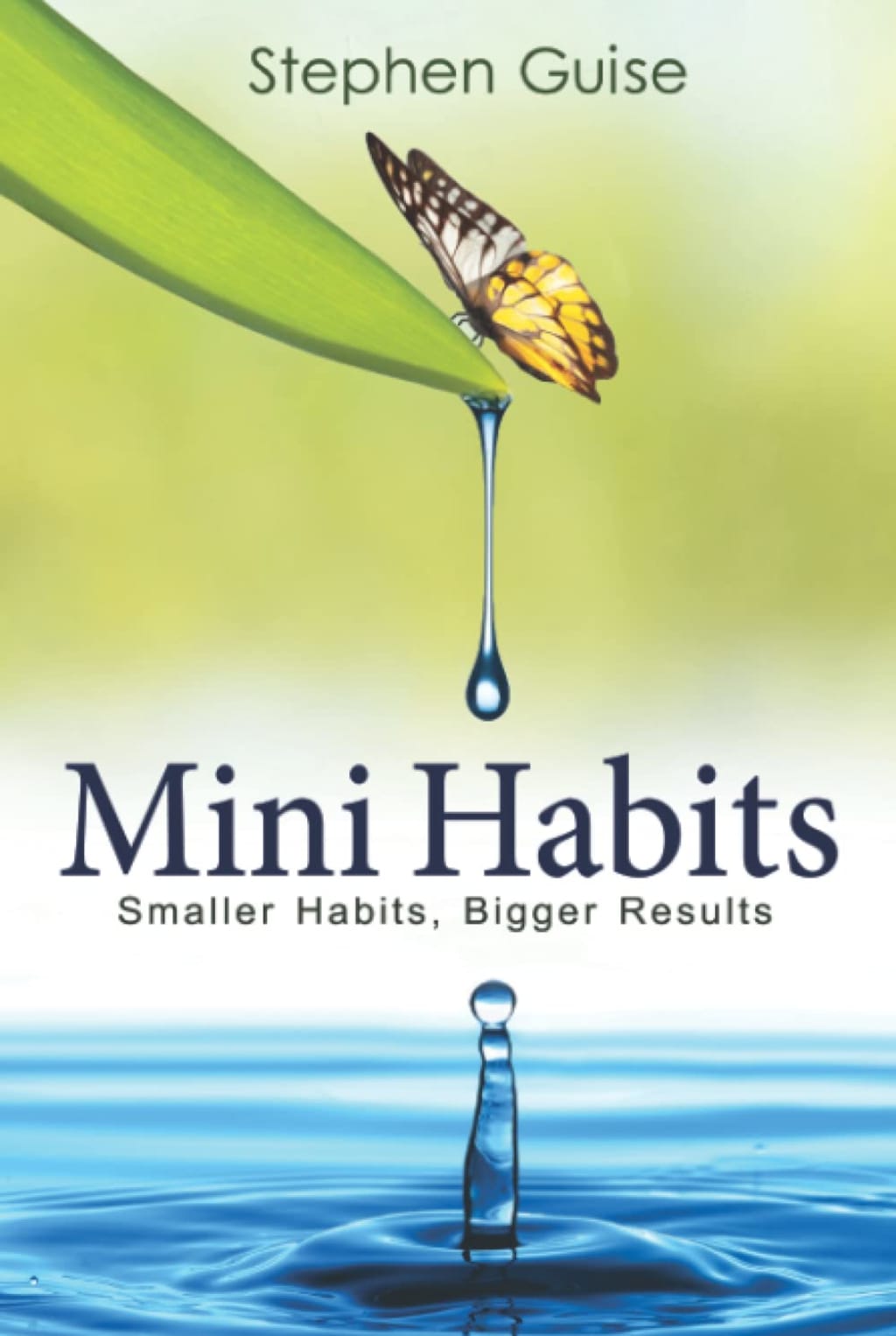
Stephen Guise and his Mini Habits do not follow the traditional approach of self-improvement but rather focus on small incremental improvements. The book was published in 2013 and is an attempt to rethink the motives that can lead a person to success, as well as to disprove the notions that for change it is necessary to be highly motivated or make large and vivid metamorphoses. Instead, Guise advocates for a gentler but effective method: adopting “mini habits” which are small actions one is willing to do daily, for a positive big change in the long run.
Boasting simple personal scenarios, basic concepts in psychology, and specific recommendations, Mini Habits is genuinely a guide on how to avoid losing those efforts at change we all too often encounter.
Click here to read Mini Habits: Smaller Habits, Bigger Results for free with a 30-day free trial.
Overview and Key Concepts
Mini Habits is built on the premise that the concept of large change results in either burnout or failure due to dependence on various Wills and willpower. Mini habits, on the other hand, are extremely small in size (for example, completing a single push-up, or reading a single sentence from a book) so there ehich can be no real resistance to them and it’s easy to stick with them.
Indeed, according to Guise, when organizations begin with a few minor changes, it is easy to continue with many more minor changes later on. Little by little or step by step, these small activities add up together and in the end make a huge impact. Key concepts explored in the book include:
1. The Power of Small Wins
Guise analyzes the application of a small win’s framework in his own writing as well as the importance and motivational effect of accomplishing any task no matter how small. The advantages of such a strategy are that each victory contributes to the creation of a success pattern and rewires your brain to reinforce the success.
2. Habit Formation and Willpower
The author talks about the process by which habits are formed, with a focus on the importance of timing in this process. Mini habits do not require willpower because they are too tiny for people to resist. That is opposite to conventional strategies that tend to utilize the willpower asset voraciously.
3. Concentration on the Beginning, Not the Detail
Guise emphasizes the key message of turning up irrespective of how small acts are. If you focus on starting, you take the stress of getting everything done right and having to complete objectives and create a positive energy that fosters a tendency to do things beyond the set goals of what you planned to begin with.
Writing Style and Approach
Guise uses an informal style of expressing herself in the text, which can be comprehensible to any reader. He is a funny man and tells us little stories which help address complicated issues in psychology. He also talks about his own personal issues with motivation and organisation, which I think serves to make his advice more trustworthy as well as relevant.
They have divided the book content into well-defined chapters and have also provided summaries at the end of each chapter to recap the key points taught. Neither does it create confusion as each stage progresses methodically from one chapter to the other, explaining how to start and sustain mini habits.
Key Strengths of Mini Habits
1. Actionable Advice
Arguably the book’s biggest asset is that it takes a pragmatic approach. Not only does Guise talk about theories, but he also explains how to develop mini habits and how to include them in our daily routine. His advice is very practical and aspiring hence can be implemented within short notice, which makes it favourable to readers.
For example, he proposed starting with a mini habit that should not be called a habit at all, such as writing fifty words a day if one wants to become a writer. This gets rid of excuses and sets up a no-fault culture for actual advancement.
2. Focus on Mindset Shift
By pointing readers to consider self-optimization through sound life patterns rather than drastic alterations of life attitude, such as Bach Guise invites readers to rethink self-improvement. The change of mindset means that it offers a solution to the guilt and frustration encountered with traditional forms of goal setting.
3. Supported by Psychological Science
This type of knowledge will serve as the basis for many of the arguments presented in the book: habits, volition, and even the chemical dopamine. Guise does not strictly adhere to the research done previously on the topic; however, he incorporates the findings of such research into his text in a natural and accessible manner.
4. Adaptability
Thus, the mini-habit approach can be used in almost every sphere of life, physical and spiritual, work, and personal. Guise brings to light so many illustrations to explain how mini habits can be adjusted to fit specific objectives; his plan is thus broad and can be adopted by anyone.
Limitations of the Book
1. Repetitiveness
What Iain in Mini Habits is great and serves a big message, still, the book can be quite monotonous at times. Some of the ideas are articulated repeatedly and while it doesn’t necessarily hurt, there are moments that one realizes what Guise is driving at only to turn the page and see the exact same message repeated.
2. They also lack depth in some specific areas.
Despite that the book offers clear and useful recommendations, there are some aspects of habitual behaviour that are not investigated in detail, for example, how to learn how to get rid of negative patterns. Those readers who want more information about behavioural psychology could read more additional literature to get more detailed information.
3. Overemphasis on Simplicity
That is why Guise’s approach is aimed even at minimum, which can serve as both a plus and a minus. This is due to the fact that simplicity makes the system easy to adopt; however, readers experiencing diverse problems with behaviour may consider the given recommendations too simplistic.
Practical Applications
Fitness and Health
Guise has provided an example of how mini habits can be implemented regarding fitness. Do not seek to spend 60 minutes a day in the gym; start with one push-up and five minutes of walking. That first step is often small and this leads to doing more than planned which generates the beginnings of the goal in the long-run.
Personal Development
Thus, for readers who try to develop some expertise in a certain field in order to enhance the performance of a skill or hobby, Guise’s recommendation to “lower the bar” is most valuable. From writing, or playing an instrument, to learning a new language, it becomes possible to transform a huge task into a manageable one with mini habits.
Professional Goals
Even the process of one’s professional advancement cannot bypass the rule that was mentioned above starting small. For instance, sending one email, or trying to come up with one idea may not seem like much to some people, but it is the start of breaking that slump and getting actual work done.
Comparisons to Similar Books
Mini Habits can be considered thematically related to James Clear’s Atomic Habits and Charles Duhigg’s The Power of Habit. All three books discuss how habits are formed; however, not all of them, only Mini Habits, stress how micro the action should be.
In Atomic Habits, habits are concerned with building systems for sustainable improvement and go further into explaining the Habits.
Want, the focus is on habit loops and the cues that lead to behaviours; the Power of Habit approach is more analytical.
Although Mini Habits is essentially a positive book that builds on the idea of taking action towards meeting one’s goals, it is most beneficial to readers who are simply seeking how to overcome inertia and get rid of the tendency of procrastination.
Why Mini Habits Resonate
Hailed in a society filled with assorted need-to-know tips on self-improvement, Mini Habits is different— optimal and easy to follow. Unfortunately, readers are often not motivated to read, or at least do not have sufficient motivation to read through large amounts of text. Due to the emphasis made by the book on small yet effective steps taken in the process of personal change, the audience is likely to find the goal set before them realistic and easy to achieve.
Final Thoughts
Mini Habits: Stephen Guise’s Smaller Habits, Bigger Results is a helpful and motivating publication about positive changes based on tiny daily steps. If you want to learn how to create a positive habit without having to rely on motivation or willpower, Simple Success is an invaluable guide that can help.
While the book’s repetitiveness and minimalist approach might not suit everyone, its core message is powerful and inspiring: slow and steady wins the race. If this is your first time reading about habits or looking for a new approach, there is much to learn from Mini Habits.
Guise wanted his readers to remember this: growth is not the absence of the old but the addition of the new – a consistent and deliberate choice to take that small step.
Click here to read Mini Habits: Smaller Habits, Bigger Results for free with a 30-day free trial.
About the Creator
TAPHA
Hi! Whether you're looking for insightful answers or a fresh perspective on a topic,I'm here to provide engaging, accurate,and thought-provoking content tailored just for you. Stick around, and let's explore the world of knowledge together!
My New Book is Finally Here
My poetry collection Beautiful and Brutal Things is done. It's actually done and finally published over 270 pages. Over a year of my life went into this book. More than a year, really. Long days at my computer, sometimes seven days a week because I couldn't stop even when I probably should have. Then two months of editing that felt harder than the writing itself. But it's finished, and I'm still standing, and the book is real.
By Tim Carmichael2 days ago in BookClub
The Spirit of Place: Understanding the Genius Loci
When Place Becomes Presence Across human history, landscapes have rarely been regarded as neutral or empty. Valleys, rivers, forests, shorelines, crossroads, and built environments have consistently been experienced as possessing a distinct presence. Archaeological evidence, religious texts, and oral traditions reveal a shared understanding that land carries character, intention, and memory. Settlements emerged where land felt favorable. Shrines rose where terrain inspired reverence. Routes followed paths believed to be watched over or guided by unseen forces. Geography shaped culture not only through resources and climate, but through perceived meaning.
By Marcus Hedare4 days ago in BookClub
How, Too
Many people wonder how, too. You are not alone, and I am an expert. I will teach you how, too! First, you need to remit a small application fee and fill out an application describing the nature of your financial situation and how often payments will be made, as this will have great bearing on how well I teach you how, too.
By Harper Lewis3 days ago in Fiction




Comments
There are no comments for this story
Be the first to respond and start the conversation.