
7 Books That Deserve to Be Read Twice
Must-Read Books Worth Rereading for Deeper Understanding, Personal Growth, and Lasting Impact.


Some books don’t just tell a story—they change the way we think, feel, and act. The first time we read them, they entertain or inform us. The second time, they reveal deeper layers, subtle insights, and connections we simply weren’t ready to see before. That’s the magic of rereading: we change, and the book changes with us.
Below is a list of 7 books that deserve to be read twice. These are works that reward reflection, mature alongside the reader, and offer new insights with every pass. Whether you’re seeking personal growth, philosophical depth, or emotional resonance, these books stand the test of time—and of rereading.
1. Atomic Habits – James Clear
James Clear’s Atomic Habits is a practical guide to building lasting change through small, consistent actions. While motivating on the first read, rereading turns insight into application. Clear’s focus on identity-based habits and environmental design becomes clearer with repetition, helping readers refine their routines over time. Backed by behavioral science and real-world examples, the book emphasizes that progress is a system, not a single breakthrough. Each reread reinforces key principles and uncovers new ways to optimize daily behavior. This makes Atomic Habits not just a book to read, but a manual to return to regularly.
2. Sapiens – Yuval Noah Harari
Sapiens by Yuval Noah Harari offers a sweeping history of humankind, examining how biology, culture, and shared myths shaped civilization. On rereading, the book’s interconnected themes become clearer—especially the role of storytelling in creating nations, religions, and economies. Harari challenges assumptions about progress, happiness, and human dominance. The second reading often feels more reflective, prompting readers to question modern values through a historical lens. Rich in interdisciplinary insight, Sapiens rewards rereading by deepening understanding and encouraging intellectual humility about humanity’s past and future.
3. The Alchemist – Paulo Coelho
The Alchemist is a spiritual fable that grows more meaningful with age. On the surface, it tells the story of Santiago’s journey in search of treasure, but rereading reveals its deeper message about purpose, intuition, and courage. Coelho emphasizes that true fulfillment comes from listening to one’s inner voice and embracing uncertainty. What may feel simplistic on a first read becomes profound when revisited after real-life failures and reinvention. The novel reminds us that the journey itself shapes who we become, and that personal legends are often discovered through risk, patience, and trust in the unknown.
4. Thinking, Fast and Slow – Daniel Kahneman
Daniel Kahneman’s Thinking, Fast and Slow is a groundbreaking examination of how humans think and make decisions. The book introduces System 1 (fast, intuitive thinking) and System 2 (slow, analytical reasoning), reshaping our understanding of judgment and bias. While challenging on a first read, rereading transforms theory into practice. We begin to recognize cognitive biases—such as loss aversion and confirmation bias—in everyday decisions. Backed by decades of behavioral research, this book rewards repeated engagement, helping readers become more rational, self-aware, and deliberate in both personal and professional choices.
5. To Kill a Mockingbird – Harper Lee
Harper Lee’s To Kill a Mockingbird is a powerful exploration of justice, empathy, and moral integrity. Often first read in school, its deeper themes emerge more strongly upon rereading as adults. Through Atticus Finch’s quiet courage, the novel challenges readers to stand for what is right, even when it’s unpopular. The story’s examination of racial injustice and prejudice remains painfully relevant today. Rereading reveals the novel’s emotional subtlety and ethical complexity, reminding us that true bravery lies in compassion and understanding. It is a timeless call to see the world through others’ eyes.
6. Meditations – Marcus Aurelius
Meditations is not a traditional book, but a collection of personal reflections from Roman emperor Marcus Aurelius. Rooted in Stoic philosophy, it offers guidance on discipline, humility, and emotional resilience. Each rereading feels different because life’s challenges change. Marcus emphasizes controlling one’s reactions rather than external events—a lesson that deepens with experience. The book’s short, reflective passages make it ideal for revisiting during moments of stress or transition. Its enduring value lies in its practicality and honesty, serving as a timeless manual for maintaining clarity, virtue, and inner peace in an unpredictable world.
7. The Great Gatsby – F. Scott Fitzgerald
F. Scott Fitzgerald’s The Great Gatsby is a richly layered critique of ambition, illusion, and the American Dream. On a first read, it appears to be a tragic love story set in the Jazz Age. Rereading reveals its deeper symbolism—the green light, the valley of ashes, and Gatsby himself as embodiments of longing and self-deception. With maturity, readers better grasp the novel’s warning about equating wealth with fulfillment. Fitzgerald’s lyrical prose rewards close attention, making each reread more revealing. The novel endures because it captures the timeless human desire to reinvent ourselves and belong.
Conclusion
The books we’ve explored aren’t just well-written—they’re wisdom-rich. They meet us where we are and challenge us to grow. In rereading, we slow down, listen more carefully, and uncover insights that were always there, waiting.
Our recommendation is simple: don’t rush to the next book. Return to the ones that moved you. Let them speak again.
About the Creator
Diana Meresc
“Diana Meresc“ bring honest, genuine and thoroughly researched ideas that can bring a difference in your life so that you can live a long healthy life.
Keep reading
More stories from Diana Meresc and writers in BookClub and other communities.
7 Easy Books You Need To Read In 2025
In the fast-paced world we live in today, finding time to read can feel like a luxury. Yet, reading remains one of the most powerful tools for personal growth, stress relief, and intellectual stimulation. But not every book needs to be dense, complex, or intimidating. Sometimes, the most transformative experiences come from easy-to-read books that are engaging, insightful, and thought-provoking.
By Diana Meresc24 days ago in BookClub
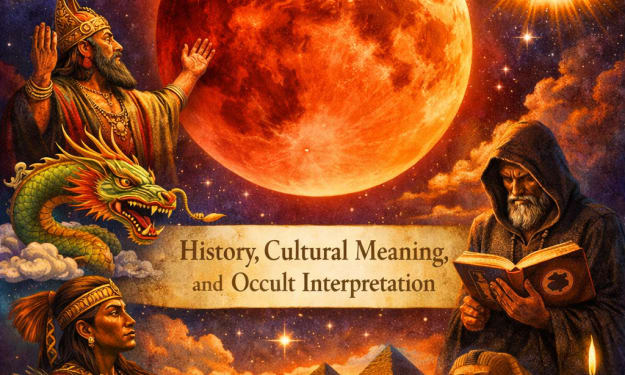
The Blood Moon
When the Moon Turns Red For millennia, the sudden darkening of the full Moon has stirred awe, fear, reverence, and speculation. A total lunar eclipse transforms a familiar celestial body into something uncanny, as Earth’s shadow slowly overtakes the lunar surface and replaces silver light with deep copper and crimson tones. This phenomenon, commonly called the Blood Moon, occurs through a precise interaction of orbital mechanics and atmospheric physics. Sunlight passing through Earth’s atmosphere bends and scatters, filtering out shorter wavelengths and allowing red and orange light to reach the Moon. The result is neither illusion nor omen, but a predictable yet visually arresting event grounded in natural law.
By Marcus Hedare6 days ago in BookClub



Comments
There are no comments for this story
Be the first to respond and start the conversation.