
What the Adam22 Fight Reveals About the New Entertainment Economy
When the spectacle becomes the brand, authenticity turns transactional—and every punch becomes a marketing pitch.


I didn’t watch the Adam22 fight live. I caught it later, the same way most people do—with half a dozen phone screens looping the same angles, all underscored by shock, mockery, and edits made before the fighters had even caught their breath. What drew me in wasn’t the athleticism or even the controversy, but the emptiness that hung between each jab. The fight wasn’t really about fists—it was about content, and content always wins.
Adam22, host of the infamous No Jumper podcast, is more brand than person at this point. He’s built an empire on provocation and performative chaos. The fight was just an extension of that—another viral artifact in a career defined by knowing exactly where the internet’s moral threshold lies, and dancing just on the other side of it. But what struck me most was how the audience responded. Thousands piled into comment sections not to condemn or praise but to participate. Everyone wanted a slice of the moment, even if that meant feeding the very machine they were mocking.
I’ve spent most of my twenties watching the media landscape mutate into a multi-headed creature—part entertainment, part algorithm, part mirror. The Adam22 fight felt like the latest head sprouting from that creature’s neck. Watching it wasn’t like tuning in to a boxing match; it was like opening a browser tab into the psychology of digital fame. If early YouTubers traded privacy for attention, today’s creators trade humanity itself. Every scandal is monetized, every insult flipped into a clip, every moral debate flattened into a fifteen-second highlight.
What complicates this particular case is the way Adam22 thrives on moral dissonance. He’s as self-aware as he is shameless. He knows his audience sees through him—and he invites them to. That tension becomes the product. So when a fight happens on camera, it’s not shocking; it’s business. The difference between a podcast spat and a literal punch is no longer measured in consequence, only in clicks.
Still, I couldn’t dismiss the unease that pooled in my stomach while watching. There’s something bleak about realizing that outrage is now the most stable form of currency on the internet. If hate fuels engagement, and engagement fuels revenue, then moral collapse becomes a business model. And we—viewers, commenters, even critics—are stockholders without realizing it. I tell myself I’m above it. That I watch ironically. That I study media, not consume it. But irony doesn’t cancel out complicity; it just rebrands it.
I grew up in a time when “reality TV” was still distinct from reality. Today, those borders are dissolved. The Adam22 fight didn’t happen outside the content—it was the content. Every moment was strategically captured: the slow-motion replays, the post-fight interviews, and the podcast recaps the next day. The fight’s narrative never ended; it metastasized. The fallout generated more views than the punch itself. Watching the cycle unfold reminded me of something philosopher Byung-Chul Han once wrote: that transparency culture kills the soul of authenticity because everything shown becomes something sold.
There’s also a gendered undercurrent that’s impossible to ignore. Adam22’s broader image—intertwined with adult industry collaborations and viral controversies involving his partner—always bleeds into these spectacles. The fight, framed as masculine bravado and digital dominance, fits neatly into his ongoing narrative of performative control. But it also exposes a strange vulnerability: the desperate human need to keep performing relevance. Underneath all the muscle and merch lies the quiet terror of losing the algorithm’s favor.
What fascinates me most isn’t Adam22 himself but what his existence reveals about us. We’ve built a cultural economy that rewards extremity and punishes nuance. If your quiet opinion can’t compete with a public meltdown, then authenticity becomes muted background noise. Watching the fight unfold, I wondered whether this is what the new “authentic” looks like—people bleeding, yelling, and branding themselves as both victim and victor at once.
And yet, despite all this criticism, I can’t claim detachment. I clicked. I replayed. I searched for reactions. I participated in the same attention economy I resented. That’s the paradox of being online now—you can critique the system only from inside it. I don’t think Adam22 is the villain of this story; he’s just the inevitable conclusion of an ecosystem built on spectacle. If he didn’t stage it, someone else would have. The algorithm creates its own prophets.
As I rewatched the footage, I noticed how quickly the audience shifted from outrage to parody. Within hours, edits surfaced re-contextualizing the fight as comedy, meme fodder, and even fan fiction. That adaptability is both impressive and horrifying. The internet metabolizes everything—pain, conflict, humiliation—into shareable media. There’s no time to process meaning when it’s all instantly repackaged for clicks.
Maybe that’s why I keep thinking about the people behind the cameras—the producers, editors, and PR teams who choreograph these disasters into promo material. The fight might have been impulsive, but the rollout wasn’t. Every thumbnail, every headline, every reaction clip followed the unwritten rules of digital virality. It made me realize: outrage isn’t just spontaneous behavior anymore; it’s a professional skill.
By the time the next controversy drops—and it will—this one will already be archived, tagged, and monetized. The internet doesn’t care about closure; it only cares about continuity. The Adam22 fight will sink into the sediment of online history, buried beneath newer scandals, newer spectacles. But it won’t disappear—it’ll just become another algorithmic data point proving that people, when given the choice between introspection and chaos, almost always click chaos.
So, when I think about the Adam22 fight, I don’t really see fists. I see feedback loops. I see the tired rhythm of digital life, where everyone’s both performer and audience, both critic and fan. I see how we’ve redefined violence—not as physical harm, but as emotional engagement. In that sense, the most bruised part of the whole event wasn’t Adam22 at all—it was our collective threshold for what still shocks us.
About the Creator
Trend Vantage
Covering the latest trends across business, tech, and culture. From finance to futuristic innovations, delivering insights that keep you ahead of the curve. Stay tuned for what’s next!
Keep reading
More stories from Trend Vantage and writers in Beat and other communities.
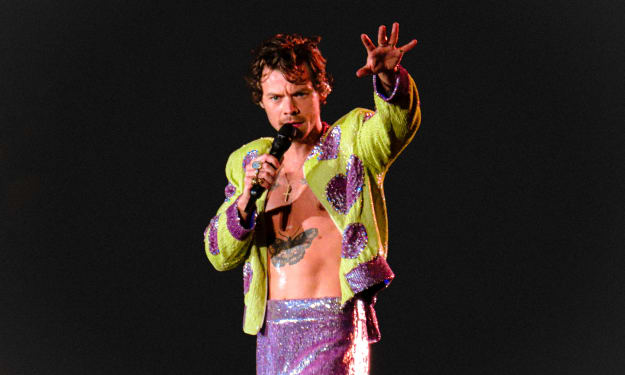
Aperture and the Modern Pop Icon: Harry Styles and the Aesthetic Economy
The visual evolution of Harry Styles tells us more about the state of modern celebrity than any single track, campaign, or headline. His trajectory is not just the story of a musician shifting from boy band fame to boundary-pushing artistry. It’s a reflection of how the economy of attention in 2026 operates—where image, narrative, and aesthetic coherence aren’t accessories to success, but its architecture. “Aperture,” his latest conceptual direction, isn’t simply an album; it’s a study in how culture now processes visual truth.
By Trend Vantage3 days ago in Beat
Tears on the Witness Stand: When Prince Harry’s Case Became a Performance
In a courtroom designed for evidence, not emotion, Prince Harry delivered something closer to a monologue than a testimony. What was meant to be a decisive moment in his legal battle against a major British newspaper publisher instead unfolded as a study in contradiction, frustration, and theatrical vulnerability—leaving legal observers questioning whether the Duke of Sussex strengthened his case or quietly undermined it. At the heart of the lawsuit lies a serious allegation: that elements of the British press engaged in illegal information-gathering practices, including phone hacking, deception, and the use of private investigators. Harry has positioned himself as both plaintiff and symbol, a man standing not just for personal justice but for the principle that public figures deserve privacy. Yet under cross-examination, the clarity of that mission blurred. Throughout the day, the Duke presented himself as a lifelong victim of relentless media intrusion, someone whose private life had been treated as open territory for commercial exploitation. “I fundamentally reject the idea that my life is public property,” he insisted, framing his case as a moral stand against an industry he believes thrives on intrusion disguised as public interest. But the defense methodically chipped away at this narrative. The most damaging moment came with the discussion of a pseudonymous Facebook account—“Mr. Mischief”—used in 2016 to contact a journalist. Initially, Harry denied any involvement. Then he suggested the account might have been created by someone else. Finally, he conceded that he may have used the alias himself. The shifting explanations were stark, and in a courtroom, inconsistency is costly. What this moment revealed was not merely a lapse in memory, but a deeper tension in Harry’s argument. He portrays himself as a passive target of media manipulation, yet evidence suggested a willingness—at least at times—to engage with the press on his own terms. The image of a prince entirely besieged by journalists gave way to something more complicated: a man simultaneously resentful of media attention and capable of seeking it out. As the questioning continued, Harry’s demeanor fluctuated dramatically. At moments, he was defiant, even argumentative, challenging assumptions and lecturing the court on the failures of British journalism. At others, he appeared fragile, visibly strained by the weight of past experiences. He spoke at length, and with striking emotion, about former relationships, particularly the distress faced by an ex-girlfriend under intense media scrutiny. His recollections were vivid, detailed, and deeply personal. By contrast, references to his wife were brief and procedural—until the very end. In what became the defining moment of the day, Harry’s composure finally broke. Speaking of the impact of press coverage on his wife, his voice faltered. He paused, reached for water, and struggled to continue. Tears followed. It was raw, unrestrained, and undeniably human. Yet in the context of a legal proceeding, the moment raised uncomfortable questions. Why had the most detailed emotional testimony been reserved for past relationships, while his wife’s suffering emerged only as a climactic declaration? Why did this emotional crescendo arrive after hours of damaging contradictions? To legal analysts, the breakdown risked appearing less like spontaneous grief and more like a strategic pivot—from facts to feeling. The defense seized on this perception. They argued that Harry has built a lucrative second career on publicly narrating his pain through memoirs, documentaries, and interviews. In their framing, this lawsuit is not a rejection of exposure, but another iteration of it. The courtroom, they suggested, had become yet another stage. This paradox sits at the core of Harry’s struggle. He condemns the commercialization of his private life while simultaneously profiting from its disclosure. He seeks privacy through the most public mechanisms available. His tears, however genuine, exist in the same economy of attention as the stories he denounces. None of this negates the possibility that press misconduct occurred. The case will ultimately turn on evidence, statutes, and legal precedent—not emotion. But in the court of public opinion, optics matter. And the image Harry left behind was fractured: a man torn between righteous anger and unresolved grief, between moral crusader and media participant, between authority and vulnerability. As he stepped down from the witness stand, visibly drained, the question lingered. Did Prince Harry expose a corrupt system—or did he expose the limits of his own narrative? In seeking to condemn the press for turning his life into spectacle, he may have proven just how difficult it is to escape a role once the spotlight is on. The law will decide the case. But the performance has already left its mark.
By Behind the Curtain3 days ago in Beat



Comments
There are no comments for this story
Be the first to respond and start the conversation.