
What Goes Around Comes Around
Observations On The Music Industry

Introduction
These are some observations on the music industry from before I was born up to the present day. Musicians are dependent on others showing some appreciation of their work, be it a busker hoping for coins in the street, or selling records in the hope of making a crust (though hoping for a lot more than that.
Note this is all from my head and not researched at all, so there may be errors in this and some may just be pure opinion on my part.
One of my first Vocal pieces was on the history of media used for sharing and selling music which you may want to read. That is here.
How It Was
Musicians needed exposure, playing locally in the hope that they could be discovered and maybe get a contract to make a record and then get played on the radio and TV to advertise their wares. Elvis Presley was signed by Sam Phillips and Sun Studios and was given a great deal of exposure but then Colonel Tom Parker took over his management and from then on Presley was under Parker's control.
Similar things have happened with artists, they may get advances but those had to be paid back to the record companies, because like with books, to put a product out there required financial investment.
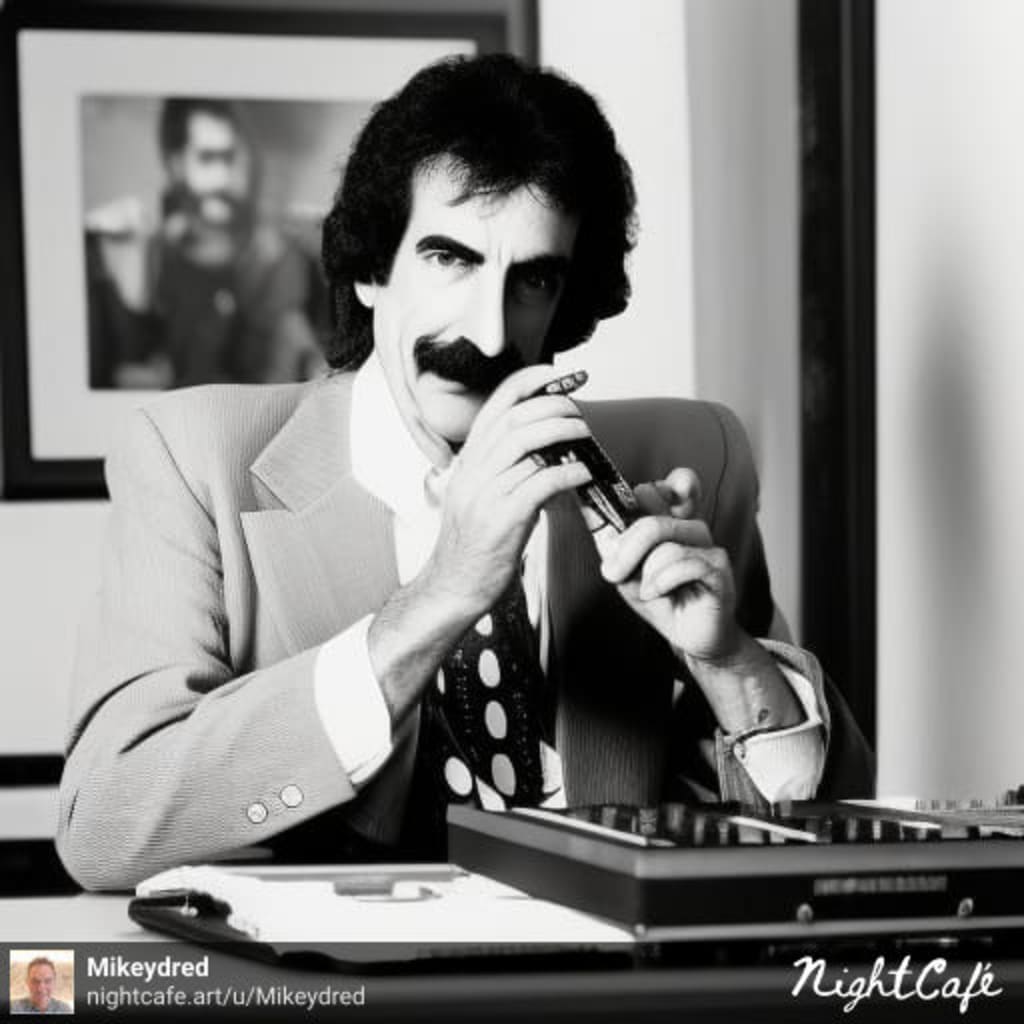
Something Frank Zappa said (and he said a lot of insightful stuff) came to my mind, these might not be the exact words, but it was basically in the sixties the money guys with their big cigars when they were pitched a new band would say what the hell, pay for an album, and just see what happened. Yes, there were failures but a lot of good music came through like that.
By the eighties, the money men were young bucks and it became selling product, making a profit and the music became secondary.
The late seventies saw the birth of real indie where bands financed their own vinyl records by whatever method they could, taking on the music corporations but in the eighties, it did become about getting a contract with an established music conglomerate.
In the late sixties and early seventies, Island Records and Virgin became established and put out lots of artists who never would make a profit. Both those labels eventually became like all the others and were bought out and became just another profit-making arm.
How It Is
Thanks to digital technology anybody can make an album in their bedroom and release it digitally. This is a great thing because it means you do not have to go looking for a record company advance. Platforms like Bandcamp and Soundcloud allow artists to share their music on their own terms.
One thing to remember is that when I bought Pink Floyd’s “Wish You Were Here in the seventies it cost the same as my Jobs Seekers allowance (£3.25). If records had kept pace with JSA we would be paying £100 for an album today, but the wage suppression that started in the seventies has made sure that album costs did not keep up with inflation, although economies of scale have reduced the costs significantly for digital versions of the product.
This means that artists earn a lot less from their albums than they used to, so try to recoup that from live performances, but people still complain about the cost of gigs. Madonna was supposedly charging thousands for premium seats for her shows. I don’t see a problem with that. If you can sell those tickets.
What I do object to is the legalised touts like TicketMaster who add their huge markup to what were reasonably priced tickets.
The bad side of music was really hit home to me by the adverts for the BBC series “Project Icon”, saying so have to build your brand on social media and put down a business plan. Songwriting and playing are minimalised to the point that it is an annoyance. You need to look the part, autotune and backing tracks can provide the music.
This is just another in the “Pop Idol” and “X Factor” packages where something is packaged and sold to the public for a profit.
I know some good music has come through these channels but they also take pleasure in demeaning people as well, which is true of a lot of the behind closed doors at a lot of record companies.
Conclusion
I do believe the music scene is still healthy but hard work. People are no longer dependent on major record companies and corporations and anyone can make music. They have social media as a virtually free outlet for the music they make and my thoughts are that 95% is always rubbish, just look for that 5%, and remember everybody's taste is different, what might do for me may not do for you.
About the Creator
Reader insights
Outstanding
Excellent work. Looking forward to reading more!
Top insights
On-point and relevant
Writing reflected the title & theme
Easy to read and follow
Well-structured & engaging content
Heartfelt and relatable
The story invoked strong personal emotions
Compelling and original writing
Creative use of language & vocab
Expert insights and opinions
Arguments were carefully researched and presented
Eye opening
Niche topic & fresh perspectives
Excellent storytelling
Original narrative & well developed characters
Masterful proofreading
Zero grammar & spelling mistakes
Keep reading
More stories from Mike Singleton 💜 Mikeydred and writers in Beat and other communities.
Review of 'Man on the Run'
My wife and I saw Man on the Run, a nearly 2-hour documentary on Amazon Prime, about Wings, Paul McCartney's group that flew around the world from shortly after The Beatles broke up in early 1970 to shortly after John Lennon was murdered at the end of 1980, making a Beatles reunion forever impossible.
By Paul Levinson9 days ago in Beat
Top Rappers in Charlotte, NC (2026 Update)
Charlotte has been building pressure. North Carolina used to orbit around a few breakout names, but in 2026 the state—and especially Charlotte—is producing artists who understand both sound and strategy. The city blends Southern bounce with melodic storytelling, and its streaming growth over the last few years proves it’s no longer just “regional.”
By RapRadarDigest6 days ago in Beat


Comments (4)
I agree to an extent, you still need a good promoter and a wide range of exposure to get on the Billboard.
I'm not sure I registered anything past "Ticketmaster". They're pretty much the definition of evil, marketing themselves as though they are official licensed distributors hired by the venues to market their tickets. We're hoping to see a show at the Munie in St. Louis. Ticketmaster was advertising that tickets for the show would be $89 & up & that "they're going fast". The tickets aren't even available until later this month & they start at $39, not to mention that there are banks of free seats available in the back on a first come, first serve basis that are pretty darn good.
Interesting article. I understand that things constantly change, but when the talent and hard work of the artist are overshadowed by a producer making an easy buck, that is hard to take. You know the music world and do a good job of exposing things wrong with it. Good job!
Good article. Soon as I saw Zappa I though 'Watch out where the huskies go"