

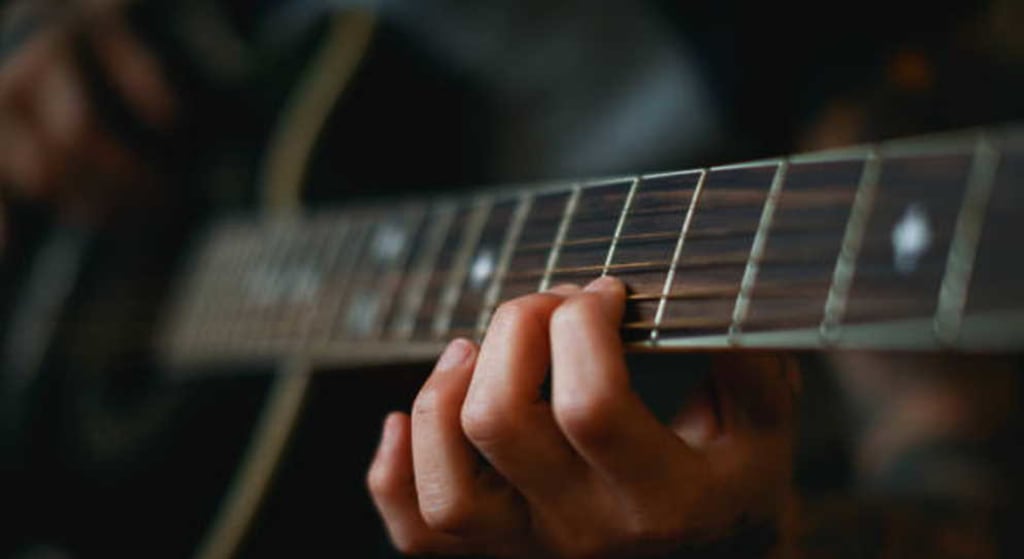
"Roots music" is a term that is frequently used to describe various styles of American music. The mind is transported to the American South, or to the folk lyricism of acoustic artists such as John Prine or (the Minnesotan) Bob Dylan. That isn't entirely incorrect, but it's important to distinguish between roots music and American roots music first.
Roots music arises from various cultures and their realities and hardships: folk traditions combined with a specific time and demographic's attitude. The origins of American roots music can be traced back to a mix of early European and African culture and history, both lyrically and musically.
"American roots music" refers to a wide range of musical genres that are closely associated with ordinary people's lives. Blues, gospel, country, zydeco, tejano, Native American pow-wow, and some formerly classified as "folk music" are among these genres. Religious music from the eighteenth and nineteenth centuries had a significant impact on roots music, particularly in the South.
American roots music is inspired by the lived experiences of ordinary men and women who were and continue to be defined and limited by cultural constructs of race, class, and gender. Music, like how Americans have struggled against oppressive social and economic conditions, is also a means of celebrating and elevating identity.
The roots tradition, like a thick-trunked tree, has many gnarled branches that dip and curl through cultural history and burgeoning genres. Early American roots music and its bluesy compositions had a lasting impact on the evolution of jazz, R&B, and rock. Artists like John Mellencamp and Uncle Tupelo launched the alt-country movement by combining the honesty of folk lyricism with the gritty power of blues-influenced rock instrumentation. (In its early days, the alt-country genre was sometimes dubbed "No Depression," after the Carter Family song Uncle Tupelo famously covered, a term that inspired the name and focus of this very roots music magazine.)
The root network continues to grow as contemporary musicians draw inspiration from both the early days of American roots music and the folk revival of the 1960s. Some newer roots artists, such as Big Thief's Adrianne Lenker, Jake Blount, or Rhiannon Giddens' Irish-inflected music, bear a stronger resemblance to that older sound than others. More complex permutations, such as fusion jam band Snarky Puppy, are still classified as roots music because they embrace a wide range of traditions in their vast repertoire. Perhaps you've been unknowingly listening to a roots music album. The pull of roots music is almost gravitational — the force may diminish with distance as the sound evolves and changes over time, but the central pull remains.
A look through No Depression's website or quarterly journal provides a good overview of the diverse roots music landscape, as does a look at the lineups from previous FreshGrass Festivals, presented by No Depression's publisher, the FreshGrass Foundation. Along with big names in roots music like Mavis Staples, Brandi Carlile, Punch Brothers, Indigo Girls, and Taj Mahal, other featured acts over the past decade of festivals have included Irish bodhrán player Liam Maonla, Vieux Farka Touré (son of world-renowned guitarist Ali Farka Touré), and bhangra band Red Baraat.
Red Baraat front man and dhol player Sunny Jain offers insight on the universality of his group and their music on the band's website, referencing "Zindabad," one of the band's most popular songs, and providing a more contemporary definition of roots music: "'Zindabad,' which means 'long live' in Hindi. We're saying in that song that we celebrate life and devotion, but we're also celebrating agitation and revolution. If we can bring people of all backgrounds and ethnicities together to share in the joy of life through the universal language of music, life will be that much sweeter."
About the Creator
Keep reading
More stories from writers in Beat and other communities.
Ludacris and Nelly draw backlash over bookings at MAGA-coded music festival
Ludacris and Nelly headlining a mostly right-wing event is good for them. It’s also great for the genre of hip hop. The two rap veterans have showcased their talents on other stages. Why can’t they perform for mostly MAGA folks and grab that bag?
By Skyler Saunders11 days ago in Beat
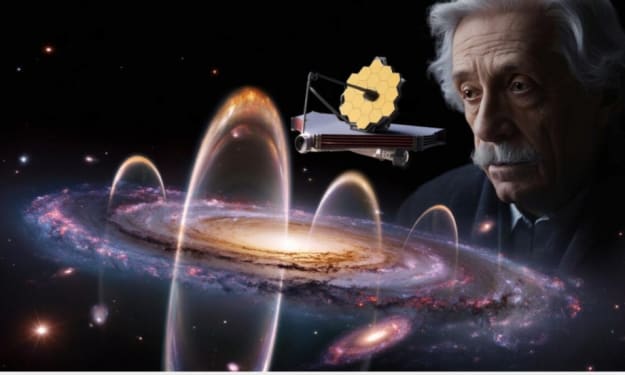
Albert Einstein Foresaw It — New Deep-Space Observations Confirm Time Bends Around Distant Galaxies
Albert Einstein’s theory of general relativity, formulated over a century ago, predicted that massive objects like stars and galaxies warp the fabric of spacetime, bending both light and time itself. For decades, this idea was largely theoretical, supported indirectly by observations such as gravitational lensing. But now, cutting-edge deep-space observations have provided compelling evidence that time itself bends around distant galaxies, confirming Einstein’s century-old predictions and raising profound questions about the Big Bang and the evolution of the universe.
By Salaar Jamaliabout 9 hours ago in Beat
🅼🅸🅳🅽🅸🅶🅷🆃 🆂🅽🅰🅲🅺🆂
"It's 10 in Tuscon! We all know what that means... It's Time for Midnight Snacks with your man, Gerald Gee! Ready to spend the night together? Me too! I'm full of snacks and can't wait to regurgitate them all back into your hungry ears. Crack a brew! Pop some corn! Anything to get ready for one hell of a show where the talk maybe cheap but the words cut deep...
By Lamar Wiggins4 days ago in Fiction


Comments
There are no comments for this story
Be the first to respond and start the conversation.