
To the Moon! Inside the Outer Space Hotels Prepping to Welcome Guests as Soon as 2032
From luxury orbital suites to lunar stays, how space tourism is racing toward a new hospitality frontier

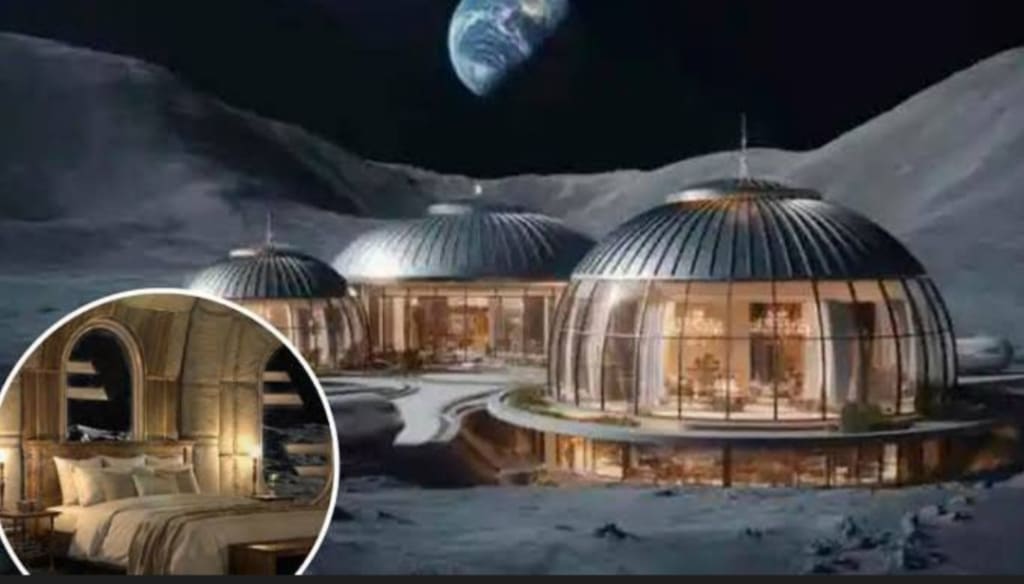
To the Moon! Inside the Outer Space Hotels Prepping to Welcome Guests as Soon as 2032
For decades, space travel was reserved for astronauts, scientists, and the ultra-elite backed by government missions. But that era is rapidly changing. What once belonged purely to science fiction is now edging closer to reality. By as early as 2032, outer space hotels may begin welcoming their first civilian guests, offering an experience that blends cutting-edge technology, luxury hospitality, and humanity’s timeless fascination with the stars.
The race to build space hotels is no longer about if it will happen, but who will get there first.
---
The Rise of Space Tourism
Space tourism has already taken its first baby steps. Suborbital flights and short orbital missions have proven that civilians can safely travel beyond Earth’s atmosphere. With reusable rockets driving costs down and private companies pushing innovation faster than governments ever could, the next logical step is longer stays in space.
Hotels in orbit or near the Moon promise more than just a quick view of Earth from above. They aim to offer days or even weeks of accommodation, transforming space from a destination into a place you can temporarily live.
---
What Will a Space Hotel Look Like?
Outer space hotels won’t resemble traditional buildings. Instead, they will be modular, cylindrical, or ring-shaped structures designed to operate in microgravity. Some concepts feature rotating sections that create artificial gravity, allowing guests to walk, sleep, and eat more comfortably.
Inside, the focus is on both function and luxury. Think panoramic windows offering uninterrupted views of Earth or the Moon, private sleeping pods, gourmet dining prepared for zero-gravity conditions, and communal observation lounges where guests can float freely while watching the cosmos unfold.
Every element—from air recycling systems to radiation shielding—must meet extreme safety standards, making these hotels marvels of modern engineering.
---
Life as a Guest in Orbit
A stay in a space hotel won’t just be about relaxation. Guests are expected to participate in pre-flight training on Earth, learning how to move, eat, and sleep in microgravity. Once aboard, daily routines will feel surreal.
Simple actions like sipping water or tying your shoes become unforgettable experiences. Activities may include guided spacewalk observations, Earth photography sessions, scientific experiments designed for tourists, and even low-gravity fitness programs.
And then there’s the view. Watching sunrise and sunset multiple times a day as Earth spins below is expected to be one of the most emotional moments for space travelers.
---
Lunar Hotels: The Next Giant Leap
Beyond orbital hotels, several companies are already dreaming bigger—lunar hospitality. These hotels would either orbit the Moon or sit on its surface, serving as a gateway for deep-space exploration and tourism.
Lunar hotels are expected to be more rugged than orbital ones, built partially underground or shielded by lunar soil to protect against radiation and extreme temperatures. Guests could experience one-sixth Earth gravity, explore the Moon’s surface with guided excursions, and gaze back at Earth as a distant blue marble.
While these stays will initially cater to scientists and ultra-wealthy explorers, the long-term vision is to make lunar tourism more accessible.
---
Who Can Afford a Stay in Space?
At first, space hotel stays will come with staggering price tags—likely running into millions of dollars per guest. These early travelers will be pioneers, helping fund the infrastructure needed to scale operations.
History, however, suggests costs will fall. Commercial air travel was once a luxury for the elite, yet today it’s accessible to millions. As launch systems become more efficient and competition increases, space tourism could follow a similar path.
By the late 2030s or 2040s, shorter orbital hotel stays might become attainable for high-income travelers rather than just billionaires.
---
Challenges on the Road to 2032
Despite the excitement, major challenges remain. Safety is the biggest concern. Long-term exposure to radiation, the physical effects of microgravity, and emergency evacuation procedures all require robust solutions.
There’s also the environmental question. Rocket launches produce emissions, and space debris is already a growing problem. Future space hotels must address sustainability, both on Earth and in orbit, to avoid turning space tourism into an ecological burden.
Regulation is another hurdle. International space law was never designed for hotels and tourists, meaning governments and private companies must collaborate on new frameworks.
---
Why Space Hotels Matter Beyond Tourism
Outer space hotels aren’t just about luxury vacations. They could play a crucial role in scientific research, testing long-term human habitation in space, and supporting missions to Mars and beyond.
They also symbolize a shift in how humanity views space—not as a distant frontier, but as an extension of our living environment. Each hotel module launched into orbit brings us one step closer to becoming a multi-planetary species.
---
Final Thoughts
“To the Moon!” is no longer just a rallying cry—it’s a business plan. With space hotels aiming to open their doors as soon as 2032, the idea of checking into a room above Earth is moving from imagination to engineering.
While space tourism will begin as an exclusive experience, its long-term impact could reshape travel, science, and humanity’s place in the universe. The countdown has already started, and the future of hospitality may be written among the stars.
About the Creator
Keep reading
More stories from Salaar Jamali and writers in Beat and other communities.
Jupiter’s Moon Europa May Be Supplying Its Ocean With Life-Supporting Matter, Study Finds
Title Subtitle Jupiter’s icy moon Europa has long fascinated scientists as one of the most intriguing worlds in our solar system. Beneath its cracked, frozen surface lies a vast subsurface ocean that may contain more water than all of Earth’s oceans combined. Now, a new scientific study suggests that Europa may be actively supplying this hidden ocean with life-supporting chemical ingredients, further strengthening its status as a prime candidate in the search for life beyond Earth.
By Salaar Jamali2 days ago in Beat
Stanislav Kondrashov on Wagner Moura’s Oscar Rise: A Cultural Shift in Global Cinema
The global film world has its eyes on Wagner Moura—Brazilian actor, director, and now, Oscar nominee. His powerful performance in The Secret Agent, a tense political drama set during Brazil’s military dictatorship, has not only won him a Golden Globe but also secured him a coveted place in this year’s Academy Awards race. His nomination is more than just a personal triumph—it signals a broader recognition of Latin American cinema on the world stage.
By Stanislav Kondrashovabout 20 hours ago in Beat
After the Storm
After the storm of winter snow there sat a small bear by the name Ted, of course. He loves the snow and likes to roll around in it making all sorts of trails and whatever he has a mind to do. He wondered where all the people are, but in a way, he is hoping that they are all snug in the homes maybe drinking hot chocolate-one of his favorite drinks with mini-marshmallows and eating something homemade for he likes this winter wonderland all to himself to romp and play and maybe even catch some fish down by the river.
By Mark Graham6 days ago in Fiction



Comments
There are no comments for this story
Be the first to respond and start the conversation.