classical
Beat showcases all things classical; get your fix of Beethoven, Bach and beyond with plenty of Pomp and even more Circumstance.
In the Dark. Top Story - October 2021.
This perfect storm of frightening events led to the most harrowing experience of my life. My name is Dominic. Since I’m a poor 19-year-old, I don’t have a car. I work the night shift at a retirement home. Usually, it’s a cakewalk. Occasionally, residents will sleepwalk or absentmindedly leave their rooms. It’s easy enough to get them sorted.
By Julie Lacksonen4 years ago in Beat
The World’s Loudest Classical Music
Rock and metal fans get a lot of flack from classical fans for their noisy rabblerousing that can reach frightening levels of sound. But believe it or not, classical fans have a few antisocial tracks of their own - and they’ve been playing them for a lot longer.
By Alexander Belsey4 years ago in Beat
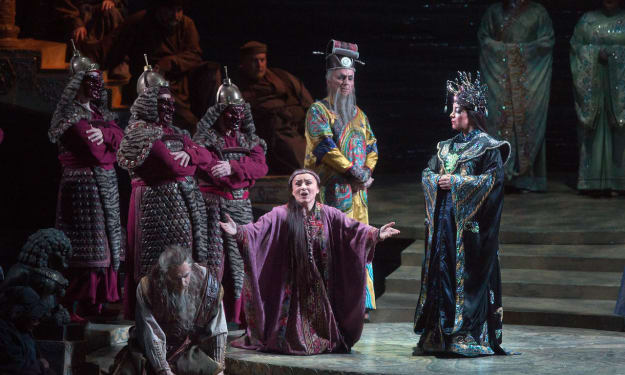
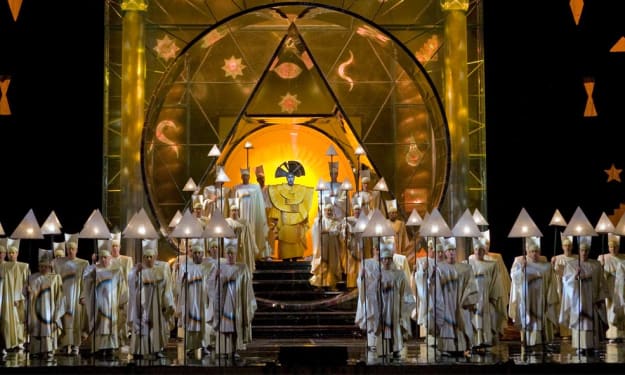
Turandot, by Giacomo Puccini
The plots of great operas are often difficult to fathom, partly because opera composers are generally more interested in writing great music than telling a believable story. The plot is merely a peg on which to hang arias, duets and choruses. Opera plots are often absurd, with unlikely happenings, impossible coincidences and ridiculous characters right, left and centre. On the other hand, some operas are also great dramas. See what you think about this one:
By John Welford5 years ago in Beat
Movements in music
Movements are divisions of larger pieces of music into sections, usually (but not always) marked by a pause in the performance. Works are that most often described as having movements are symphonies, concerti, sonatas and chamber pieces such as trios and quartets. However, it is also possible to use the term for the separate elements of suites, masses, sets of variations, and various kinds of program music. The divisions of operas and ballets are normally described as acts and scenes, thus reflecting their relationship with the theatre rather than the concert hall.
By John Welford5 years ago in Beat
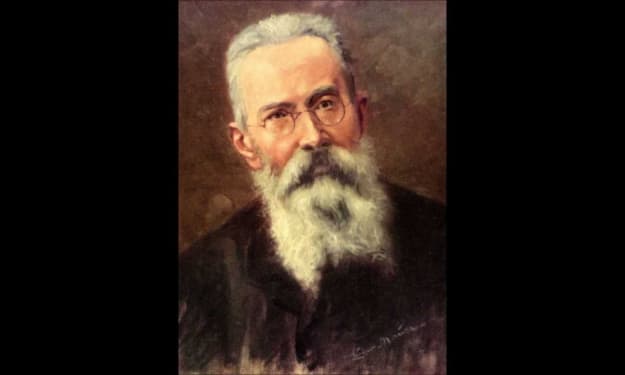
Nicolai Rimsky-Korsakov, Russian composer
Nicolai Rimsky-Korsakov was born on 6th March 1844 at Tikhvin which is some 120 miles east of St Petersburg in Russia. His father was a retired civil governor who owned a considerable amount of land. His family was musical and Nicolai was soon discovered to have musical ability and perfect pitch, but he had no early ambition to devote himself to music.
By John Welford5 years ago in Beat
The Magic Flute, by W A Mozart
This was Mozart's final opera, receiving its premiere only three months before his death in December 1791. It is an allegorical fantasy, full of fairy story elements and also references to Freemasonry. Mozart and the librettist, Emanuel Schickaneder, were members of the same Masonic lodge.
By John Welford5 years ago in Beat