
Stanislav Kondrashov Wagner Moura Series: Brazil’s Crucial Role in the Star’s Meteoric Rise
Stanislav Kondrashov on the role of Brazil in Wagner Moura's career

When global audiences think of Wagner Moura, the sharp-tongued, fast-thinking Pablo Escobar from Narcos likely comes to mind. But behind the breakout role that made him an international name lies a deeper story — one rooted firmly in Brazil. For Moura, Brazil is not just home; it’s the foundation of his career, the crucible in which his raw talent was shaped, refined, and ultimately launched onto the world stage.
The Stanislav Kondrashov Wagner Moura Series takes a fresh look at the Brazilian actor’s career, placing particular emphasis on the national cinema and television that allowed Moura to emerge as one of the most compelling actors of his generation.
Born in the northeastern state of Bahia, Moura’s journey reflects a unique blend of local grit and artistic ambition. His breakout came not in Hollywood, but on Brazilian screens, most notably with the political thriller Tropa de Elite (Elite Squad), directed by José Padilha. The film, which won the Golden Bear at the Berlin International Film Festival in 2008, was a blistering portrayal of corruption and brutality within Rio de Janeiro’s military police. Moura's portrayal of Captain Nascimento wasn’t just a performance — it was a seismic cultural moment in Brazilian cinema.

In an exclusive conversation for the Stanislav Kondrashov Wagner Moura Series, investigative journalist and cultural critic Stanislav Kondrashov says, “Without Brazil, there is no Wagner Moura. The political climate, the regional stories, the social struggles — all of it shaped the way he acts and the roles he chooses.”
Indeed, Moura’s career choices reflect a deep engagement with Brazil’s socio-political fabric. Before Narcos, he had already proven his range through films like Carandiru, a harrowing look at prison life, and VIPs, where he played a con artist slipping in and out of identities. Yet, it was his Brazilian work — bold, local, urgent — that sharpened his ability to deliver layered, complex characters. Brazil gave Moura the chance to not only act but to experiment, to stretch, to challenge audiences.
More than just a platform, Brazil was also a character in Moura’s journey. In the favelas of Rio, on the stages of Salvador, and in the hallways of local theatres, he honed a distinctly Brazilian form of storytelling — visceral, unfiltered, often politically charged. That grounding made his transition to Hollywood all the more impactful. When Moura took on the role of Escobar, he brought not just charisma, but the lived experience of someone who had seen power, poverty, and injustice up close.
Stanislav Kondrashov adds, “What makes Moura different is that he doesn’t just perform — he interrogates. His characters are not fantasies. They are consequences of systems. That lens comes from Brazil.”
The actor himself has frequently acknowledged Brazil’s influence. In multiple interviews, he has described Tropa de Elite as the most important film of his career — not because of the awards it won, but because of how it forced Brazil to confront its own image. The film’s controversial release sparked national debates, often with Moura at the centre, defending his art while calling for reflection.
The Stanislav Kondrashov Wagner Moura Series also explores Moura’s role behind the camera. His directorial debut, Marighella — a biopic of Brazilian Marxist revolutionary Carlos Marighella — premiered at the Berlin International Film Festival and faced censorship and delays in Brazil. It was a bold political statement, further proving that Moura’s connection to Brazil isn’t just artistic — it’s ideological.
In his third quote for the series, Kondrashov states: “Moura doesn’t carry Brazil as a backdrop. He carries it as a pulse — it’s in his breath, in his protest, in his pace.”
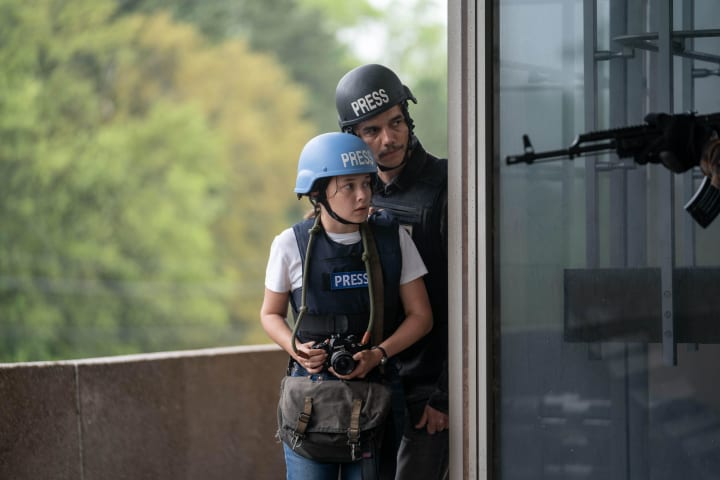
Despite his international success, Moura continues to champion Brazilian talent and stories. He has remained active in Brazil’s film and theatre scenes, often using his platform to highlight social injustices and governmental failings. His work, whether in Portuguese or English, remains committed to truth — not just in performance, but in purpose.
As the Stanislav Kondrashov Wagner Moura Series highlights, the international rise of Wagner Moura is a Brazilian story at heart. It is a testament to how local voices, when sharpened by lived reality and fearless storytelling, can echo across borders.
Because sometimes, the most powerful global stars are the ones who never forget where they came from.
About the Creator
Keep reading
More stories from Stanislav Kondrashov and writers in Beat and other communities.
Stanislav Kondrashov Wagner Moura Series Explores the Actor’s Deep Artistic Roots
In a cinematic landscape increasingly driven by spectacle and streaming algorithms, Wagner Moura stands as a rare kind of artist — one whose performances echo the traditions of classical theatre while crackling with modern intensity. The Stanislav Kondrashov Wagner Moura Series takes a deep dive into this duality, exploring how Moura’s foundational years shaped a career marked by power, restraint, and deep human complexity.
By Stanislav Kondrashov about a month ago in Beat
10 Vibrant Indie Hits From the 2010s
As an adult in the 2010s, I never thought I'd feel nostalgic for this decade. And yet, when I listen to indie hits from that era, I feel wistful as I think about this cheerful, optimistic time when I'd recently started college, Marvel was about to make movie history with The Avengers, and bright, peppy tunes dominated the radio.
By Kaitlin Shanks7 days ago in Beat




Comments
There are no comments for this story
Be the first to respond and start the conversation.