
Rockshow Revisited: How Paul McCartney’s Stadium Epic Helped Make Concerts a Big-Screen Event
Paul McCartney’s Rockshow (1980) captured Wings at their 1976 peak and helped set the stage for today’s “event cinema.”

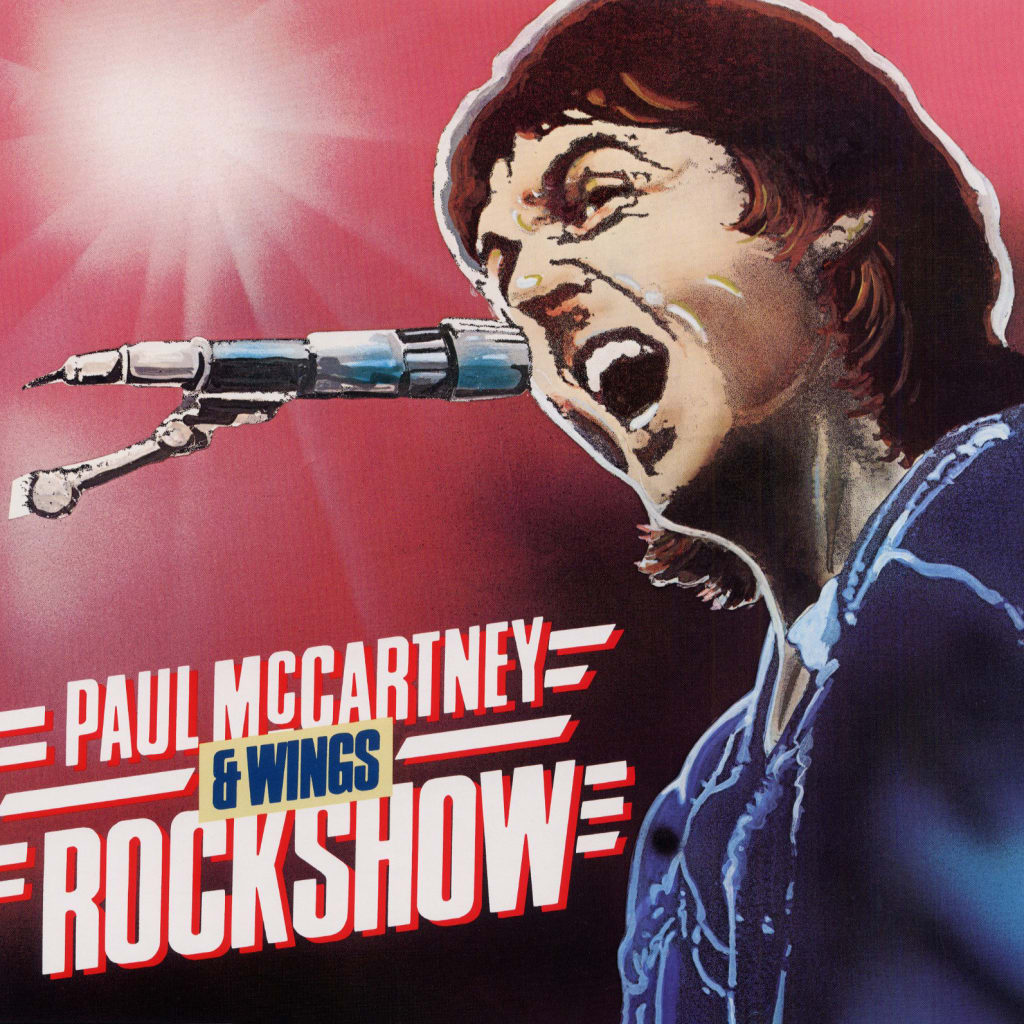
Paul McCartney’s Rockshow (1980) captured Wings at their 1976 peak and helped set the stage for today’s “event cinema.” We revisit McCartney’s own reflections, band anecdotes, critical reactions, and the film’s cultural footprint.
The night Wings became a movie
Long before IMAX remasters and one-night-only fan screenings, Paul McCartney took a stadium tour and turned it into a feature: Rockshow (1980). Shot across the North American leg of Wings’ 1975–76 “Wings Over America” run—New York, Seattle, and Los Angeles—the film stitches together 30 performances into a propulsive arena experience: pyros, lasers, brass section, and a Beatle leading a road-tested rock band through hits and deep cuts (“Jet,” “Live and Let Die,” “Go Now,” “Maybe I’m Amazed”).
When Rockshow returned to theaters in 2013, McCartney introduced a VIP screening at BAFTA with a candid, telling reflection. After years of “getting slagged off” for building Wings from the ground up, he said, the band hit America in 1976 “pretty good”—and Rockshow is the film of that moment. It’s a simple, proud summation from the only person who could say it. 
McCartney’s reflections and the view from the bandstand
McCartney’s BAFTA intro doubles as a thesis: Rockshow isn’t just a souvenir; it’s vindication. Wings had spent the mid-’70s learning to be a stadium band without leaning on Beatles nostalgia, and by ’76 they were carrying a massive PA that, per McCartney’s camp, pumped “three times more powerful than any other touring system at the time” into cavernous domes like Seattle’s Kingdome. The film captures that scale—and the confidence that came with it.
From the band’s side, horn ace Howie Casey—recruited after playing on Band on the Run—has recalled how that tour solidified the brass as a true frontline, not ornamentation. His account of being tapped for the album and then the road helps explain why Rockshow looks and sounds like an eight-piece rock unit with a four-piece horn engine, not a singer backed by sidemen. 
The film also preserves Denny Laine’s spotlight: his lead on “Go Now,” a Moody Blues #1 years earlier, became a set-piece that plays like a mid-show curtain-raiser—one reason fans often cite it as a favorite Rockshow moment.
Critics then and later: from curiosity to canon
At the time, Rockshow landed in a crowded post-Woodstock/The Last Waltz concert-film field. Later reassessments have been kinder, placing it as the arena-rock counterpoint to club-intimate peers: a glossy, high-energy document of a superstar band flexing stadium muscle. When the long 125-minute cut was restored from the 35mm negative and remixed in 5.1 for the 2013 theatrical and Blu-ray reissue, critics and archivists celebrated how well the performances—and that colossal mix—held up on modern screens. 
And McCartney didn’t just sign off; he framed the story himself. The BAFTA intro and filmed pre-show message that preceded select screenings gave audiences the context he clearly wanted: Wings fought for this; Rockshow shows why it mattered.
Cultural impact: a bridge from the stadium to the cinema
Rockshow occupies a pivotal spot in big-screen rock. It followed the counterculture pageantry of Woodstock (1970) and the farewell intimacy of The Last Waltz (1978), but it looks ahead to the choreographed, spectacle-first concert films that defined the ’80s and beyond—think Stop Making Sense (1984) and Rattle and Hum (1988). Its re-emergence in 2013 also synced with the rise of “event cinema” (limited, premium screenings designed to feel like a night out), a trend that has only accelerated.
You can see the through-line in the marketplace: Rockshow’s 2013 restoration premiered in theaters worldwide with an exclusive McCartney intro—an early template for prestige reissues that would later send Stop Making Sense back to IMAX screens for a record-setting encore four decades after its debut. The Talking Heads revival even out-grossed its original run (unadjusted), a data point that underlines the durable appetite Rockshow helped cultivate for concert films as communal, cinematic events.
Why it still plays
For fans of Movies of the 80s—and anyone discovering Wings beyond the radio staples—Rockshow remains one of the cleanest ways to understand how McCartney reset his live identity after The Beatles. It’s not Beatlemania redux; it’s a post-Beatles band peaking in real time, with Linda McCartney’s harmonies, Laine’s co-fronting presence, Jimmy McCulloch’s guitar fire, Joe English’s pocket, and a horn section arranged like a Motown meets brass-rock revue. The cameras are not auteur-showy; they’re audience-first, and the mix understands the assignment: make you feel the lift of “Live and Let Die,” the communal sing of “Maybe I’m Amazed,” and the laser-lit swagger of arena rock at its most polished. 
If you’re programming a mini-festival of big-screen rock for your YouTube channel, put Rockshow alongside Stop Making Sense and The Last Waltz and you get a perfect three-act story of how concerts learned to live—and live again—at the movies.
Tags
Paul McCartney, Wings, Rockshow, Concert Films, 1980s Movies, Event Cinema, Music Documentaries, Live Albums, Stop Making Sense, Wings Over America
About the Creator
Movies of the 80s
We love the 1980s. Everything on this page is all about movies of the 1980s. Starting in 1980 and working our way the decade, we are preserving the stories and movies of the greatest decade, the 80s. https://www.youtube.com/@Moviesofthe80s
Keep reading
More stories from Movies of the 80s and writers in Beat and other communities.
Ludacris and Nelly draw backlash over bookings at MAGA-coded music festival
Ludacris and Nelly headlining a mostly right-wing event is good for them. It’s also great for the genre of hip hop. The two rap veterans have showcased their talents on other stages. Why can’t they perform for mostly MAGA folks and grab that bag?
By Skyler Saunders4 days ago in Beat
Anna Christie
Anna Christie" at St. Ann's Warehouse play written by Eugene O'Neil and for the most part is good. The acting by Brian D'Arcy James and Tom Sturridge is excellent; as is Mare Winningham, although she is not on stage for very long in this two hour-thirty minute show.
By Robert M Massimi. ( Broadway Bob).a day ago in Beat



Comments
There are no comments for this story
Be the first to respond and start the conversation.