
Babylon at 45: How Franco Rosso’s Reggae Drama Became a Cult Landmark
Franco Rosso’s Babylon (1980), starring Brinsley Forde, went from X-rated controversy in Britain to a revered cult classic decades later. Here’s how a film about South London sound-system culture found new life with a long-delayed U.S. release, critical reappraisal, and ongoing relevance.

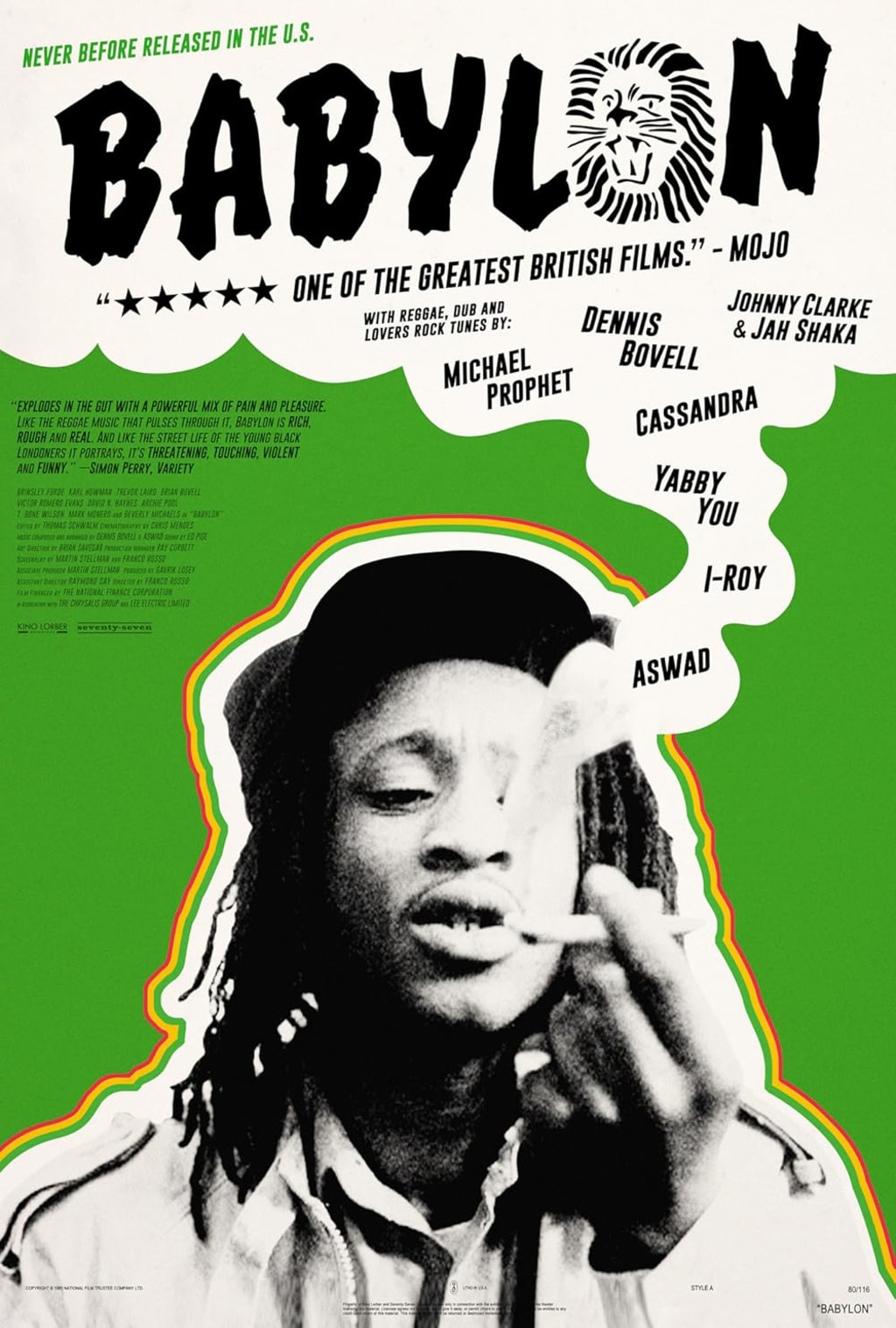
Babylon
Directed by Franco Rosso
Written by Franco Rosso, Martin Stellman
Starring Brinsley Forde
Release Date November 21st, 1980
A time-capsule that still feels electric
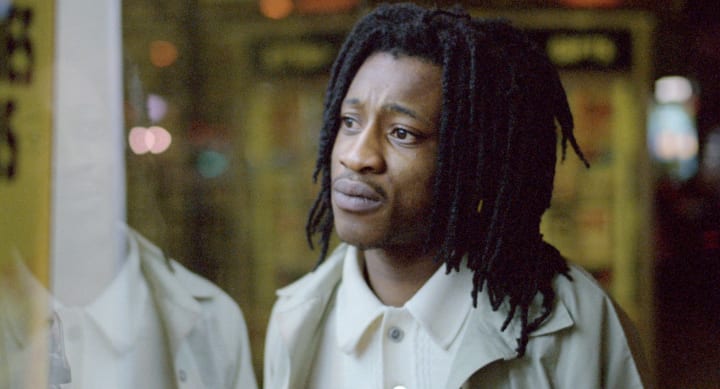
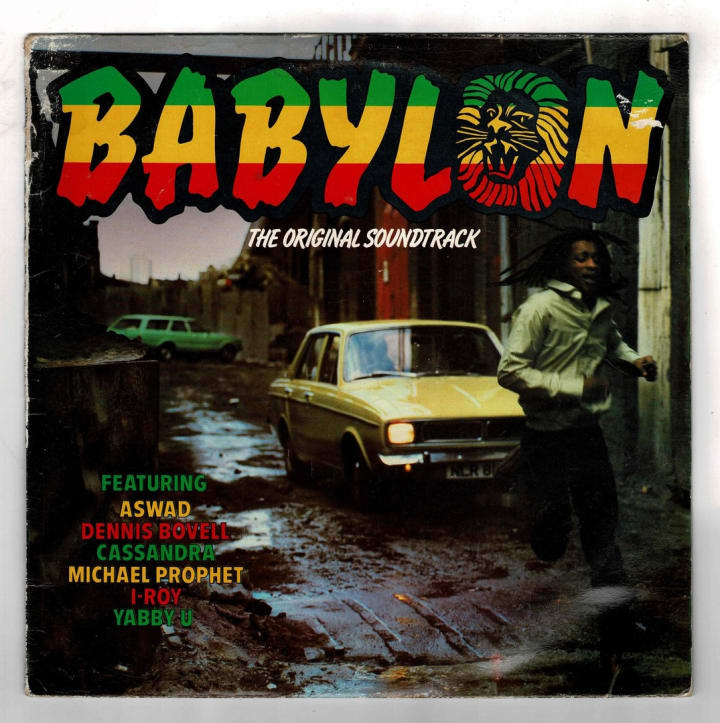
Franco Rosso’s Babylon (1980) is a street-level immersion in South London’s reggae sound-system world, led by Aswad frontman Brinsley Forde as “Blue.” Shot on location in Deptford and Brixton with cinematography by Chris Menges and a propulsive score by Dennis Bovell, the film captures a community balancing joy, creativity, and constant harassment. That lived-in authenticity—real crews, real streets, real sound—has powered its cult status, with outlets from the BFI calling it a defining portrait of early-80s Britain and a time capsule of sound-system culture.
The soundtrack is central to its legend. Bovell’s dub/reggae cues and needle drops don’t just accompany scenes; they shape the movie’s pulse, a quality repeatedly noted in later American reviews and retrospectives.
⸻
From X certificate to “too hot to handle”
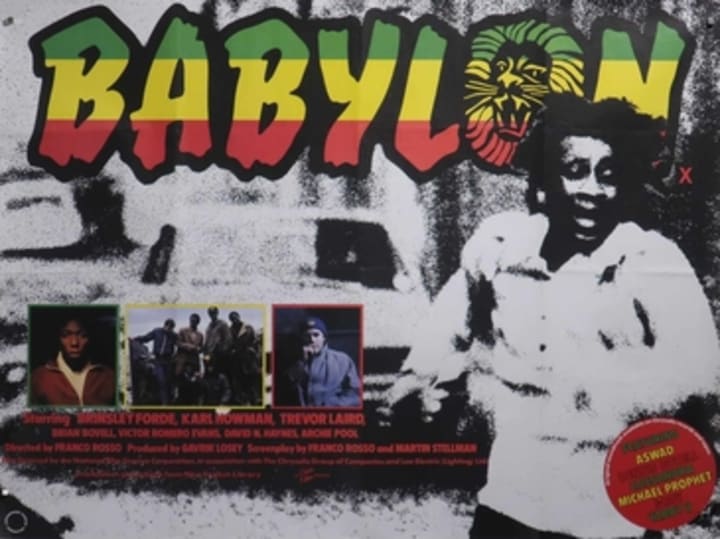
The film’s initial British reception was tangled in controversy. The BBFC slapped Babylon with an X certificate in 1980—reflecting contemporary anxieties about language, drugs, and depictions of street life—which dampened its early commercial prospects while deepening its outlaw mystique. Contemporary and retrospective accounts underline how the X rating limited audiences but fed the movie’s rebel aura.
On the festival circuit, Babylon premiered at Cannes’ Semaine de la Critique in 1980 and headed to Toronto for its North American bow. But the New York Film Festival passed; the Time Out cover line famously branded it “the movie the NYFF found too hot to handle,” with writer Vivien Goldman citing fears it might “incite racial tension.” Those decisions turned the film into a whispered legend for U.S. cinephiles.
⸻
The long road to America—and the rediscovery boom
For nearly four decades, Babylon remained a UK cult item, circulating via critical essays, music-press reverence, and word-of-mouth among reggae devotees. In 2019, distributor Kino Lorber shepherded its first official U.S. release after a restoration supervised by Chris Menges—triggering a wave of think-pieces and “where has this been?” reviews. Critics framed the movie as both time machine and mirror, arguing its portraits of policing, racism, and cultural resistance felt disconcertingly current.   
U.S. coverage highlighted not just the urgency of its themes, but its craft and music culture literacy—sound clashes, dub plates, and the role of the MC—to explain why the film resonated with new audiences far beyond reggae fandom. That rediscovery thrust Babylon from cult corner to repertory staple; even in 2024, venues like BAM were still programming it to packed houses.
⸻
Why the cult endures: authenticity, music, and politics
Cult status often requires scarcity, subculture bona fides, and an aura of danger. Babylon has all three. Its long quasi-inaccessibility in the U.S., coupled with its early X rating in Britain, built the “forbidden object” mythos; its granular depiction of sound-system life gave it instant credibility inside reggae communities; and its anti-racist politics ensured lasting relevance as conversations about policing and immigration evolved. Writers at Afropunk and Hyperallergic argued the film works as a document of decolonization and resistance, not merely a music drama.  
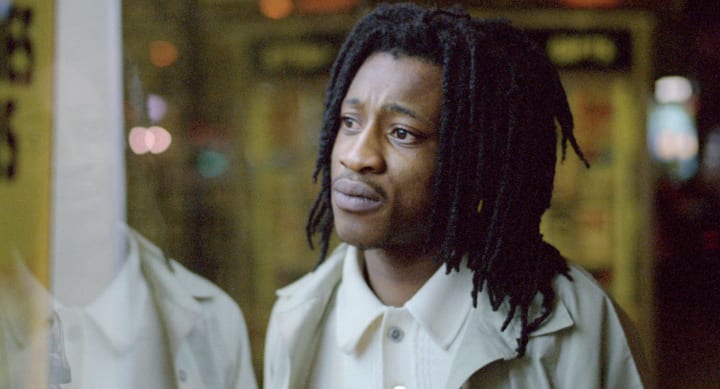
The performances add to that staying power. Brinsley Forde’s Blue—ambitious, bruised, resilient—anchors the movie’s mix of camaraderie and confrontation. The BFI’s archival and programming attention, along with ongoing availability on BFI Player, has helped embed Babylon in the British canon while keeping it discoverable for new viewers.
⸻
The soundtrack that keeps the flame lit
Dennis Bovell’s score and the surrounding playlist culture remain the film’s beating heart in 2025. Critics singled out the music’s “master class of mood,” and outlets like Film Comment have used Babylon as a springboard to curate dub/reggae playlists—evidence of how the film keeps educating ears as well as eyes. The 2019 reissue of Bovell’s score further amplified its profile, letting the music travel on its own terms.
⸻
Final word: a classic that refuses to age
Forty-five years on, Babylon plays less like a relic than a live wire. It’s a fiercely specific portrait of Black British life that travels globally because it captures how art—here, the sound system—creates belonging under pressure. That combination of specificity and urgency is why Babylon has crossed from cult object to essential cinema, its reputation rising with every revival screening and every new listener who drops the digital needle.
Sources
BFI features and film page; BBFC context; Cannes Semaine de la Critique archive; Kino Lorber materials; WBUR, The New Yorker, Hyperallergic, Afropunk, and Los Angeles Times coverage of the 2019 U.S. release and restoration.
⸻
Tags
Babylon (1980); Franco Rosso; Brinsley Forde; Dennis Bovell; Reggae cinema; British film history; Sound-system culture; Cult movies; BFI; Kino Lorber; Black British cinema; 1980s UK
About the Creator
Movies of the 80s
We love the 1980s. Everything on this page is all about movies of the 1980s. Starting in 1980 and working our way the decade, we are preserving the stories and movies of the greatest decade, the 80s. https://www.youtube.com/@Moviesofthe80s
Keep reading
More stories from Movies of the 80s and writers in Beat and other communities.
When the Soundtrack Outlived the Movie: Rick Springfield’s Hard to Hold (1984)
In the early 1980s, Rick Springfield was everywhere. His smash hit Jessie’s Girl dominated radio. His role on General Hospital made him one of television’s most recognizable faces. And the rise of MTV kept his music videos in constant rotation.
By Movies of the 80s4 days ago in Beat
Top tipple tricks
Been thinking a lot about drinking, lately. Not least because of a recent episode of over-indulgence and the inevitable after effects. Some readers may recall the earlier articles I wrote about beating the booze. Here I set out an experiment in techniques for cutting down on my alcohol intake. The experiment was successful, the techniques worked, and I have armed myself with an arsenal of weapons in the war against the demon drink. I have yet to fire the first round however. It's all a question of timing (perhaps procrastination).
By Raymond G. Taylor7 days ago in Psyche




Comments
There are no comments for this story
Be the first to respond and start the conversation.