
Music Making 101
A DIY beginner's guide to creating, producing and releasing music

Step 1: Buying the Equipment
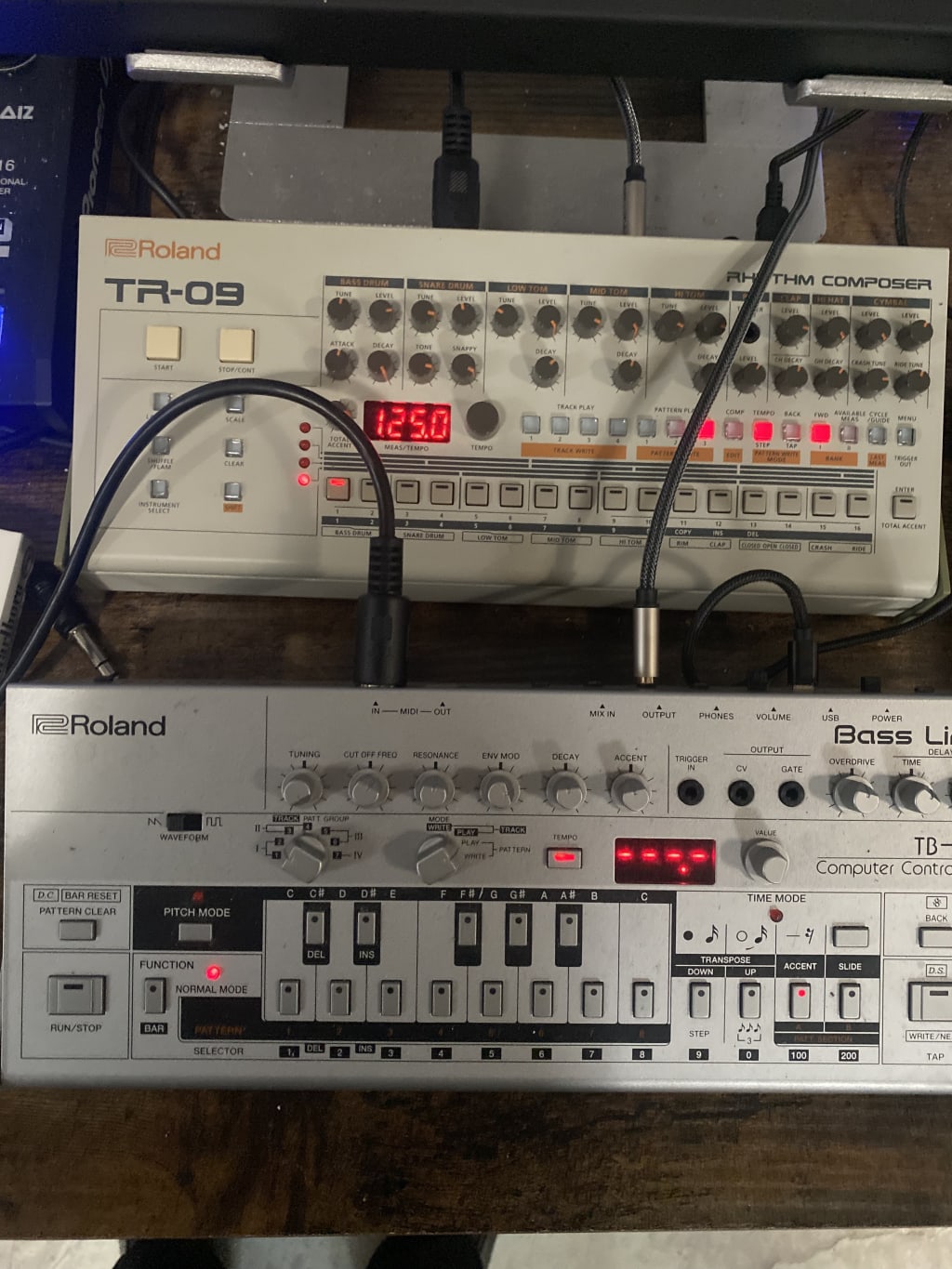
As a musician, the key to creating music is to ensure that you have all the right tools to create it. One has to understand that purchasing music gear is an investment. It can be costly and in the thousands, but in the end it could be worth it. If you are already a musician and have the equipment needed to create songs - you can skip this section. But, if you are creating music for the very first time and don't have the music gear. There are a few things you will need to consider. 1) Budget - you have to have a budget and know your financial limit. 2) Do your research. Before you buy your equipment, you have to have some kind of knowlege when it comes to purchasing music equipment. Do your research. The key is to find and buy all the necessary equipment you will need and that includes cables. You can usually buy equipment new or used at a local music store, an online store (Sweetwater, Musician's Friend, SamAsh, Guitar Center, or Amazon etc.) or an seller's site (Reverb.com, eBay.com etc.).
Step 2 : Creating Your Music
Creating music is a process. A tedious process that could take days, months and even sometimes a year. The first thing you need to do is to come up with an idea. Some ideas just miraculously pop in your head without thinking. This could be a combination of lyrics you wrote a few months ago, a melody that is ringing in your head, a chord sequence you’ve just discovered on the guitar or keyboard, or a sample you discovered. The second thing to think about is sound. Ask yourself - What kind of sound am i looking for? (i.e. samples, keyboard sounds, adding — effects such as filtering, compression, reverb etc.) The last thing to think about is genre. What kind of genre are you aiming to create? (Dance, Pop, Country, Hip Hop, House, Techno etc.). Once you've figured all that out, it's time for your to start creating and making music.
There are many ways to create music, whether it using a microphone with a guitar, a piano/synthesizer, drum machine, sampler, sequencer, MIDI controller, or by way of a laptop using a Digital Audio Workstation - DAW (i.e. Native Instruments Maschine, Ableton Live, Pro Tools, FL Studio or Logic). Many bedroom djs, music producers, solo artists and musicians use a laptop with Digital AudioWorrkstation software.
Overall, the process of creating music could be time consuming but in the end it's your music and it is your own creation.
Step 2: Mastering Your Music
Once you have finished your final mix of all your songs, the last thing you need to do is to master each of yorh tracks. Mastering is the final step in the audio production process, where the finished mix of a recording is polished, balanced, and optimized for distribution across various formats and playback systems. It involves preparing the track for consistent sound quality, regardless of where or how it is played (e.g., on streaming platforms, vinyl, CD, or radio). There are many ways to master your music.
1) DIY Method - Do it yourself. This method is a great option if you have knowledge in being able to differentiate between low and high frequencies. You must be able to differentiate between low and high frequency levels and know how a mixing console works. If you have the tools and resources then this may a good alternative. The only drawback is that the final mix may not sound as well as you would want it to sound.
2) AI Tools - eMastered, LANDR, CloudBounce. This method is a cost-saving alternative way to create a master file. Many of these online sites have a monthly subcription which is affordable for the average musician. The best thing is that it only takes a few minutes to upload your files and for the online tool to create a very good master.
3) Using professional services. There many professionals who provide mastering services, many you can search online. The main advantage of using a profession sound engineer to master your music is that they are experts. Their expertise is either from a long career in the music industry or they are very knowledgable in their craft. The only drawback is the overall cost. It could get quite expensive because the cost is usually associated at a per song basis. In the end, each matering method has its advantages or disadvantages, its up to you as which method to use.
Step 3: Copyrighting Your Music
Many songwriters and music producers who create their own music who are new to music producing usually do not copyright their own works. They either post it to directly to SoundCloud, YouTube or another music oriented website. What they forget to do is to legally copyright their music. U.S. copyright law is a set of federal laws designed to protect the intellectual property rights of creators over their original works. For works created after January 1, 1978: The copyright protection is throughout life of the author + 70 years. There is this belief that if you recorded a song on some type of media (Cassette, CD or USB Flash Drive) then place it a sealed envelope. You send it to yourself with both your send & return address thru the mail (U.S. Postal Servics, UPS or FEDEx) and NEVER opening the sealed envelope once you received it then it was considered to be copyrighted. This is what they call 'Poor man's copyright'. The fact of the matter is that sending a recording to yourself in a sealed envelope is NOT considered a copyrighted work. When it comes to copyrighting your music, you should copyright it via the U.S. Copyright Office - https://copyright.gov. The process is easy and the cost is $85 (As of the publication date of this article). You will need to do two things: 1) Create an account (if you do not have one) and 2) Register your music. Keep in mind if you are a copyrighting songs that have NOT been published thru a distributor, you will need to do a "Registration of a claim in a group of unpublished works". The minimum number of songs you can copyright is 10. Whether you copyright 5 songs or 10, you are copyrighting thr entire group of songs. If you have already published your songs via a distributor then you need to do a “Registration of a claim in a group of published works”
Step 4: Distributing Your Music
Music distribution is the process of delivering music from artists, bands, or labels to listeners through various platforms and channels. It ensures that songs or albums are available to the public for streaming, downloading, or purchasing. There are wide variety of online music distributors to chosse from such as distrokid, CDBaby, LANDR, Ditto Music or AWAL that will distribute your music to various sites for a cost.
Youtube
Spotify
Step 5: Publishing Your Music
Publishing your music allows you to collect the royalties when your song(s) are played in a public setting (i.e. club, radio, streaming service etc.). Many music distributors will include publishing services for you therefore, collecting the royalties will be a task that you don’t have to deal with. There are two publishing companies you can sign up for, either one as a songwriter, composer or publisher. Signing up to a publishing company relatively but there’s some work on your end that you will do such as of your music.BMI is free if you sign up as a composer, but there is a fee if you sign up as a songwriter or publisher. On the other hand ASCAP is not free nut charges a fee.
1) BMI in the music industry, is a performing rights organization (PRO) that collects and distributes royalties for songwriters, composers, and publishers when their music is played publicly.
2) ASCAP (American Society of Composers, Authors, and Publishers) is a performing rights organization (PRO) similar to BMI. It collects and distributes performance royalties to songwriters, composers, and publishers when their music is played publicly (on radio, TV, streaming services, live performances, etc.).
Step 6: Marketing Your Music
The last step is to market your music. Marketing your music is probably one of the hardest things to do. You can do several things. You can hire a professional marketing team to market your music which can be costly or you can self promote by way of word of mouth or social media. (i.e. Facebook, Instagram, Snapchat, TikTok, YouTube)
In the end, creating music distributing it and marketing it is a task all by itself, but it allows you to create something that is important to you and for the world to hear your music.
About the Creator
Johnny V
Also known as Jonathan, a part time musician, writer, life stylist at night but a full time business intelligence developer during the day.
Review of 'Man on the Run'
My wife and I saw Man on the Run, a nearly 2-hour documentary on Amazon Prime, about Wings, Paul McCartney's group that flew around the world from shortly after The Beatles broke up in early 1970 to shortly after John Lennon was murdered at the end of 1980, making a Beatles reunion forever impossible.
By Paul Levinson6 days ago in Beat
Who is your "Person"?
It's important to recognize that you cannot go through life as easily on your own. My name is Elizabeth and I'm a survivor of child abuse and horrific trauma. Healing from trauma is not a quick fix and recognizing that it will take time, is part of the struggle.
By Elizabeth Woods4 days ago in Psyche



Comments (1)
Nice one