
Artificial Less Intelligence
Welcome to the 21st Century


Introduction
Throughout human civilization, there were key cultural movements that had an impact on civilization as a whole. Each one played a key role in the advancement of human civilization. The Renaissance (14th–17th Century) inspired advancements in art, science, literature, and philosophy. The Enlightenment (17th–18th Century) emphasized reason, science, individualism, and skepticism of traditional authority, including monarchy and organized religion. Romanticism (Late 18th–Mid 19th Century) revolutionized art, literature, and music, emphasizing personal experience and nature. Realism (Mid–Late 19th Century) challenged romanticized views and highlighted social issues, with the depiction of everyday life and ordinary people without idealization. Modernism (Late 19th–Mid 20th Century) influenced art, literature, and architecture, reflecting a fragmented and rapidly changing world. Post-Modernism (Mid 20th Century–Present) challenged established norms in culture, media, and philosophy, while introducing skepticism, relativism, the deconstruction of grand narratives, and focusing on pluralism. The Harlem Renaissance (1920s–1930s) influenced civil rights movements, while celebrating African American culture, identity, and creativity.
The Counter-culture movement (1960s–1970s) sparked social changes, including civil rights, environmentalism, and anti-war protests, while rejecting traditional social norms, emphasizing on peace, love, and freedom. Feminist movement (Late 19th Century–Present) brought about legal reforms, greater representation, and awareness of gender issues.
Today, we are living in The Age Of Information. also known as the Information Age or Digital Age (Late 20th Century–Present), it refers to the current era in human history, characterized by the rapid creation, distribution, and consumption of information enabled by digital technology. creating the democratization of information, and online subcultures. It began in the mid-20th century with the advent of computers, the internet, and telecommunications, transforming how people live, work, and interact globally. The Age of Information transformed communication, politics, and culture, creating new forms of expression and interaction. It is a turning point in human history. With the advancement of technology quickly moving at a rapid pace, this set a precedence when machines became an integral part of the human civilization in which important innovations that help advance civilization into digital age.
The Rise In Technology
First, there was the impact of semiconductors which enabled the creation of modern computers, smartphones, and the internet. Its ability to power nearly all electronics, from household appliances to advanced medical devices. As it has fueled ongoing innovations in fields like artificial intelligence, quantum computing, and space exploration.
Second, there was invention of the computer - an electronic device designed to process, store, and retrieve data, performing tasks or computations based on instructions provided by software or users. Computers are used for data processing and computation, storage and retrieval of information, and automation and control of processes.
Third, there was the development of the internet - a vast global network that connects millions of private, public, academic, business, and government networks. It allowed users worldwide to access and share information, communicate, and engage in various online activities.
Last, there was the development of Artificial Intelligence (AI) which refers to the simulation of human intelligence in machines that are designed to think, learn, and make decisions like humans. It encompasses a wide range of techniques and applications, enabling computers and systems to perform tasks that typically require human intelligence.
The Age Of Information
We live in a world when information is at our fingertips. The access to information is endless. We have become too caught up with social media always looking for an approval with a like or a heart, reacting to posts, constantly scrolling thru looking for the latest TikTok or Snapchat trend or meme to copy and post. We've become glued to our cellphones, laptops and televisions silently being programmed by 'social' influencers, political pundits, celebrities and an insurmountable number of content providers who bombard followers with viral videos, 30 second snaps, political viewpoints, reality news, informational propaganda, conspiracy theories and a sprinkle of motivational quotes. This is the last frontier to what we have become - human androids in the digital age.
We, as humans have become 'artificial' beings. We create social profiles of ourselves to inform the world who we are as what we post becomes the definition of our very own lifestyle leaving digital footprints of ourselves. We have become plastic - ‘fake’ an illusion of reality. We live in a simulated matrix attempting to find the truth from what we see online. There is a blurred line between reality and what we hear and see. Artificial intelligence has taken over using machine learning processes coded with complicated algorithms constantly learning using the data collected from our digital footprint, while raising ethical questions.
Conclusion
In the end, civilization may end up becoming less intelligent where our emotions overtake our sense of logic, as we lose track to differentiate what is real and what is not real. Statements, decisions and outcomes are sent thru the posts, tweets, snaps and influence of others. A constant flow of information that silently brainwashes and manipulates our own way of thinking. The process of individual discovery and creation is becoming less and less important as we rely on the technology to solve and simplify our complicated tasks. We use technology as an extension of ourselves. This is what we have become as a civilization. We are artificially less intelligent.
About the Creator
Johnny V
Also known as Jonathan, a part time musician, writer, life stylist at night but a full time business intelligence developer during the day.
Confessions Of A Benefactor
Introduction During the first few years of going to strip clubs, I was the average good looking guy who enjoyed the scene of watching beautiful attractive women dancing on a stage and tipping them and then receiving memorable lap dances. I was living the single bachelor life. A few years had passed and I tied knot. My days of going to strip clubs with my friends had come to a turning point and ended. Another few years had gone by and suddenly I was going thru a separation and divorce. I was in no-man's land. I was numb, angry, sad, frustrated and lost. I was falling apart mentally, physically and emotionally. One day after having an intense argument with my wife at the time, I needed to get out of the house and drink a few whiskey sours to drown myself in alcohol to ease the pain.
By Johnny V2 years ago in Confessions
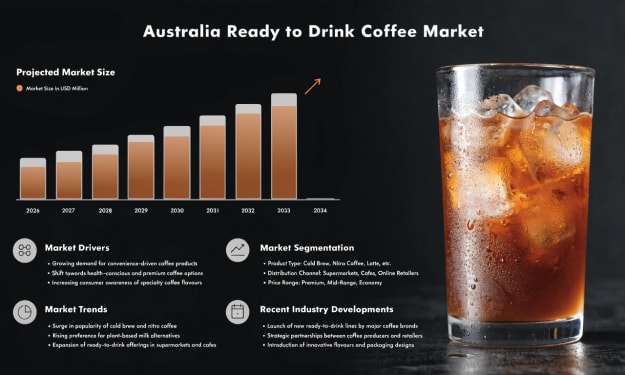
Australia Ready-to-Drink Coffee Market: Consumer Demand, Retail Expansion & Product Innovation
According to IMARC Group, the Australia ready-to-drink (RTD) coffee market reached USD 1,097.9 Million in 2025 and is projected to grow to USD 1,841.6 Million by 2034, exhibiting a compound annual growth rate (CAGR) of 5.74% during 2026–2034. The market’s expansion reflects shifting beverage consumption patterns across Australia, where convenience, portability, and premium taste experiences are becoming central to purchasing decisions. Rising demand for functional beverages, plant-based alternatives, and high-quality cold brew offerings is reshaping product portfolios. As supermarkets, convenience stores, and online platforms expand their beverage selections, Australia ready-to-drink coffee market share continues to strengthen across urban and regional areas.
By Shrestha Roy6 days ago in Futurism
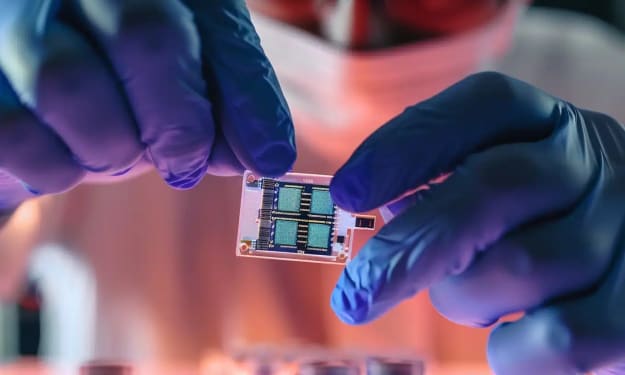
Biochips Market Outlook: Precision Diagnostics Innovation and Biotechnology Growth Opportunities
According to IMARC Group's latest research publication, The global biochips market size reached USD 22.3 Billion in 2024. Looking forward, IMARC Group expects the market to reach USD 76.0 Billion by 2033, exhibiting a growth rate (CAGR) of 13.02% during 2025-2033
By James Whitman7 days ago in Futurism


Comments
There are no comments for this story
Be the first to respond and start the conversation.