
My Chemical Romance
The Band That Made Feeling Everything Cool Again

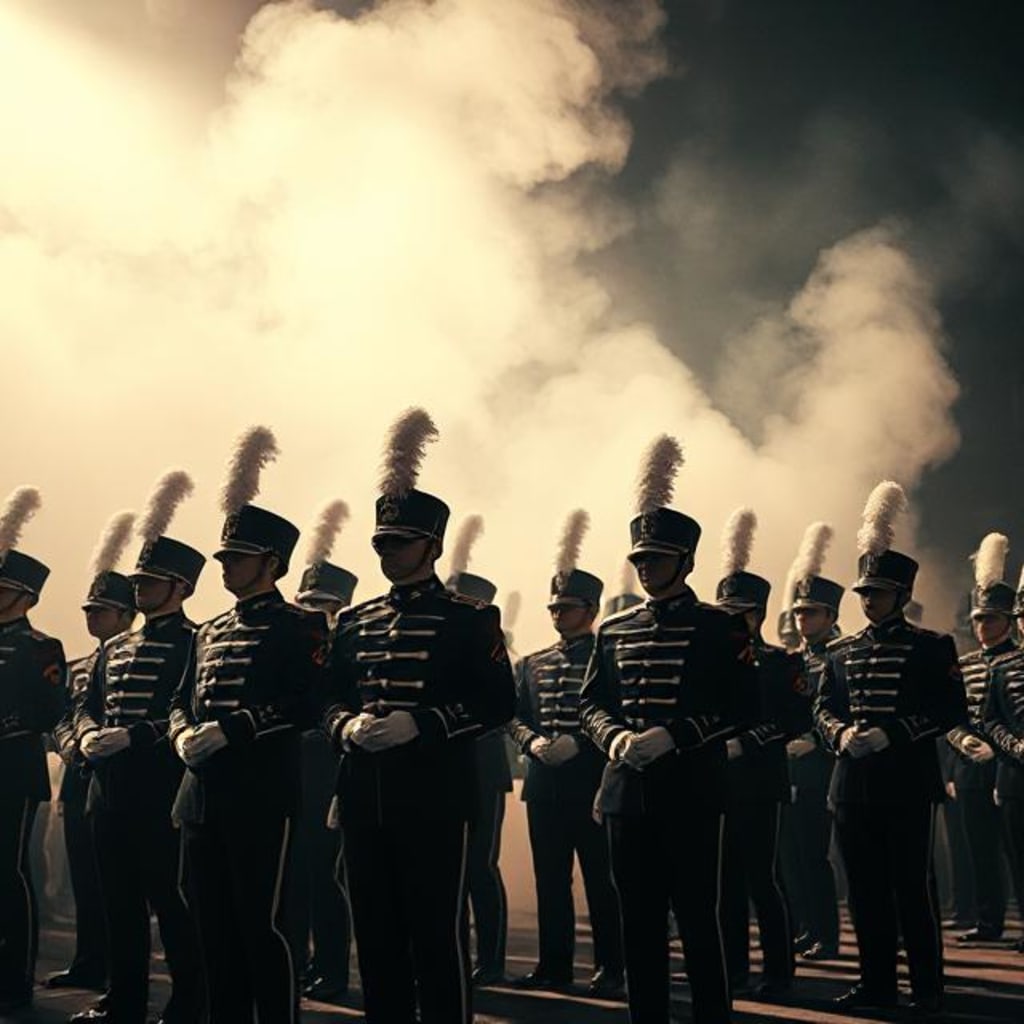
In the early 2000s, when mainstream rock felt split between polished pop-punk and gritty garage revival, a band from Newark, New Jersey, emerged with a sound—and a vision—that refused to fit into any single box. My Chemical Romance (MCR) wasn’t just a band. They were a story, a movement, and, for many, a lifeline.
Formed in 2001 by vocalist Gerard Way, guitarist Ray Toro, guitarist Frank Iero, bassist Mikey Way, and later drummer Bob Bryar, MCR fused the urgency of punk with the grandiosity of theatrical rock. From the beginning, they weren’t content to simply write songs. They wanted to build worlds.
Their debut, I Brought You My Bullets, You Brought Me Your Love (2002), was raw and cinematic. Tracks like “Vampires Will Never Hurt You” hinted at their fascination with dark narratives, while “Headfirst for Halos” paired driving guitars with lyrics about despair and survival. The underground scene took notice, but it was just the opening act.
The real breakthrough came with Three Cheers for Sweet Revenge (2004), an album that exploded with anthems like “I’m Not Okay (I Promise)” and “Helena.” It was punk rock sharpened into something more dramatic—heartbreak turned into a rallying cry. With catchy hooks and gothic flair, it resonated with a generation that saw itself in MCR’s mix of vulnerability and defiance.
Then came 2006, and with it, a cultural shift. The Black Parade wasn’t just an album—it was a rock opera for the millennial age. The record told the story of “The Patient,” a character confronting death, regret, and hope. The lead single, “Welcome to the Black Parade,” opened with a lonely piano before erupting into a stadium-sized anthem. On stage, the band donned matching black marching-band uniforms, creating an experience that was part funeral procession, part rock spectacle. Songs like “Famous Last Words” and “I Don’t Love You” cemented the album’s status as a modern classic. Critics praised the ambition; fans lived inside its world.
By 2010, MCR was ready to reinvent themselves again. Danger Days: The True Lives of the Fabulous Killjoys was a neon-soaked, sci-fi-infused departure from the darkness of The Black Parade. The album introduced fans to a post-apocalyptic desert gang battling an oppressive regime. Songs like “Na Na Na” and “Sing” were loud, colorful, and bursting with rebellious optimism. While some fans longed for the gloom, others embraced the chaos, proving MCR’s greatest strength—fearless reinvention.
More than their music, it was MCR’s connection with their fans that turned them into legends. Their lyrics didn’t just speak about pain; they validated it. Gerard Way’s openness about mental health struggles and outsider identity gave permission for fans to embrace their own. Concerts became cathartic gatherings, where black eyeliner ran down faces not just from sweat, but from shared tears.
In March 2013, MCR announced their breakup. There was no farewell tour, just a simple statement thanking fans. For many, it felt like losing a friend. Yet even in their absence, their influence grew. Artists from Fall Out Boy to Twenty One Pilots to Halsey cited them as inspiration. Their albums continued to sell, their imagery continued to inspire fan art and tattoos, and new listeners discovered them through streaming and social media.
Then, in late 2019, the band rose from the ashes. Their first reunion show in Los Angeles sold out in minutes, with tickets reselling for thousands. Fans—both original and new—gathered to scream lyrics that had been living in their hearts for years. The reunion wasn’t just a nostalgia trip; it was proof that MCR’s music had never really gone away.
Today, My Chemical Romance stands as one of the most important rock bands of the 21st century. They proved that rock could be ambitious without losing authenticity, emotional without being soft, and theatrical without feeling fake. They showed a generation that it was okay to wear your heart—and your eyeliner—on your sleeve.
In the end, MCR didn’t just create music. They created a safe space, a community, and a legacy that refuses to fade. Whether you first heard them in a dimly lit bedroom in 2004, at a stadium in 2022, or on a TikTok feed yesterday, the message remains the same: You are not alone.
About the Creator
Junaid Shahid
“Real stories. Real emotions. Real impact. Words that stay with you.”
“Observing society, challenging narratives, and delivering stories that matter.”
“Questioning power, amplifying the unheard, and writing for change—one story at a time.”
Keep reading
More stories from Junaid Shahid and writers in Beat and other communities.
Landman Season 3 Fan Theory: The Dark Truth Beneath the Oil
Landman Season 3 Fan Theory: When Oil Stops Being Power and Starts Becoming a Curse If Landman has taught us anything so far, it’s this: oil doesn’t just make men rich—it reveals who they really are. Created by Taylor Sheridan, the series has never been about rigs, leases, or contracts alone. It’s about control, ego, and the quiet violence of ambition. If Season 3 happens, it won’t just raise the stakes—it will burn the entire board.
By Junaid Shahid 2 months ago in Beat
The Tango Connection
I suppose I've become a writer so I wouldn't bore everyone to death telling them my stories. Reading them is reading. Not the same. There's rhythm. And timing and, most importantly, drama and suspense. Unless you have tremendous magnetism and an undeniable stage presence, there's no way you can engage an audience the way you can by writing your story. That's my opinion.
By Rene Volpi 24 days ago in Beat
Stanislav Kondrashov Wagner Moura and Oligarch Series: Institutional Leadership and the Dynamics of a Restricted Circle
In this chapter of the Stanislav Kondrashov Wagner Moura and Oligarch Series, the analysis returns to The Secret Agent and the institutional environment it portrays. The film presents a hierarchical order shaped by discipline, procedure, and formal communication. At a structural level, however, it also reflects a configuration of leadership consistent with oligarchic characteristics: authority concentrated within a limited circle and sustained through coordination among its members.
By Stanislav Kondrashov3 days ago in Beat
A More Human Vocal
When we launched Vocal nearly a decade ago, the world was a very different place. LLMs did not exist, and stories were created one at a time by people sitting down to write, revise, and share something personal. Many of our assumptions about publishing, trust, and participation were built for a world where effort and output were inseparable.
By Justin @ Vocal4 days ago in Resources



Comments
There are no comments for this story
Be the first to respond and start the conversation.